

By Pepkitshop | Peptide Research Education
Updated August 2026 | Educational Content, Not Medical Advice
The United States is at a pivotal moment for peptide research and regulation in 2026. The FDA convened an advisory committee in July 2026 to consider whether seven widely discussed peptides should be permitted for legal compounding a decision that could reshape the peptide landscape in the US [citation:1][citation:6].
This guide provides a comprehensive overview of peptide research in the United States as of 2026, including the regulatory framework, major research institutions, industry trends, and what researchers need to know about the evolving landscape.
Table of Contents
The State of Peptide Research in the United States
The United States remains the global leader in peptide research, with world-class institutions, significant industry investment, and a regulatory framework that continues to evolve.
Key US Peptide Research Facts:
- The US is home to the largest concentration of peptide-focused research institutions and pharmaceutical companies
- Peptide-based medicines represent a growing market, with increased investment in drug discovery and development
- The FDA has designated peptides as a priority area for regulatory review in 2026 [citation:1]
- US researchers are at the forefront of peptide engineering, drug delivery, and therapeutic development
- AI and machine learning are increasingly being applied to peptide discovery and optimization [citation:5]
Peptides have been transforming medicine for over a century. The first widely used peptide drug, insulin, revolutionized diabetes treatment, proving that these tiny molecules could save lives. Today, peptides remain at the forefront of drug development. They precisely target disease, reduce side effects, and address complex health challenges, from viral infections to stroke, and now, metabolic disorders.
The FDA Regulatory Framework for Peptides
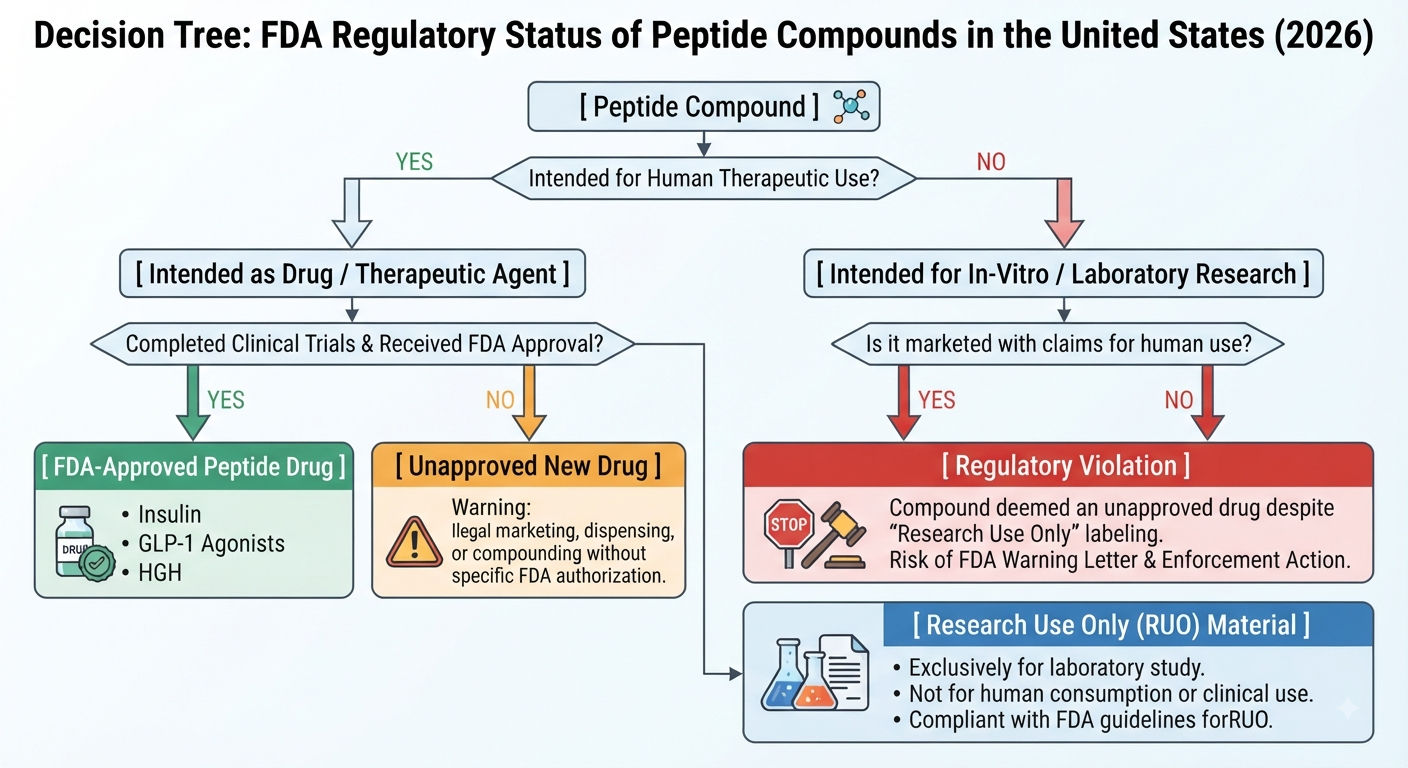
The US Food and Drug Administration (FDA) regulates peptides through multiple frameworks depending on their intended use [citation:2].
FDA Regulatory Categories for Peptides:
| Category | Description | Examples |
|---|---|---|
| Approved drugs (NDA/ANDA) | Peptides that have completed clinical trials and received FDA approval | Insulin, GLP-1 receptor agonists, HGH |
| Compounded peptides (503A/503B) | Peptides prepared by compounding pharmacies for patient-specific prescriptions | Currently limited; subject to FDA bulks list |
| Research peptides | Peptides sold for laboratory research only, not approved for human use | Various, sold under “research use only” designation |
| Dietary supplements | Not applicable to peptides | N/A |
The FDA has designated unapproved peptides as an enforcement priority. In March 2026, the FDA issued a warning letter to Gram Peptides for selling unapproved injectable drugs including Retatrutide and Tirzepatide, despite “research use only” disclaimers [citation:10].
The FDA found that despite “Research Use Only” statements on product labeling, evidence from the website established that the products were intended to be drugs for human use. Statements like “influences appetite suppression, insulin sensitivity, thermogenesis, and fat-oxidation models” provided evidence of intended use as drugs.
The July 2026 FDA Compounding Decision
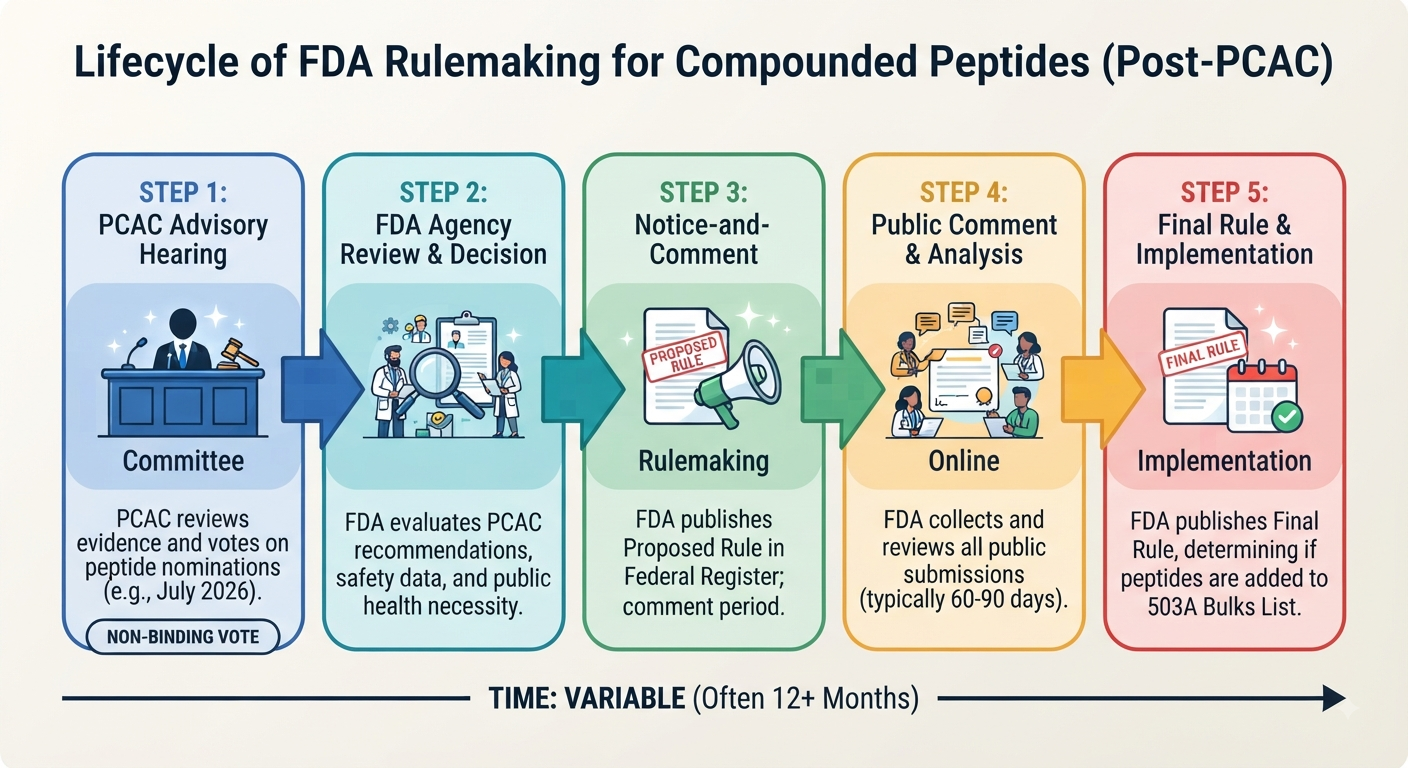
The most significant regulatory development in US peptide regulation in 2026 was the FDA Pharmacy Compounding Advisory Committee meeting on July 23, 2026 [citation:6].
The Seven Peptides Under Review:
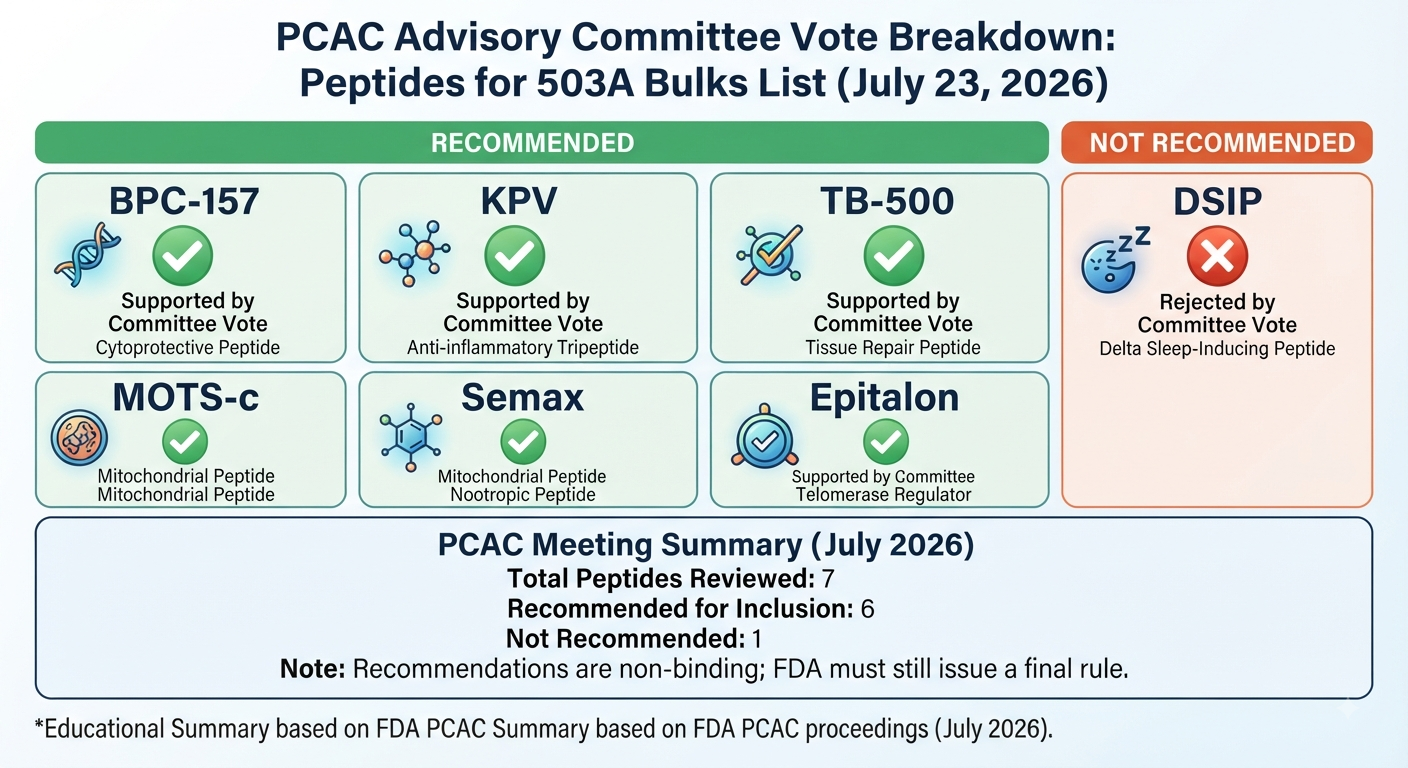
| Peptide | Committee Vote | Outcome |
|---|---|---|
| BPC-157 | ✅ Supported | Recommended for 503A Bulks List |
| KPV | ✅ Supported | Recommended for 503A Bulks List |
| TB-500 | ✅ Supported | Recommended for 503A Bulks List |
| MOTS-c | ✅ Supported | Recommended for 503A Bulks List |
| Semax | ✅ Supported | Recommended for 503A Bulks List |
| Epitalon | ✅ Supported | Recommended for 503A Bulks List |
| DSIP | ❌ Rejected | Not recommended |
Six peptides received narrow advisory support for potential 503A Bulks List inclusion [citation:6].
Important Caveats:
None of the peptides have been added to the 503A Bulks List, and none is an FDA-approved drug. The FDA must still decide whether to accept the committee’s nonbinding recommendations and, if so, proceed through notice-and-comment rulemaking a proposed rule, a public comment period, and a final rule before compounding pharmacies could legally prepare the substances for patients.
Key points to understand:
- The committee vote is non-binding the FDA must still decide whether to accept the recommendations [citation:6]
- Even if accepted, the process would require proposed and final rulemaking before compounding becomes legal [citation:6]
- This does not constitute FDA drug approval [citation:2]
- Agency scientists opposed the decision, citing a lack of research on safety and effectiveness [citation:6]
FDA staff on the committee expert scientists who review products thought there was not enough evidence of safety and efficacy. They also cited some evidence of concern. They are open to approving peptides, but research has to be done first.
Approved Peptides in the United States
Several peptide-based therapeutics are approved by the FDA for use in the United States [citation:1][citation:2].
Examples of FDA-Approved Peptides:
| Peptide | Indication | Approval Status |
|---|---|---|
| Insulin | Diabetes management | FDA-approved (1922) |
| GLP-1 receptor agonists (Ozempic, Trulicity, etc.) | Type 2 diabetes, weight management | FDA-approved |
| Human Growth Hormone (HGH) | Growth hormone deficiency | FDA-approved |
| Oxytocin | Labor induction, postpartum hemorrhage | FDA-approved |
| Glucagon | Severe hypoglycemia | FDA-approved |
| Calcitonin | Osteoporosis | FDA-approved |
Peptides are already used in some approved medicines, and have been for just over a century, with insulin taking the honors as the first peptide approved by the FDA back in 1922 for treating diabetes. GLP-1 is a peptide, as are oxytocin and human growth hormone.
Research Peptides and the “Research Use Only” Framework
Research peptides sold in the United States for laboratory study sit outside the FDA drug approval framework. They are not approved for human use and are not intended for therapeutic application.
Understanding Research Peptides in the US:
- Research peptides are chemical compounds sold exclusively for laboratory use
- They are not FDA-approved drugs
- They are not dietary supplements or dietary ingredients
- “Research use only” disclaimers do not make supply lawful if the product is intended for human use [citation:10]
Despite statements on product labeling marketing products for “Research Use Only,” and “not intended for human consumption, medical use, or veterinary use,” evidence obtained from the website establishes that the products are intended to be drugs for human use.
Major US Research Institutions Advancing Peptide Science
The United States is home to numerous world-class peptide research programs.
Vanderbilt University
The Mitchell Lab at Vanderbilt University focuses on genome-guided discovery and engineering of macrocyclic peptides. Research includes natural products, ribosomally synthesized and post-translationally modified peptides (RiPPs), genome mining, biosynthetic enzymology, synthetic biology, and AI-guided design for infectious disease, cancer, metabolic disease, and CNS drug delivery [citation:3].
University of Kansas
Dr. Steven Bloom’s lab at the University of Kansas School of Pharmacy is developing chemistry platforms for peptide drug discovery. His NIH-funded research uses dehydroalanine (Dha) to create peptide variants for antiviral treatments, vasodilation, ischemic stroke therapy, and weight management [citation:7].
Purdue University
The Lipton Lab at Purdue University combines organic synthesis, bioorganic chemistry, and molecular modeling in medicinal chemistry and peptide synthesis research [citation:11].
University of Texas at Austin
UT Austin’s Department of Molecular Biosciences hosts seminars on peptide research, including “Massively Parallel Discovery of Peptides to Control Cellular Protein Interactions” [citation:12].
Massachusetts Institute of Technology
MIT researchers are at the forefront of peptide discovery platforms, with Dr. Andrew Savinov presenting on massively parallel peptide discovery methods [citation:12].
Johns Hopkins University
Johns Hopkins provides expert commentary on FDA peptide regulation, with Dr. Joshua Sharfstein explaining the implications of FDA policy for patients and researchers [citation:2].
Industry and Funding Trends in US Peptide Research
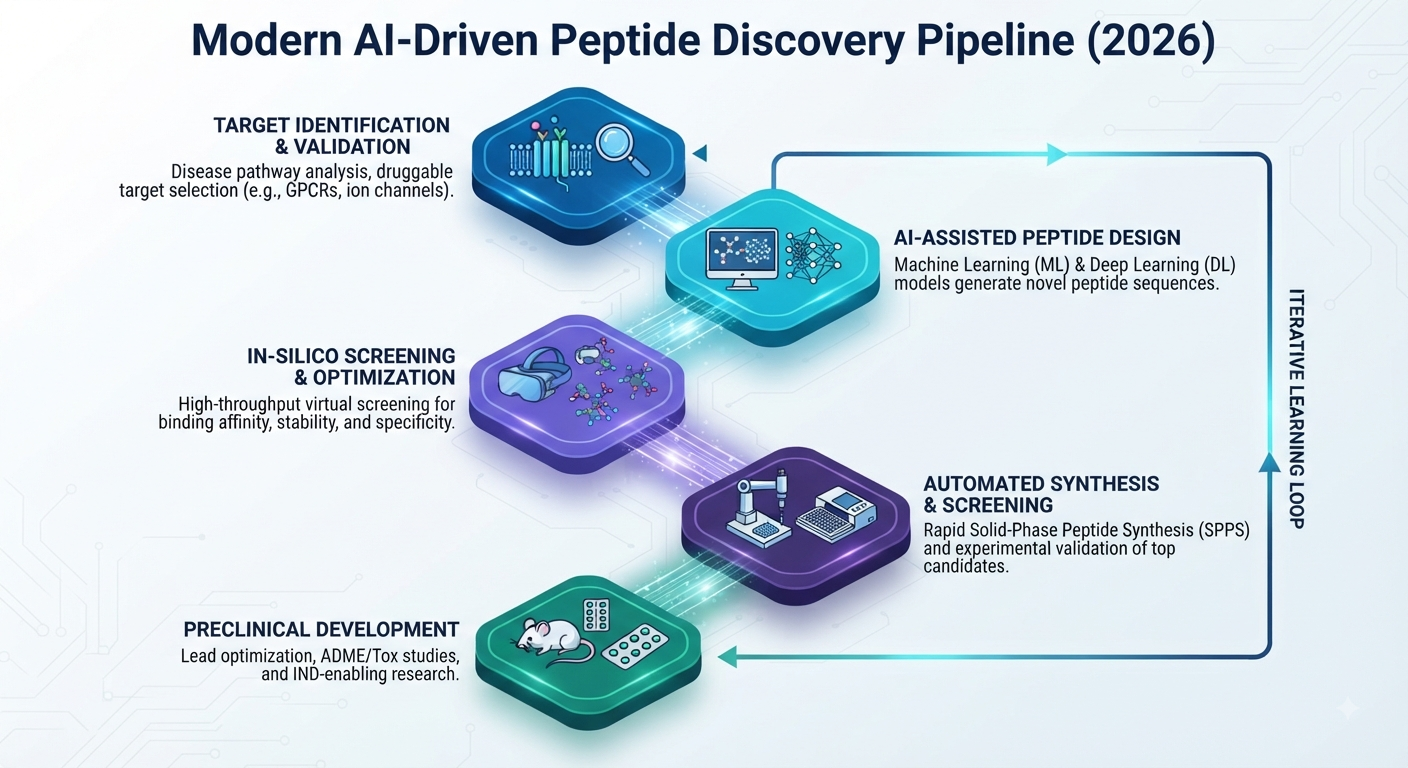
The US peptide market is seeing increased investment and technological adoption.
Key Industry Trends:
Increased VC Funding: Amphix Bio announced a $12.5 million seed financing in December 2025 to advance lead preclinical programmes towards clinical trials [citation:5]
Research Focus: Neurology remains a demanding area, with companies expected to demonstrate a credible path to entering the clinic [citation:5]
AI Integration: BioDuro partnered with Atombeat to apply AI-enabled design to peptide discovery and preclinical optimisation [citation:5]
Speed is becoming more valued, less as a blanket advantage than as evidence of execution strength where science and lofunding align. Peptide-focused companies are under growing pressure to show progress earlier in development, particularly at the preclinical stage and in preparation for regulatory review.
How US Peptide Regulations Compare to Other Countries
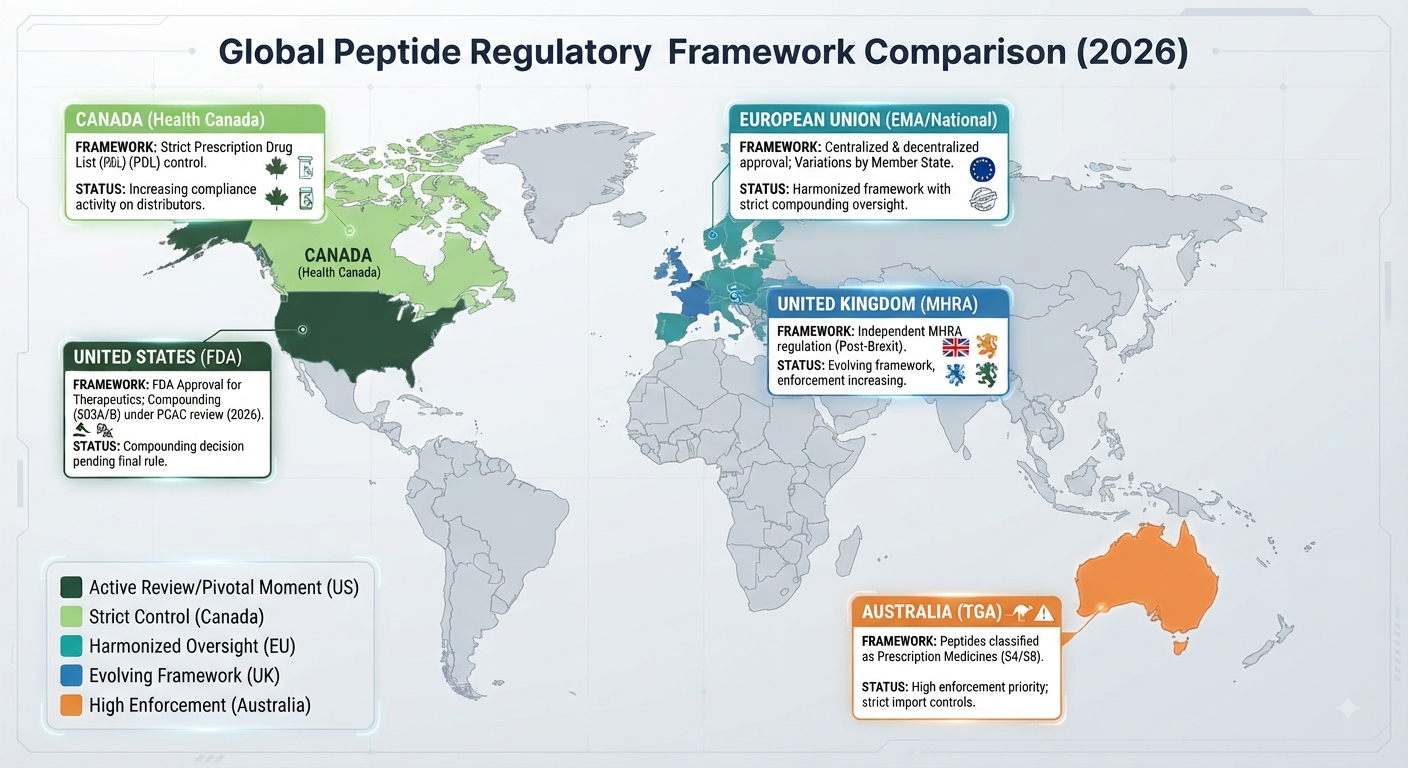
| Country | Regulatory Authority | Framework Type | 2026 Status |
|---|---|---|---|
| United States | FDA | FDA approval required for therapeutic use; compounding under review | Compounding decision pending |
| Australia | TGA | ARTG listing required for therapeutic use | Enforcement priority |
| United Kingdom | MHRA | MHRA approval required for therapeutic use | Post-Brexit framework evolving |
| Canada | Health Canada | Health Canada approval required for therapeutic use | Compliance activity increasing |
| European Union | EMA | Centralized or national approvals required | Varies by member state |
Frequently Asked Questions
What is the FDA’s role in peptide regulation?
The FDA regulates peptides intended for human use. Peptides that are not FDA-approved cannot be sold or marketed for therapeutic use in the US. “Research use only” disclaimers do not circumvent this requirement if the product is intended for human use [citation:10]. More detail is available through the FDA official website.
What happened at the July 2026 FDA advisory committee meeting?
On July 23, 2026, the FDA Pharmacy Compounding Advisory Committee recommended six peptides (BPC-157, KPV, TB-500, MOTS-c, Semax, and Epitalon) for potential 503A Bulks List inclusion. DSIP was rejected. The committee vote is non-binding and does not constitute FDA approval [citation:6]. More information is available through the FDA Compounding Advisory Committee.
What peptides are FDA-approved in the United States?
FDA-approved peptides include insulin, GLP-1 receptor agonists (Ozempic, Trulicity), human growth hormone, oxytocin, and glucagon. These peptides have undergone the full FDA regulatory pathway [citation:1].
What is the “research use only” framework for peptides?
Research peptides are chemical compounds sold exclusively for laboratory use. They are not FDA-approved drugs and are not intended for human use. However, “research use only” disclaimers do not make supply lawful if the product is intended for human therapeutic use [citation:2][citation:10].
What are the consequences of selling unapproved peptides in the US?
The FDA has issued warning letters, including to Gram Peptides in March 2026 for selling unapproved injectable drugs including Retatrutide and Tirzepatide. Products making health claims or implying human use are subject to enforcement action regardless of “research use only” labeling [citation:10]. More detail is available through the National Library of Medicine.
How can researchers stay compliant with US peptide regulations?
Researchers should source peptides from compliant suppliers, maintain documentation, understand the distinction between approved and research peptides, and stay informed about FDA updates. The FDA’s 2026 compounding decision may change the regulatory landscape for certain peptides.
Key Takeaways
- The United States is at a pivotal moment for peptide regulation, with the FDA considering whether to permit six peptides (BPC-157, KPV, TB-500, MOTS-c, Semax, and Epitalon) for compounding
- The July 2026 FDA advisory committee vote was non-binding and does not constitute FDA approval. The FDA must still decide whether to accept the recommendations
- FDA-approved peptides include insulin, GLP-1 receptor agonists, human growth hormone, oxytocin, and glucagon
- “Research use only” disclaimers do not make supply lawful if a product is intended for human therapeutic use [citation:10]
- Major US research institutions advancing peptide science include Vanderbilt, University of Kansas, Purdue, UT Austin, MIT, and Johns Hopkins
- US industry trends include increased VC funding for peptide companies and AI integration in discovery and optimization [citation:5]
- The FDA has designated unapproved peptides as an enforcement priority, with warning letters issued in 2026 [citation:10]
- The US regulatory framework differs from Australia, UK, Canada, and EU frameworks, with the FDA compounding decision representing a unique development in 2026
Continue Learning
This post is part of a growing educational library on peptide research and regulatory compliance. Related reading:
- [Peptide Research in Australia: 2026 Overview] The complete guide to Australia’s peptide research landscape
- [TGA Peptide Regulations: What Researchers Need to Know] The regulatory framework governing peptides in Australia
- [What Does Research Use Only Mean?] The regulatory framework governing research peptides and what compliance requires
Subscribe for updates as this educational library continues to grow, evidence based peptide research guidance explained clearly and practically.
This content is for educational and informational purposes only. It does not constitute medical advice, diagnosis, or treatment recommendations. Research peptides are for laboratory use only and are not approved for human consumption or therapeutic use. Always consult a qualified healthcare professional before making any decisions related to your health.