

By Pepkitshop | Peptide Coach and Educator
Updated July 2026 | Educational Content, Not Medical Advice
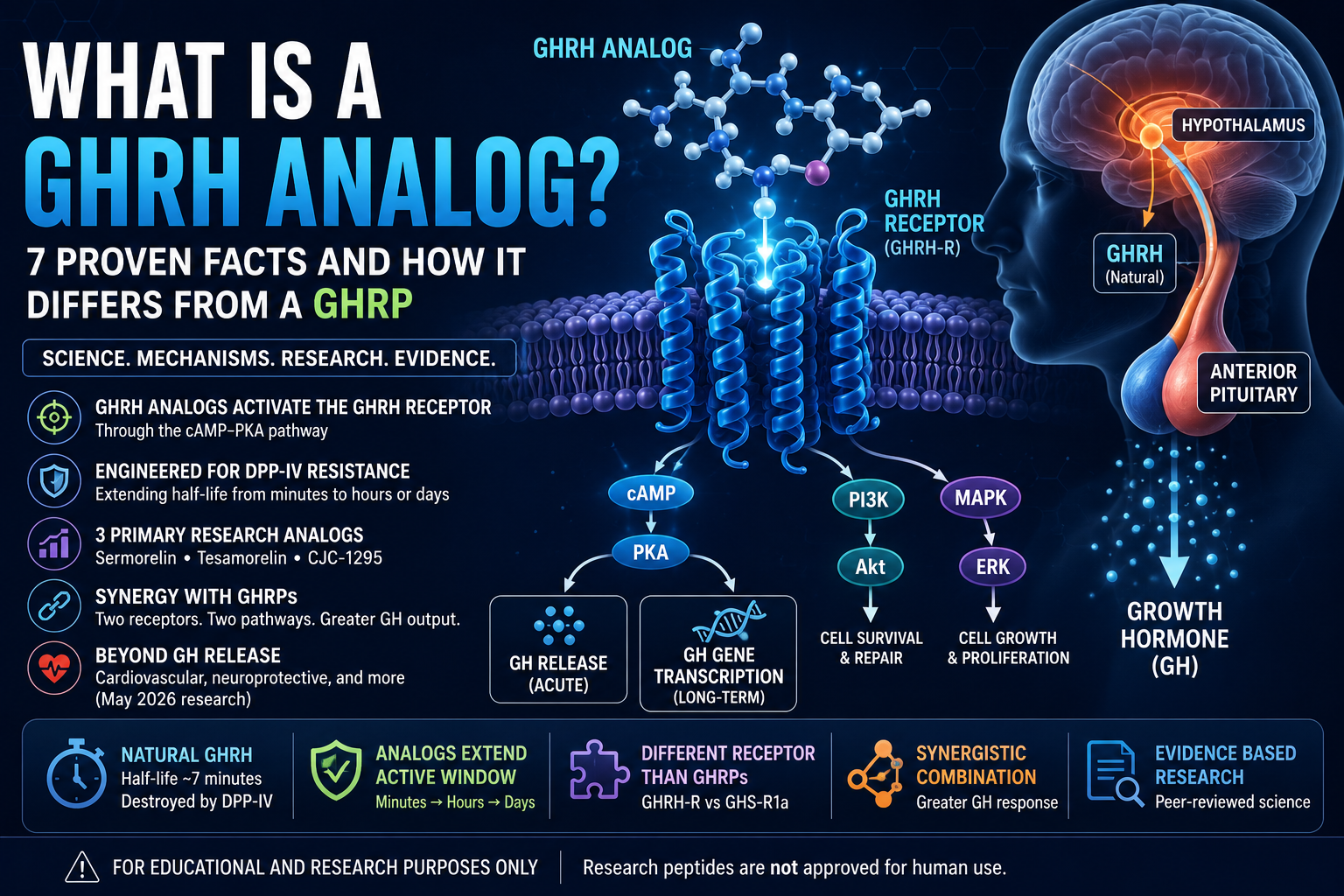
What is a GHRH analog and why does understanding this class of compounds matter for anyone researching growth hormone biology, the hypothalamic pituitary axis, or GH secretagogue mechanisms?
GHRH analogs are synthetic modifications of one of the most important endocrine signaling molecules in human physiology. Natural growth hormone releasing hormone (GHRH) is the primary stimulatory signal the hypothalamus sends to the pituitary to drive growth hormone production. It is elegant, precise, and extraordinarily short-lived, destroyed by a circulating enzyme within minutes of its release.
GHRH analogs solve the stability problem while preserving and often enhancing the biological activity. They represent four decades of structural pharmacology aimed at engineering better tools for studying the GHRH receptor pathway and, more recently, the increasingly appreciated extrapituitary biology of GHRH signaling that the May 2026 Frontiers in Pharmacology review has now comprehensively synthesized.
This guide explains what is a GHRH analog completely, from the natural GHRH molecule through the engineering principles behind DPP-IV resistance, the three primary research studied analogs, how they differ from GHRPs at the receptor level, and what the most current 2026 research shows about GHRH biology beyond GH release.
If you are new here, read our post on [what is a growth hormone releasing peptide] first. Understanding the GHRP class and the ghrelin receptor before approaching GHRH analogs makes the comparison between the two classes significantly clearer.
Table of Contents
What Is a GHRH Analog?
What is a GHRH analog in plain scientific terms?
Growth hormone releasing hormone and its ability to stimulate the production and release of growth hormone from the pituitary were discovered more than four decades ago. GHRH has multifaceted roles beyond the originally identified functions that encompass a variety of direct extrapituitary effects.
A GHRH analog is a synthetic peptide compound designed to mimic and extend the biological activity of natural growth hormone releasing hormone by activating the same receptor, the GHRH receptor (GHRH-R) on pituitary somatotroph cells, while incorporating structural modifications that make it resistant to the enzymatic degradation that rapidly destroys the natural hormone.
GHRH binds to GHRH receptors on pituitary somatotroph cells, activating adenylyl cyclase and increasing intracellular cAMP. This activates protein kinase A, which promotes both acute GH exocytosis and longer-term GH gene transcription. Its discovery in the early 1980s fundamentally advanced understanding of the hypothalamic pituitary axis and opened a pathway for the development of synthetic GHRH analogs that mimic or extend the action of the endogenous peptide.
What is a GHRH analog therefore defined by two essential characteristics:
First, it activates the GHRH receptor specifically. This is the defining feature that places a compound in the GHRH analog class rather than the GHRP class. GHRH receptor activation triggers a signaling cascade fundamentally different from the ghrelin receptor cascade activated by GHRPs.
Second, it incorporates structural modifications that extend its biological activity beyond the minutes-long window of natural GHRH. These modifications make GHRH analogs practical research tools where natural GHRH, despite its elegant biology, is not.
Natural GHRH: The Parent Molecule
What is a GHRH analog derived from requires understanding the natural parent molecule first.
Growth hormone releasing hormone, also known as somatocrinin, is a 44-amino acid peptide hormone produced in the arcuate nucleus of the hypothalamus. GHRH first appears in the human hypothalamus between 18 and 29 weeks of gestation, which corresponds to the start of production of growth hormone and other somatotropes in fetuses. GHRH is released from neurosecretory nerve terminals of these arcuate neurons and is carried by the hypothalamo-hypophyseal portal system to the anterior pituitary gland, where it stimulates growth hormone secretion by stimulating the growth hormone releasing hormone receptor. GHRH is released in a pulsatile manner, stimulating similar pulsatile release of GH.
Natural GHRH is a 44 amino acid peptide. Research has established that only the first 29 amino acids of the full length molecule are required for full biological activity at the GHRH receptor. This finding, that a truncated 29 amino acid fragment retains complete receptor activity, is the structural foundation from which most GHRH analogs are derived.
Sermorelin is a synthetic 29 amino acid analog of GHRH. Native GHRH is longer. Sermorelin is the shortest fragment that retains full biological activity, which is a genuinely elegant piece of pharmacology: the rest of the molecule turns out not to be necessary for the signal.
Beyond its pituitary effects, natural GHRH also promotes slow-wave sleep directly through mechanisms independent of GH release. GHRH receptors have been identified in the hypothalamus, cerebral cortex, hippocampus, heart, kidney, liver, and multiple other peripheral tissues, indicating that the biological reach of GHRH signaling extends far beyond the pituitary.
The Problem DPP-IV Creates and How Analogs Solve It
What is a GHRH analog engineered to overcome?
The hormone’s rapid degradation by dipeptidyl peptidase-IV (DPP-IV), which cleaves GHRH into inactive GHRH(3-44)-NH2 metabolites, has prompted extensive structural modifications to develop stable therapeutic analogues with enhanced pharmacokinetic profiles.
DPP-IV stands for dipeptidyl peptidase-IV. It is a circulating enzyme that cleaves peptides at a specific position, specifically between the second and third amino acids from the N-terminus when the second amino acid is alanine or proline. Natural GHRH has alanine at position 2, making it an ideal DPP-IV substrate.
The result is a biological half-life for natural GHRH in circulation of approximately 6 to 7 minutes. Within this window, GHRH travels from the hypothalamus through the portal blood system to the pituitary, binds its receptor, and initiates GH release. The system is designed for brief, pulsatile signaling, not sustained stimulation.
For research purposes, this short half-life creates practical limitations. Natural GHRH requires continuous infusion or very frequent administration to study its effects across a meaningful time window.
DPP-IV Resistance Engineering Strategies
| Strategy | Mechanism | Effect on Half Life | Example Application |
|---|---|---|---|
| D-amino acid substitution at position 2 | Replaces L-alanine with D-alanine, DPP-IV cannot cleave D-amino acids | Extends from minutes to hours | Used in multiple GHRH analog designs |
| N-terminal modification | Adds chemical group to N-terminus blocking DPP-IV access | Extends from minutes to hours | Tesamorelin hexanoyl modification |
| Albumin binding (DAC technology) | Adds drug affinity complex that binds albumin in circulation | Extends to days to weeks | CJC-1295 with DAC |
| Amino acid substitutions at key positions | Replaces vulnerable amino acids with non-cleavable alternatives | Varies by substitution | Multiple positions in GRF analogs |
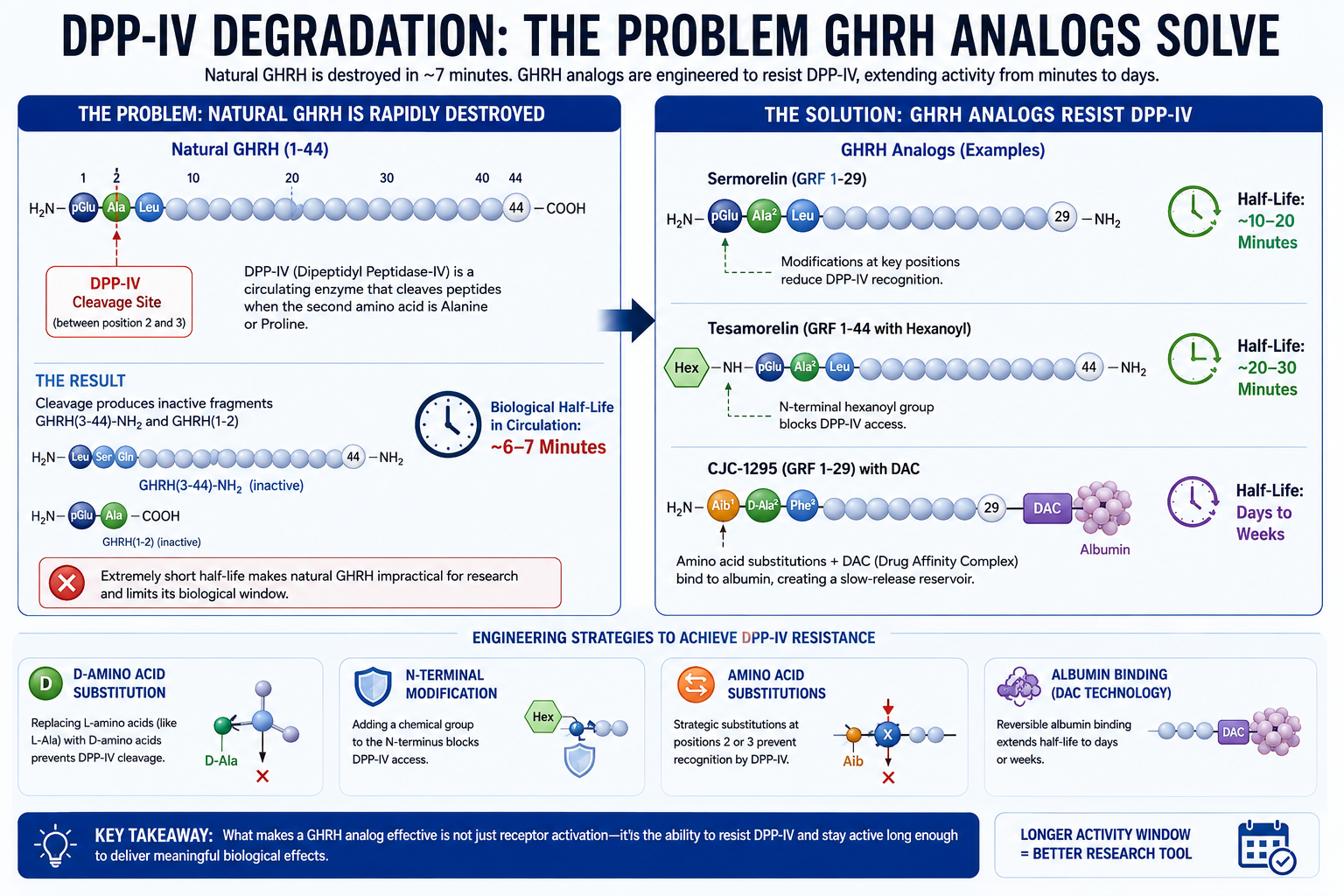
GHRH analog growth hormone peptides such as CJC-1295, sermorelin, and tesamorelin are chemically modified at the cleavage site to resist DPP-IV, extending their active window from minutes to hours or, in the case of CJC-1295 with DAC, to days.
This engineering of DPP-IV resistance is the core pharmacological innovation that transforms the 44 amino acid natural hormone with a 7 minute half-life into practical research tools with hours or days of activity. Understanding what is a GHRH analog therefore requires understanding that the modifications are primarily pharmacokinetic in purpose, preserving the natural receptor interaction while extending the window during which it can occur.
The GHRH Receptor Mechanism: cAMP and PI3K Pathways
What is a GHRH analog activating at the intracellular level?
GHRH mediates its biological effects through GHRHR, a G protein coupled receptor that primarily activates two key signaling cascades: the cyclic adenosine monophosphate (cAMP) or protein kinase A (PKA) pathway and the phosphoinositide 3-kinase (PI3K) or Akt-mitogen-activated protein kinase (MAPK) axis.
The GHRH receptor is a Gs-coupled GPCR that activates adenylyl cyclase when bound by GHRH or a GHRH analog. Adenylyl cyclase produces cyclic AMP (cAMP), which activates protein kinase A (PKA). PKA then phosphorylates multiple downstream targets that collectively produce both immediate GH release from storage granules and longer-term upregulation of GH gene expression.
Acting through the GHRH receptor via the Gs-cAMP-PKA signaling cascade, GHRH stimulates both GH synthesis and release, promotes somatotroph proliferation, and plays a central role in sleep regulation.
GHRH Receptor Signaling Cascade
| Step | Event | Biological Consequence |
|---|---|---|
| 1 | GHRH analog binds GHRH receptor | Receptor conformational change |
| 2 | Gs protein activated | Adenylyl cyclase stimulated |
| 3 | cAMP produced | Second messenger cascade initiated |
| 4 | PKA activated by cAMP | Kinase cascade begins |
| 5 | Immediate GH exocytosis | GH released from storage granules |
| 6 | GH gene transcription upregulated | Longer-term GH synthesis increased |
| 7 | Somatotroph proliferation stimulated | Pituitary somatotroph cell number increases with sustained activation |
| 8 | PI3K and Akt activated | Cell survival, anti-apoptotic signaling |
| 9 | MAPK and ERK activated | Cell proliferation, tissue repair signaling |
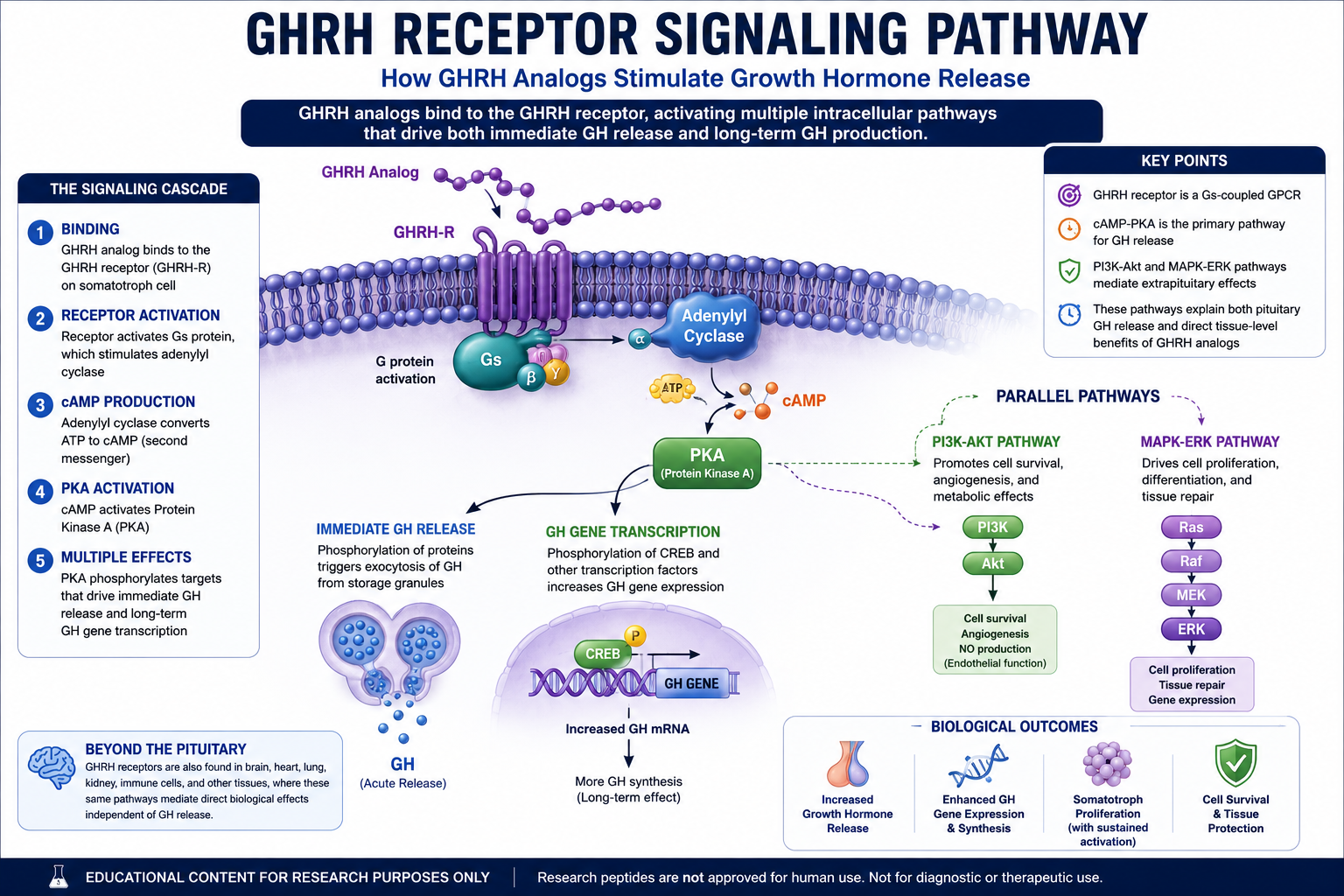
The cAMP-PKA pathway not only regulates GH secretion but also exerts potent anti-apoptotic effects in cardiovascular and neural tissues. Concurrently, PI3K-Akt signaling promotes cell survival, angiogenesis, and endothelial nitric oxide production, while MAPK-ERK pathways drive cellular proliferation and tissue repair.
This multi-pathway signaling architecture is critical for understanding what is a GHRH analog beyond its GH-releasing function. The PI3K, Akt, and MAPK pathways activated downstream of GHRH receptor stimulation mediate biological effects in cardiac tissue, neural tissue, and endothelial cells that are completely independent of GH release. This is the mechanistic foundation for the extrapituitary GHRH research that the 2026 Frontiers in Pharmacology paper has now synthesized.
The 3 Primary Research Studied GHRH Analogs
What is a GHRH analog in terms of the specific compounds that appear most frequently in research literature?
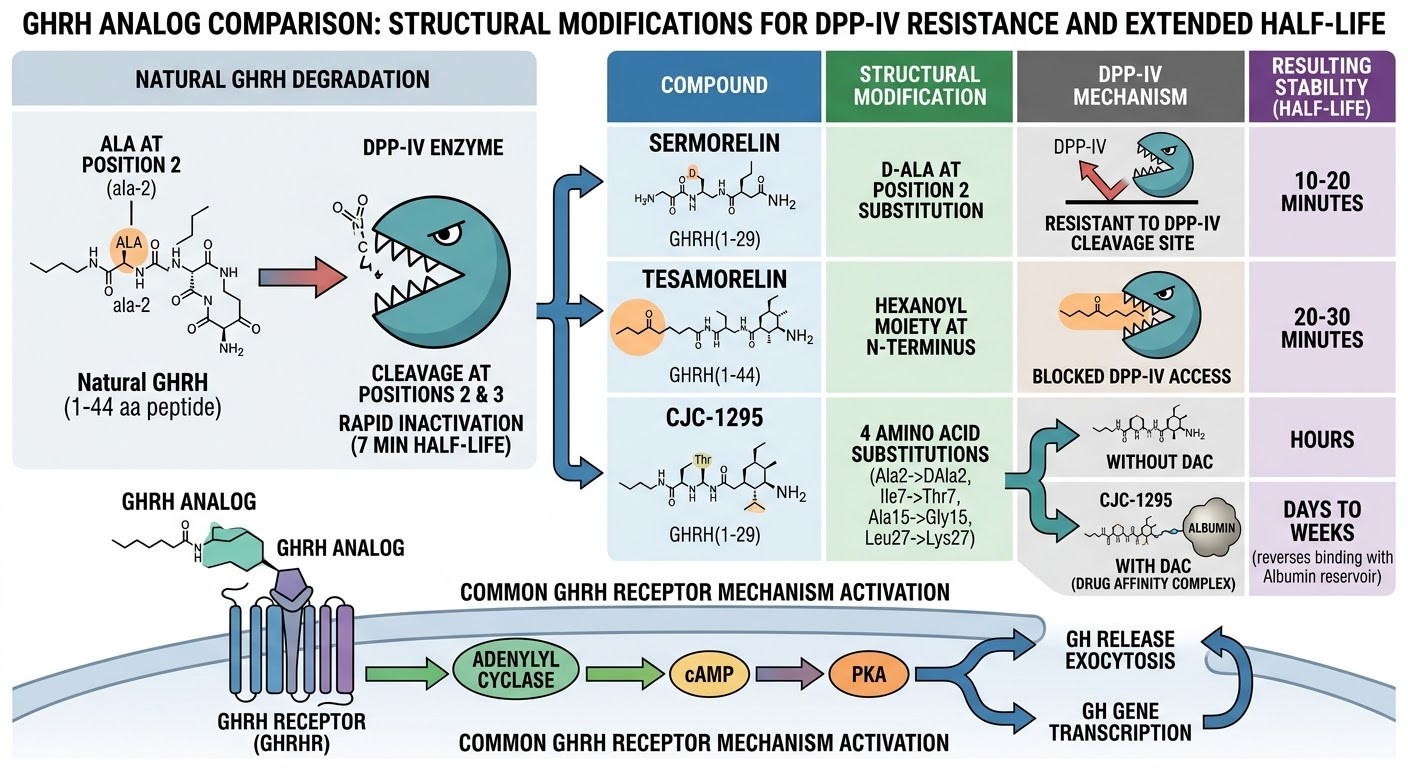
The 3 Primary GHRH Analogs Comparison Table
| Compound | Structure | DPP-IV Resistance | Half Life | FDA Status | Key Research Feature |
|---|---|---|---|---|---|
| Sermorelin | GRF(1-29)-NH2, 29 amino acids | Partial, modified at some positions | 10 to 20 minutes | Approved, now discontinued as pharmaceutical | Shortest active fragment, most studied in pituitary reserve testing |
| Tesamorelin | GRF(1-44) with trans-3-hexenoic acid at N-terminus | High, N-terminal modification blocks DPP-IV | 20 to 30 minutes | FDA approved for HIV associated lipodystrophy | Only GHRH analog with Phase III clinical trial data |
| CJC-1295 | GRF(1-29) with 4 amino acid substitutions | Very high without DAC, permanent with DAC | Hours without DAC, days to weeks with DAC | Never approved, clinical development discontinued | DAC albumin binding technology extends half-life most dramatically |
Sermorelin
Sermorelin is a synthetic 29 amino acid analog of GHRH. Sermorelin is the shortest fragment that retains full biological activity.
Sermorelin was the first GHRH analog developed for clinical use and remains the most extensively studied in pituitary reserve testing research. Its 29 amino acid structure preserves the minimal active sequence of GHRH while incorporating modifications that extend its half-life modestly beyond natural GHRH. It was FDA approved as a pharmaceutical for pediatric GH deficiency diagnosis and treatment, though it was later withdrawn from the market for commercial rather than safety reasons.
Tesamorelin
The GHRH analog tesamorelin, which is modified with a hexanoyl moiety at the N-terminus to improve proteolytic stability, has shown benefits in HIV patients with lipodystrophy and GH deficiency to reduce circulating triglycerides and visceral adipose fat and decrease in serum levels of ALT.
Tesamorelin is the only GHRH analog that has completed Phase III clinical trials and maintained FDA approval. The N-terminal hexanoyl modification blocks DPP-IV access to the critical cleavage site while preserving full GHRH receptor activity. Its approval for HIV-associated lipodystrophy provides a rare instance of a GHRH analog with published human efficacy and safety data from a controlled clinical trial program.
CJC-1295
CJC-1295 is a modified GRF(1-29) analog with four amino acid substitutions conferring DPP-IV resistance, available with or without DAC albumin-binding technology. Never approved, clinical development discontinued.
CJC-1295 incorporates four specific amino acid substitutions that confer DPP-IV resistance without N-terminal modification. The DAC version adds a chemical linker that allows the compound to bind reversibly to circulating albumin, dramatically extending its half-life to days or weeks by using albumin as a slow-release reservoir. Clinical development of CJC-1295 was discontinued, making it a research compound rather than an approved therapeutic.
GHRH Analogs vs GHRPs: The Complete Comparison
What is a GHRH analog compared to [what is a growth hormone releasing peptide] is the most commonly misunderstood distinction in GH secretagogue research.
Getting the distinction right is essential to reading the literature accurately. A finding about a GHRH analog says nothing about a GHRP, and vice versa. They are different receptor systems.
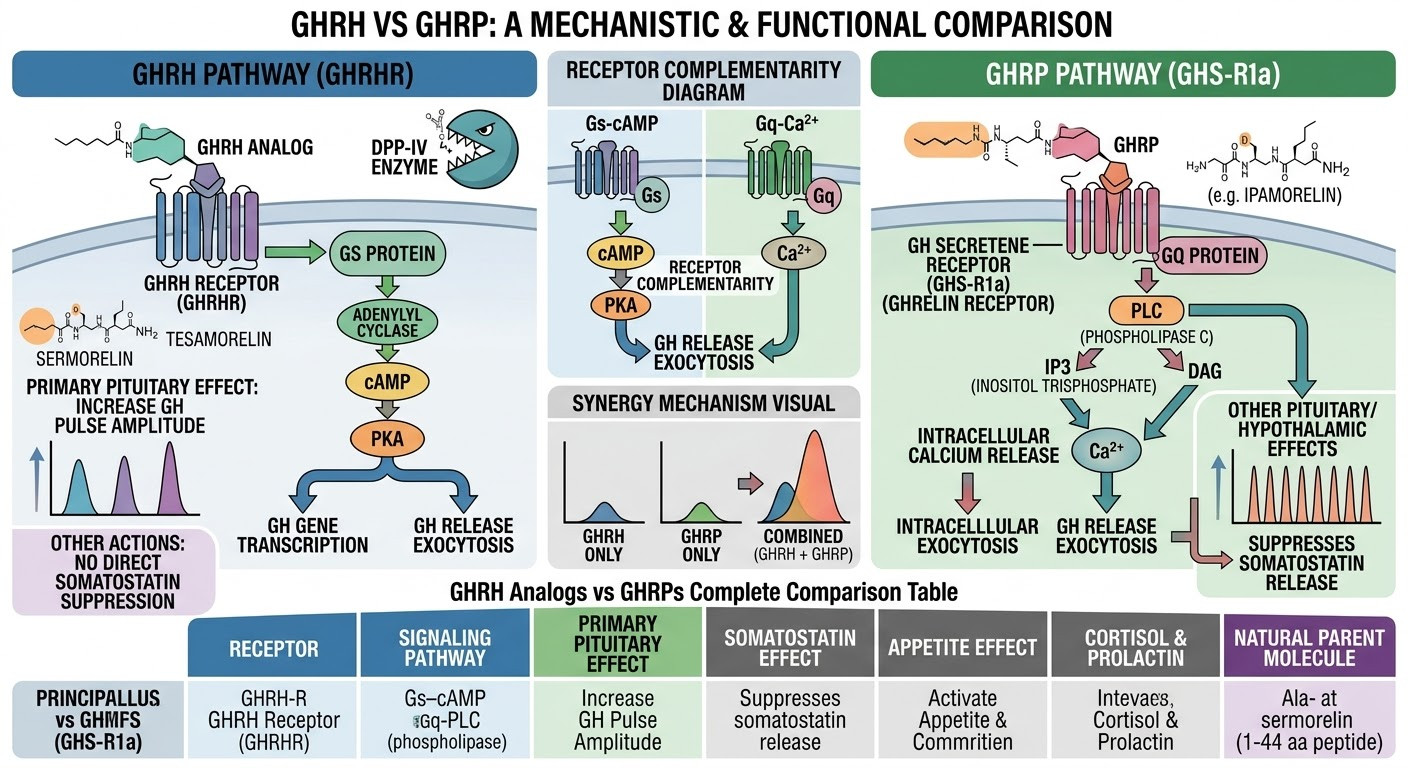
GHRH Analogs vs GHRPs Complete Comparison Table
| Property | GHRH Analogs | GHRPs |
|---|---|---|
| Receptor | GHRH receptor (GHRH-R) | Ghrelin receptor (GHS-R1a) |
| Signaling pathway | Gs-cAMP-PKA pathway | Gq-PLC-IP3-calcium pathway |
| Primary pituitary effect | Increases GH pulse amplitude | Increases GH pulse frequency |
| Somatostatin effect | No direct somatostatin suppression | Suppresses somatostatin release |
| Appetite effect | None | Present, varies by compound |
| Cortisol and prolactin | No significant elevation | Variable elevation by compound |
| Natural parent molecule | GHRH (44 amino acids, hypothalamus) | Ghrelin (28 amino acids, stomach) |
| Key stability challenge | DPP-IV degradation in minutes | Proteolytic degradation, shorter half-life |
| Half-life engineering | DPP-IV resistance modifications | Sequence modifications for stability |
| Combined effect | Synergistic with GHRPs | Synergistic with GHRH analogs |
| Approved example | Tesamorelin (FDA approved) | None currently FDA approved |
The mechanism is receptor complementarity. GHRH-R activation increases pituitary cAMP. GHS-R1a activation increases intracellular calcium and suppresses somatostatin. Both pathways converge on GH release but through independent intracellular signaling cascades.
The receptor complementarity principle is what makes understanding what is a GHRH analog and what is a GHRP so important for interpreting research. These are genuinely different biological systems that happen to produce overlapping downstream effects on GH release. Research findings from one class do not automatically translate to the other, and researchers who conflate the two classes when reading literature will misinterpret what the data actually shows.
The Synergy Mechanism: Why Combining Both Classes Matters
What is a GHRH analog producing when combined with a GHRP?
Research has demonstrated that administering a GHRH analog and a GHRP simultaneously produces a significantly larger GH response than either compound alone. The proposed mechanism involves: the GHRH analog stimulates GH synthesis and primes somatotroph cells for release, the GHRP triggers the release of GH from primed cells, and the combined signaling through two independent pathways produces amplified GH output.
The Synergy Mechanism Step by Step
| Step | GHRH Analog Contribution | GHRP Contribution | Combined Effect |
|---|---|---|---|
| 1 | Binds GHRH-R, activates cAMP-PKA | Binds GHS-R1a, activates PLC-calcium | Both pathways simultaneously active |
| 2 | Increases GH synthesis in somatotrophs | Amplifies GHRH neuron output in hypothalamus | More GH available for release |
| 3 | Primes somatotroph cells for release | Suppresses somatostatin inhibition | Release mechanism uninhibited |
| 4 | Produces larger amplitude GH pulse | Produces more frequent GH pulses | Higher amplitude plus higher frequency |
| 5 | Natural IGF-1 feedback preserved | Natural feedback through GHS-R1a preserved | Physiological regulation maintained |
Pair a GHRH analog with a GHRP and you are stimulating two independent receptor pathways simultaneously. This is the basis for the synergistic GH response that has been documented in multiple pharmacokinetic studies. The result is pulsatile GH secretion that follows the same downstream pathway as natural GH production.
The synergy is not merely additive. Multiple published studies have documented that the combined GH response from simultaneous GHRH receptor and ghrelin receptor activation is several fold greater than the sum of the individual responses. This amplification occurs because the two pathways address different rate-limiting steps in GH release simultaneously, rather than both pushing on the same mechanism.
Extrapituitary GHRH Biology: Beyond GH Release
What is a GHRH analog activating beyond growth hormone secretion?
GHRH has multifaceted roles beyond the originally identified functions that encompass a variety of direct extrapituitary effects. GHRH and GHRH analogues have been implicated in cell growth, wound healing, cell death, inflammation, immune functions, mood disorders, feeding behavior, neuroprotection, diabetes mellitus and obesity, as well as cardiovascular, lung and neurodegenerative diseases.
The extrapituitary biology of GHRH is one of the most rapidly expanding areas of research in this field. GHRH receptors have been identified in cardiac tissue, pulmonary tissue, hippocampus, cerebral cortex, immune cells, and multiple other peripheral locations.
Extrapituitary GHRH Research Areas
| Tissue | GHRH Receptor Role | Research Direction |
|---|---|---|
| Heart | Cardioprotection, anti-apoptotic signaling, angiogenesis | Cardiac injury and heart failure models |
| Brain | Neuroprotection, neurogenesis, slow wave sleep promotion | Neurodegeneration, cognitive research |
| Lung | Cytoprotection, anti-inflammatory signaling | Pulmonary injury models |
| Immune cells | Immune modulation, cytokine regulation | Inflammatory disease models |
| Tumor cells | GHRH receptor expression in multiple tumor types | Oncology, GHRH antagonist research |
| Pancreatic islets | Islet survival and function | Diabetes research |
| Wound tissue | Tissue repair, cellular proliferation via MAPK | Wound healing research |
GHRH agonists have shown promise in promoting tissue regeneration, improving cardiac function, and enhancing islet survival in diabetes. Meanwhile, GHRH antagonists, particularly those in the MIA and AVR series, demonstrate potent antitumor activity by inhibiting cancer cell proliferation and downregulating growth factor pathways.
The tumor biology angle is particularly significant. GHRH receptor expression has been documented in multiple tumor cell lines, and GHRH antagonists, rather than agonists, have shown antitumor activity in preclinical models by blocking growth signaling pathways in cancer cells. This means the GHRH receptor system is relevant to oncology research through a completely different mechanism than its pituitary GH-releasing function.
What the May 2026 Frontiers in Pharmacology Research Shows
What is a GHRH analog research producing in the most current literature?
A review published in Frontiers in Pharmacology in May 2026 titled Therapeutic potential of growth hormone releasing hormone analogues in cardiovascular and cerebrovascular diseases: mechanisms and preclinical evidence synthesized the current state of GHRH analog research in cardiovascular and neurological applications. The review documented that GHRH analog mediated cardioprotection occurs through the cAMP-PKA pathway exerting anti-apoptotic effects in cardiovascular tissue, PI3K-Akt signaling promoting cell survival and endothelial nitric oxide production, and MAPK-ERK pathways driving cellular proliferation and tissue repair. Notably, these benefits occur independently of GH and IGF-1 signaling, highlighting their therapeutic potential for cardiovascular and cerebrovascular diseases independently of the GH axis.
The finding that GHRH analog cardioprotective and neuroprotective effects occur independently of GH and IGF-1 signaling is one of the most significant recent developments in this research area. It means that any research attributing GHRH analog effects solely to GH release is missing the direct tissue-level signaling that the 2026 Frontiers paper has now documented comprehensively.
This finding also clarifies the research interpretation challenge for studies using GHRH analogs. Separating the direct receptor-mediated tissue effects from the indirect effects mediated through GH and IGF-1 requires specific experimental designs, and earlier research that did not account for this distinction may need reinterpretation.
Further detail on the 2026 GHRH research landscape is available through the National Library of Medicine and peer reviewed research databases.
Frequently Asked Questions
What is a GHRH analog in simple terms?
What is a GHRH analog at its most basic is a synthetic version of the hypothalamic hormone that signals the pituitary to release growth hormone, engineered with structural modifications that make it resistant to the enzyme that rapidly destroys the natural hormone. GHRH analogs activate the same receptor as natural GHRH but with significantly extended duration of action.
What is the difference between a GHRH analog and a GHRP?
What is a GHRH analog compared to a GHRP differs fundamentally at the receptor level. GHRH analogs activate the GHRH receptor through a cAMP-PKA signaling cascade, primarily increasing the amplitude of GH pulses. GHRPs activate the ghrelin receptor through a calcium-based cascade, primarily increasing pulse frequency and suppressing somatostatin. They are different receptor systems that produce complementary and synergistic effects on GH release when combined.
What is DPP-IV and why does it matter for GHRH analogs?
DPP-IV is dipeptidyl peptidase-IV, an enzyme that cleaves natural GHRH between positions 2 and 3, rendering it biologically inactive within approximately 7 minutes. What is a GHRH analog engineered to do is resist this cleavage through structural modifications including D-amino acid substitutions, N-terminal modifications, or albumin-binding technology, extending the biologically active window from minutes to hours or days.
What is the only FDA approved GHRH analog?
Tesamorelin is the only GHRH analog currently holding FDA approval, for the specific indication of HIV-associated lipodystrophy. It incorporates a hexanoyl modification at the N-terminus that confers DPP-IV resistance while preserving full GHRH receptor activity. Sermorelin was previously approved but withdrawn for commercial reasons.
What is a GHRH analog producing beyond growth hormone release?
What is a GHRH analog activating beyond GH release includes direct tissue-level effects through GHRH receptor expression in cardiac tissue, brain, lung, immune cells, and other peripheral locations. The May 2026 Frontiers in Pharmacology review documented that cardioprotective and neuroprotective effects of GHRH analogs occur independently of GH and IGF-1, through direct cAMP-PKA, PI3K-Akt, and MAPK-ERK signaling in the affected tissues.
Why do GHRH analogs and GHRPs produce synergistic GH release when combined?
What is a GHRH analog contributing to synergistic GH release is primarily GH synthesis upregulation and pulse amplitude increase through GHRH receptor activation. The GHRP simultaneously increases GH pulse frequency and suppresses somatostatin through ghrelin receptor activation. Together, primed somatotroph cells releasing GH more frequently with reduced inhibitory tone from somatostatin produces combined GH output several fold greater than either compound alone.
What is the difference between CJC-1295 with DAC and without DAC?
What is a GHRH analog like CJC-1295 differs based on whether it incorporates the Drug Affinity Complex technology. CJC-1295 without DAC is a DPP-IV resistant GRF(1-29) analog with a half-life of several hours. CJC-1295 with DAC adds an albumin-binding linker that creates a slow-release reservoir, extending the half-life to days or weeks. The extended half-life changes the pattern of GH stimulation from pulsatile to more sustained, which affects how research using each version is interpreted.
Key Takeaways
- What is a GHRH analog is a synthetic peptide compound that activates the GHRH receptor on pituitary somatotroph cells, engineered with structural modifications that resist DPP-IV enzymatic degradation
- Natural GHRH is a 44 amino acid peptide with a biological half-life of approximately 7 minutes, limited by DPP-IV cleavage between positions 2 and 3
- GHRH analogs extend the active window through DPP-IV resistance strategies including D-amino acid substitution, N-terminal modification, and albumin-binding technology
- The GHRH receptor signals through two primary pathways: the cAMP-PKA cascade driving GH synthesis and release, and the PI3K-Akt and MAPK-ERK axes driving cell survival, angiogenesis, and tissue repair
- Three primary GHRH analogs appear in research literature: sermorelin (29 amino acids, moderate DPP-IV resistance), tesamorelin (FDA approved, hexanoyl modification), and CJC-1295 (four substitutions, with or without albumin-binding DAC technology)
- GHRH analogs differ fundamentally from GHRPs at the receptor level: different receptors, different intracellular signaling, different effects on GH pulse pattern, and different secondary hormonal effects
- When combined, GHRH analogs and GHRPs produce synergistic GH release several fold greater than either alone through receptor complementarity
- The May 2026 Frontiers in Pharmacology review documented that GHRH analog cardioprotective and neuroprotective effects occur independently of GH and IGF-1, through direct tissue-level receptor signaling
Continue Learning
This post is part of the Pepkitshop compound education series. Related reading:
- [What Is a Growth Hormone Releasing Peptide?] The complementary class that activates the ghrelin receptor and produces synergistic GH release when combined with GHRH analogs
- [What Is a Growth Hormone Secretagogue?] The broader framework that encompasses both GHRH analogs and GHRPs
- [How Do Peptides Work in the Body?] Receptor binding, GPCR signaling, and second messenger systems explained
- What Is a Melanocortin Peptide? Coming next in this compound education series
Subscribe for updates as this educational library continues to grow, evidence based peptide science explained clearly without hype.
This content is for educational and informational purposes only. It does not constitute medical advice, diagnosis, or treatment recommendations. Research peptides are for laboratory use only and are not approved for human consumption or therapeutic use. Always consult a qualified healthcare professional before making any decisions related to your health.