

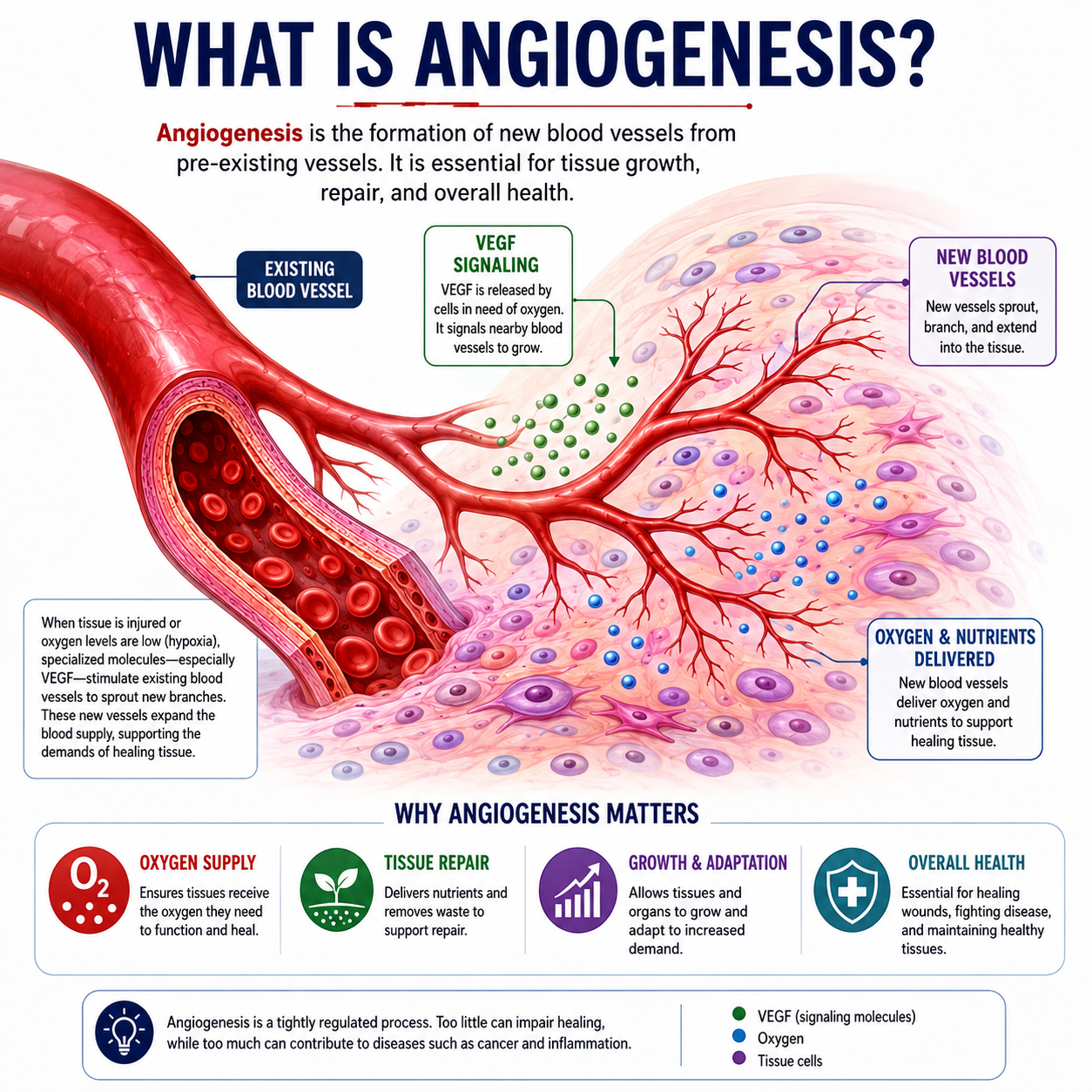
What is angiogenesis, and why does it show up in nearly every conversation about tissue repair, wound healing, and regenerative medicine research?
If you’ve spent any time reading about recovery biology or the mechanisms behind research peptides, you’ve run into this word. It sits at the center of fields as different as oncology, sports medicine, and dermatology. Yet most explanations either stay too shallow (a one-line dictionary definition) or too dense (straight out of a journal abstract).
This guide sits in the middle. By the end, you’ll understand what angiogenesis actually is, how the process unfolds step by step, which molecules control it, why it can help or harm the body depending on context, and how it connects to the broader peptide research landscape.
If you’re newer to this topic, it helps to start with our guides on [what a peptide actually is] and [how peptides work in the body] first the signaling concepts there make the mechanisms below easier to follow.
Table of Contents
What Is Angiogenesis?
Angiogenesis is the biological process by which new blood vessels form by branching off from vessels that already exist. Research literature consistently describes it this way: the growth and remodeling of blood vessels and capillaries from pre-existing vasculature, a process central to both normal development and disease.
The word breaks down from Greek roots angio (vessel) and genesis (origin, creation) so what is angiogenesis, literally, is “the creation of vessels.”
What angiogenesis is not is the original formation of blood vessels from nothing. That separate process, vasculogenesis, happens only during early embryonic development, when precursor cells first assemble into a vascular network before any vessels exist to branch from. Angiogenesis always starts with a vessel that’s already there.
This matters for tissue repair because repairing cells have elevated metabolic needs more oxygen, more nutrients, faster waste removal than resting tissue. Without new vessels extending into the area, repair simply stalls. Angiogenesis is the infrastructure-building step that makes healing possible.
Angiogenesis vs. Vasculogenesis
| Feature | Angiogenesis | Vasculogenesis |
| Definition | New vessels formed from existing vessels | New vessels formed from precursor cells with no existing vessel |
| When it occurs | Throughout life, whenever new vessels are needed | Primarily during embryonic development |
| Starting point | Existing blood vessel wall | Endothelial precursor cells called angioblasts |
| Mechanism | Sprouting and branching from existing vessel | Differentiation and assembly of precursor cells |
| Primary role | Tissue repair, adaptation, growth, disease | Initial creation of the vascular system |
| Relevance to repair | Central, primary mechanism of vascular repair | Limited in adults |
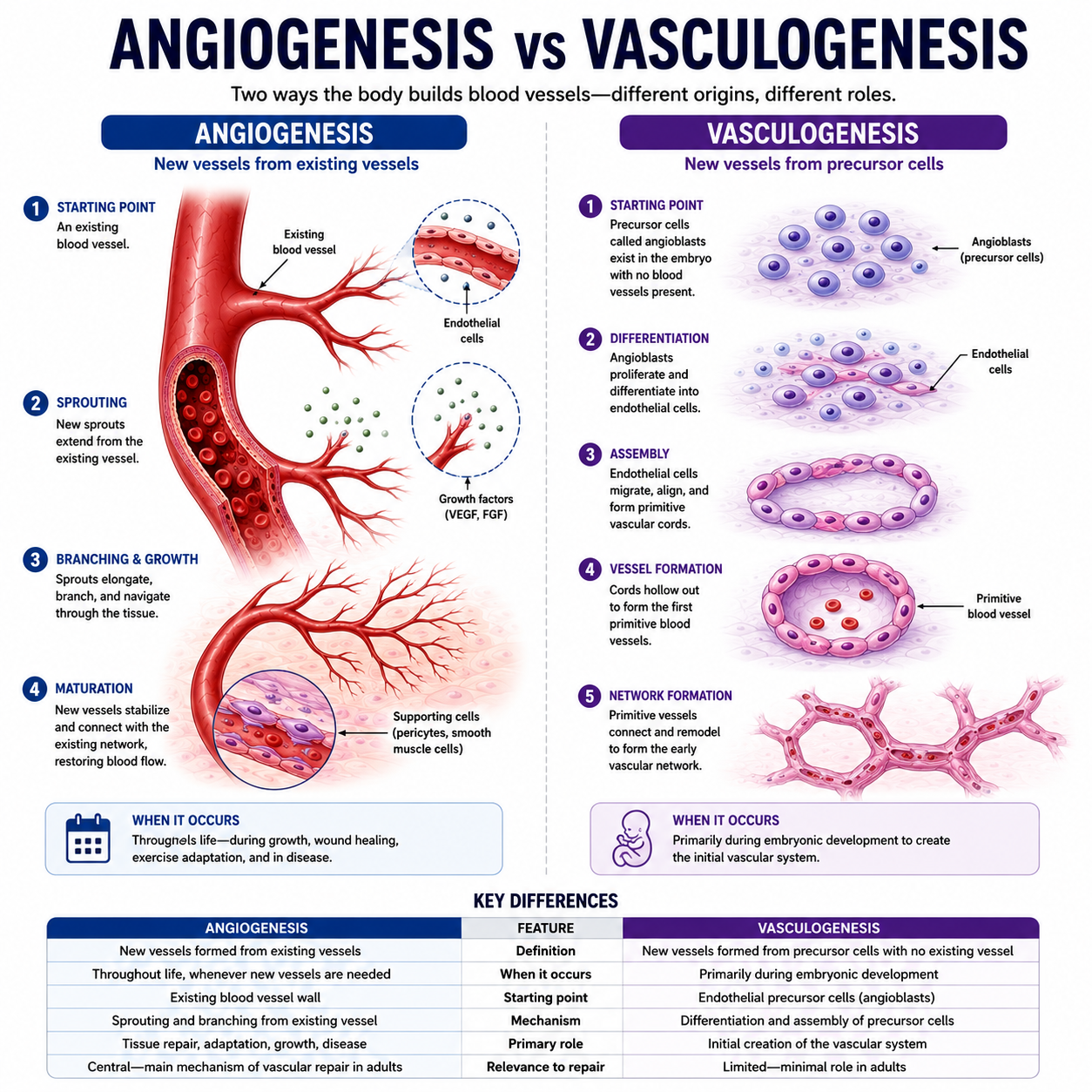
After the embryonic vascular network is laid down through vasculogenesis, virtually every new vessel formed for the rest of a person’s life in wound healing, exercise adaptation, the menstrual cycle, or disease comes from angiogenesis. That makes it the mechanism that matters most for tissue repair and regenerative research.
The Molecular Signals That Control Angiogenesis
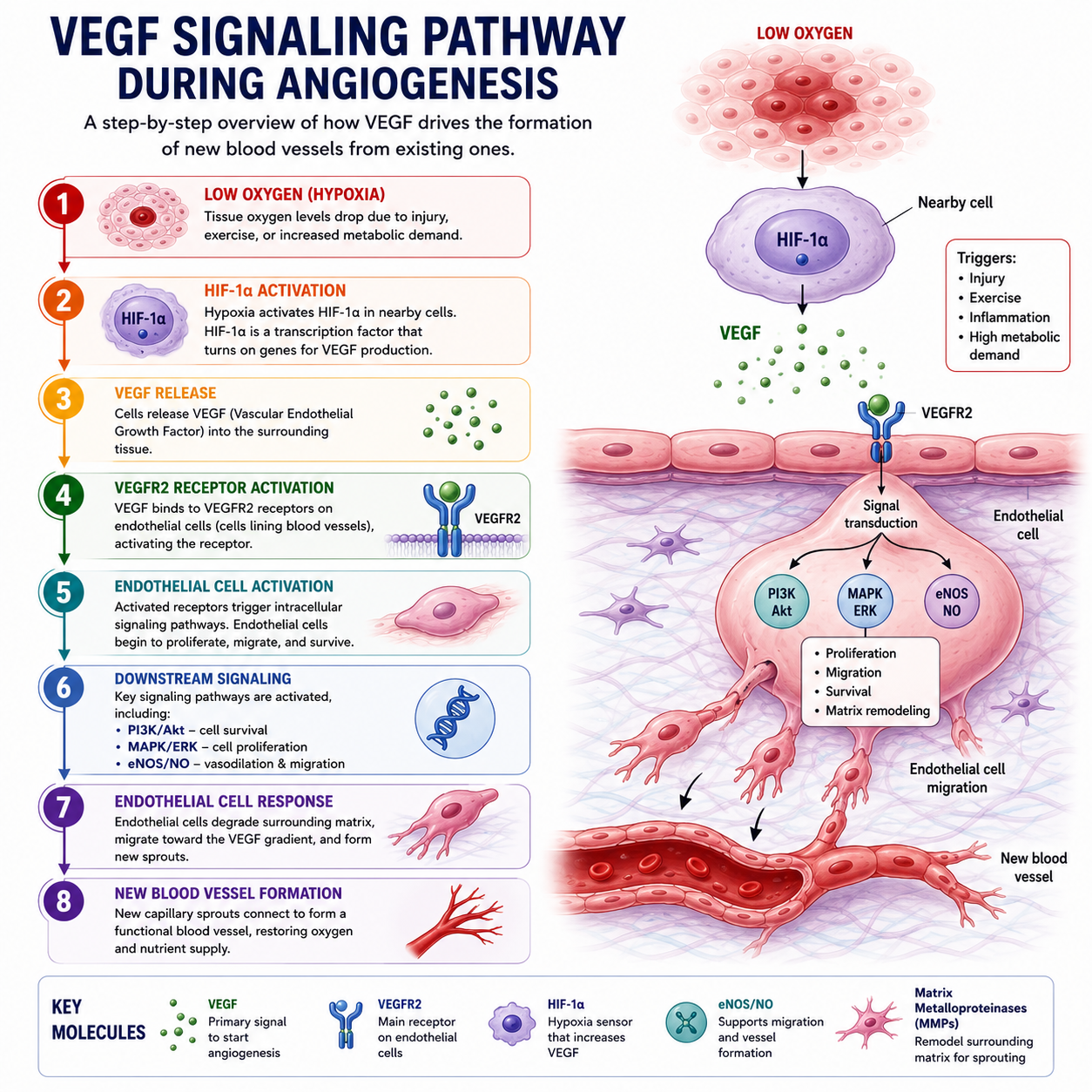
Angiogenesis is governed by a push-pull between pro-angiogenic and anti-angiogenic signals. Endothelial cells the cells lining every blood vessel sit at the center of that balance, proliferating, migrating, and organizing into new vascular structures only when the signaling tips in favor of growth.
Key Molecular Regulators of Angiogenesis
| Molecule | Type | Role in Angiogenesis |
| VEGF (Vascular Endothelial Growth Factor) | Pro-angiogenic | Primary stimulator of endothelial cell proliferation and migration |
| VEGFR2 | Receptor | Primary VEGF receptor on endothelial cells; triggers the angiogenic cascade |
| HIF-1α (Hypoxia-Inducible Factor-1 Alpha) | Pro-angiogenic regulator | Detects low oxygen levels and activates VEGF production |
| FGF (Fibroblast Growth Factor) | Pro-angiogenic | Stimulates endothelial cell proliferation and supports vessel stabilization |
| Angiopoietin-1 | Stabilizing | Stabilizes and matures newly formed blood vessels |
| Angiopoietin-2 | Destabilizing | Loosens existing vessel structure to initiate sprouting |
| Thrombospondin-1 | Anti-angiogenic | Inhibits endothelial cell migration and new vessel formation |
| Endostatin | Anti-angiogenic | Inhibits endothelial cell proliferation |
| Nitric Oxide | Modulating | Regulates vascular tone and supports endothelial cell survival during angiogenesis |
VEGF and VEGFR2 are the central axis of angiogenic signaling.
Vascular endothelial growth factor is one of the most potent pro-angiogenic growth factors. VEGF stimulates angiogenesis and also influences wound closure and epidermal repair, granulation tissue formation, and the quality of repair, both in terms of the strength of the healed wound and the amount of scar tissue deposited.
VEGF is produced by cells that are experiencing low oxygen conditions, a state called hypoxia. When tissues are injured or metabolically active, oxygen levels drop. Cells respond by producing HIF-1a, a transcription factor that activates VEGF gene expression. VEGF is then secreted into the surrounding environment where it binds to VEGFR2 receptors on nearby endothelial cells, the cells that line blood vessel walls, triggering the angiogenic cascade.
Under the control of hypoxia inducible factor, vascular endothelial growth factor induces vasoconstriction and increases permeability via endothelial nitric oxide production.
This oxygen sensing mechanism is fundamentally elegant. Tissues that need more blood supply produce a chemical signal that directly triggers the formation of new blood vessels to supply them. What is angiogenesis at the regulatory level is a demand driven biological process.
The 5 Step Angiogenesis Process
What is angiogenesis broken down into its actual biological steps?
Angiogenesis is a highly regulated process leading to the development of new capillary sprouts from pre-existing microvascular networks. It involves the activation of signaling pathways that result in endothelial cells acquiring a proliferative and migratory phenotype.
Here are the five steps through which new blood vessels form from existing ones:
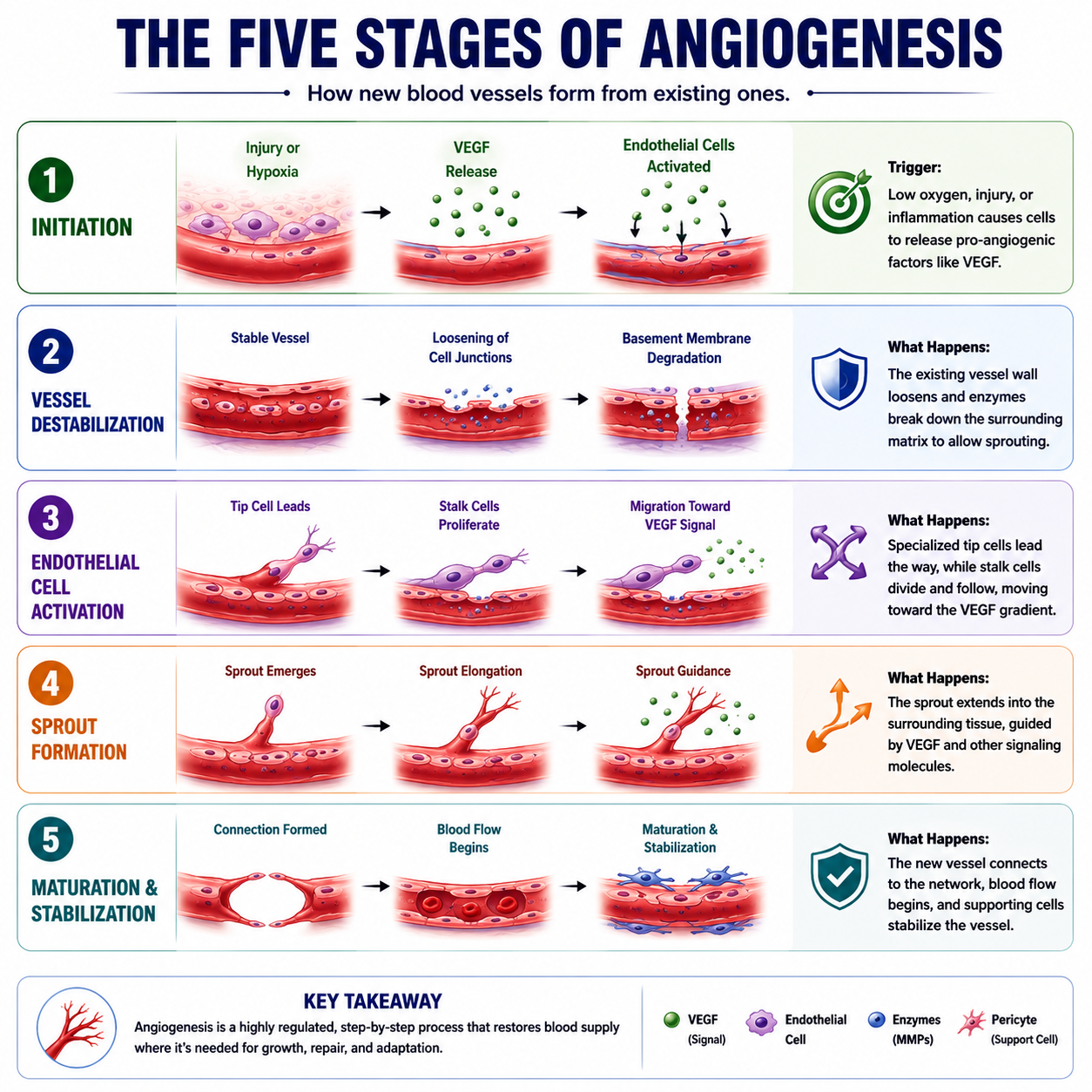
The 5 Step Angiogenesis Process Table
| Step | What Happens | Key Molecules Involved |
| 1. Initiation | Hypoxia or tissue injury triggers VEGF production by surrounding cells | HIF-1α, VEGF |
| 2. Vessel Destabilization | The existing vessel wall loosens, allowing new vessel sprouting to begin | Angiopoietin-2, matrix metalloproteinases (MMPs) |
| 3. Endothelial Cell Activation | Endothelial cells proliferate and migrate toward the VEGF signal | VEGFR2, FGF, nitric oxide |
| 4. Sprout Formation | A new vessel sprout extends into surrounding tissue by following the VEGF gradient | VEGF, tip cells, stalk cells |
| 5. Maturation and Stabilization | The new vessel matures, connects with the existing vascular network, and blood flow begins | Angiopoietin-1, PDGF, smooth muscle cells |
Step 1: Initiation
An angiogenic stimulus, most commonly low oxygen from tissue hypoxia or injury, triggers the production of VEGF and other pro-angiogenic factors. These signals diffuse through the tissue and reach nearby blood vessels.
Step 2: Vessel Destabilization
The existing vessel wall must loosen before sprouting can begin. Angiopoietin-2 and matrix metalloproteinases degrade the proteins anchoring endothelial cells to the vessel basement membrane, allowing them to become mobile.
Step 3: Endothelial Cell Activation
Endothelial cells on the vessel wall respond to VEGF by switching from a resting state to an active, proliferating, and migrating state. A specialized endothelial cell called a tip cell leads the emerging sprout, extending filopodia to sense the VEGF gradient and navigate toward it.
Step 4: Sprout Formation
The tip cell migrates toward the strongest VEGF signal while stalk cells behind it proliferate to lengthen the sprout. The growing sprout extends through the surrounding tissue matrix, guided by the chemical gradient of VEGF and other directional signals.
Step 5: Maturation and Stabilization
Once the sprout connects to another vessel or sprout, blood flow can begin through the new loop. Angiopoietin-1 and platelet-derived growth factor signal the recruitment of supporting cells including pericytes and smooth muscle cells that stabilize the new vessel wall. The new vessel matures into a functional blood vessel capable of sustained tissue perfusion.
Physiological Angiogenesis, When New Vessels Are Essential
What is angiogenesis needed for in normal, healthy biology?
Angiogenesis is not only a response to injury. It is an essential ongoing biological process that occurs throughout life in several normal physiological contexts.
Embryonic Development
After the initial vascular network is established through vasculogenesis, angiogenesis expands and refines that network throughout fetal development. Every organ and tissue requires blood supply, and angiogenesis is the mechanism by which that supply is built and extended as tissues grow.
Female Reproductive Cycle
The uterine lining undergoes cyclical angiogenesis as part of the menstrual cycle. New vessels are formed to build the endometrial lining, and vessel regression occurs during menstruation. During pregnancy, extensive angiogenesis is essential for placental development and function.
Exercise and Muscle Adaptation
Physical exercise creates metabolic demand in muscle tissue that drives local angiogenesis. Regular training leads to increased capillary density in trained muscles, improving oxygen delivery and metabolic capacity. Angiogenesis is the formation of new blood vessels from existing vessels and is a critical first step in tissue repair following chronic disturbances in healing and degenerative tissues.
Wound Healing
Restoration of blood flow to damaged tissues provides oxygen and nutrients required to support the growth and function of reparative cells. An adequate blood supply and sufficient vascularization are necessary to maintain healthy tissues.
Pathological Angiogenesis, When New Vessels Cause Harm
What is angiogenesis when it occurs outside normal physiological regulation?
The same process that is essential for wound healing and development becomes harmful when it occurs at the wrong time, in the wrong place, or at the wrong scale. Understanding what is angiogenesis in its pathological forms is as important as understanding its physiological roles.
Physiological vs Pathological Angiogenesis Comparison Table
| Feature | Physiological Angiogenesis | Pathological Angiogenesis |
| Trigger | Legitimate tissue need, hypoxia, injury, or development | Disease processes, tumor signaling, or chronic inflammation |
| Regulation | Tightly controlled and self-limiting | Dysregulated, excessive, or insufficient |
| Duration | Temporary; stops when the physiological need is met | Persistent; fails to self-limit |
| Vessel Quality | Normal, functional, and stable | Often abnormal, leaky, and unstable |
| Outcome | Tissue repair, development, and physiological adaptation | Disease progression |
| Examples | Wound healing, exercise adaptation, pregnancy | Cancer, diabetic retinopathy, rheumatoid arthritis |
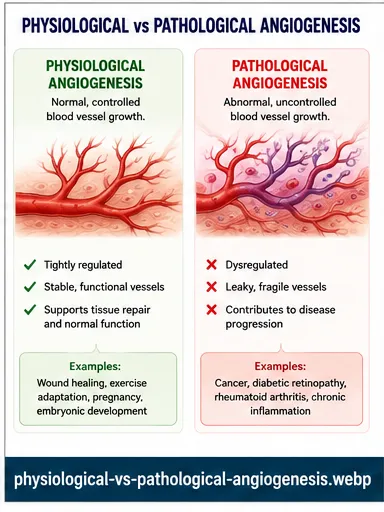
Inappropriate angiogenesis can have severe negative consequences. It is only after solid tumors are vascularized as a result of angiogenesis that the tumors have a sufficient supply of oxygen and nutrients that permit them to grow rapidly and metastasize. Angiogenesis dependent diseases and disorders are those diseases and disorders affected by vascular growth.
In cancer, tumor cells hijack angiogenic signaling to grow their own blood supply. A tumor that remains small and avascular is limited in size by diffusion of oxygen and nutrients from surrounding tissue. Once it acquires the ability to stimulate angiogenesis, it gains access to the circulatory system, enabling rapid growth and metastasis. This is why anti-angiogenic therapies have become a major class of cancer treatments.
In diabetic retinopathy, abnormal angiogenesis in the retina leads to fragile, leaky blood vessels that damage vision. In rheumatoid arthritis, excessive angiogenesis in inflamed joint tissue contributes to disease progression.
The balance of angiogenesis, enough to maintain and repair tissue, but not so much that it becomes dysregulated, is fundamental to health.
Angiogenesis in Tissue Repair and Wound Healing
What is angiogenesis contributing specifically to tissue repair?
Therapeutic stimulation of angiogenesis offers hope in regenerative medicine, particularly for treating ischemic conditions and enhancing tissue repair. Angiogenesis is modulated by a complex interplay of hypoxia inducible factors, nitric oxide, cytokines, and metabolic regulators.
In the context of tissue repair, angiogenesis is not a secondary or supporting process. It is a rate-limiting step. Without adequate new blood vessel formation, repair cells cannot receive the oxygen and nutrients they need to function, collagen synthesis is impaired, fibroblast activity is limited, and the overall pace of healing is slowed.
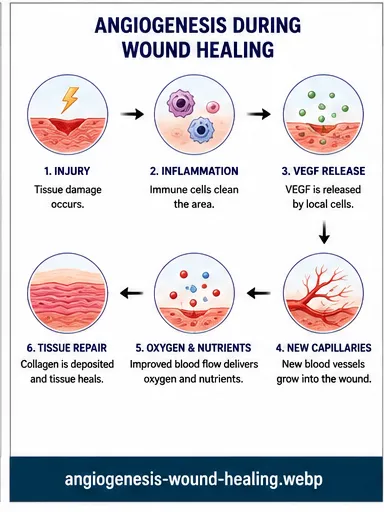
The sequence in wound healing illustrates this clearly:
First, an injury creates a local oxygen deficit. Second, hypoxia triggers VEGF production by surrounding cells. Third, angiogenesis begins, extending new capillaries into the wound bed. Fourth, the improved blood supply supports the activity of fibroblasts, keratinocytes, and other repair cells. Fifth, new tissue is deposited and organized. Sixth, once repair is sufficient, anti-angiogenic signals cause regression of excess vessels and the vasculature normalizes.
A major concern following biological procedures in chronic pathological tissues is the inability to restore an adequate microvascular blood vessel network for oxygen diffusion and nutrient uptake. Preparations that promote vascularization by inducing angiogenesis may play an important role in tissue repair and regeneration.
Chronic wounds and degenerative tissue conditions are often characterized by impaired angiogenesis. The tissue is in a state of attempted repair but lacks the vascular infrastructure to support it. Research into pro-angiogenic approaches for these conditions represents one of the most active areas in regenerative medicine as documented through the National Library of Medicine.
How Peptide Research Intersects with Angiogenesis
What is angiogenesis in the context of peptide science research?
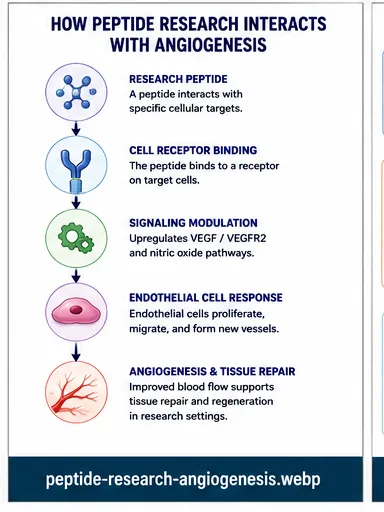
This connection is one of the most scientifically interesting aspects of peptide biology. Several peptides studied in research settings have been found to interact with the angiogenic signaling pathway, primarily through the VEGF and VEGFR2 system.
The mechanism is consistent with the general principles of [how peptides work in the body]. A peptide binds to a specific receptor or modulates a specific signaling pathway. In the case of angiogenesis-related research, the peptide of interest modulates the VEGF signaling cascade, the nitric oxide system, or endothelial cell behavior directly.
Research documented in peer reviewed research databases has explored several aspects of this intersection:
VEGFR2 upregulation has been identified as a mechanism through which certain peptides studied in tissue repair research may stimulate local angiogenesis at injury sites. Increased VEGFR2 expression increases endothelial cell sensitivity to ambient VEGF, effectively lowering the threshold required to initiate new vessel formation.
Nitric oxide pathway modulation is another documented intersection between peptide signaling and angiogenesis. Nitric oxide plays a regulatory role in endothelial cell survival and vessel tone during the angiogenic process. Peptides that modulate the endothelial nitric oxide synthase (eNOS) system can influence angiogenic capacity in the tissues they interact with.
Growth factor upregulation has been documented in several peptide tissue repair studies. Research has shown that certain compounds stimulate the local expression of VEGF and EGF at injury sites, creating a more favorable angiogenic environment for repair processes.
Understanding what is angiogenesis at a mechanistic level is therefore not an isolated topic in peptide education. It is directly relevant to understanding why certain mechanisms appear in the tissue repair research literature and what the biological basis of those mechanisms actually is.
Frequently Asked Questions
What is angiogenesis in simple terms?
What is angiogenesis simply stated is the process by which the body grows new blood vessels by branching them out from vessels that already exist. It is the primary mechanism of vascular expansion and repair throughout adult life.
What is angiogenesis triggered by?
What is angiogenesis triggered by most commonly is tissue hypoxia, the condition of low oxygen that occurs when tissue demand exceeds supply. Hypoxia activates HIF-1a which drives VEGF production which initiates the angiogenic cascade. Injury, inflammation, and certain growth factors can also trigger the process.
What is angiogenesis role in cancer?
What is angiogenesis doing in cancer is providing tumor cells with a blood supply they need to grow beyond a very small size and to metastasize. Tumor cells hijack normal angiogenic signaling by producing excessive VEGF. This is why anti-angiogenic drugs that block VEGF signaling are an established class of cancer therapeutics.
What is angiogenesis and vasculogenesis difference?
What is angiogenesis contributing to wound healing is the blood supply infrastructure that repair requires. Without adequate new vessel formation into the wound bed, repair cells cannot receive oxygen and nutrients, collagen synthesis is impaired, and healing is slowed. Angiogenesis is a rate limiting step in the wound healing cascade.
What is VEGF and how does it relate to angiogenesis?
VEGF, vascular endothelial growth factor, is the primary molecular driver of angiogenesis. It is produced by cells experiencing low oxygen conditions and binds to VEGFR2 receptors on endothelial cells, triggering their proliferation, migration, and organization into new vessel sprouts. What is angiogenesis at the molecular level is largely the story of VEGF signaling.
What is angiogenesis in the context of peptide research?
What is angiogenesis in peptide research is a biological mechanism that several research peptides have been found to interact with. Through VEGFR2 upregulation, nitric oxide pathway modulation, and local growth factor expression, certain research compounds studied for tissue repair applications appear to modulate the angiogenic environment at injury sites.
Key Takeaways
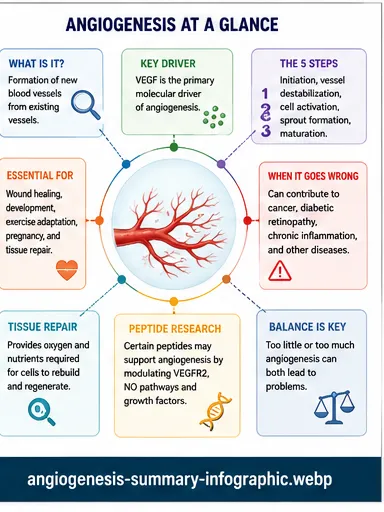
- What is angiogenesis is the formation of new blood vessels from pre-existing vessels, the primary mechanism of vascular expansion and repair throughout adult life
- Angiogenesis differs from vasculogenesis, which creates vessels from scratch during embryonic development. After birth, virtually all new vessel formation occurs through angiogenesis
- VEGF and its receptor VEGFR2 are the central molecular axis of angiogenic signaling. Hypoxia drives HIF-1a which activates VEGF which triggers endothelial cell proliferation and migration
- The five step process involves initiation, vessel destabilization, endothelial cell activation, sprout formation, and maturation and stabilization
- Physiological angiogenesis is essential for embryonic development, reproduction, exercise adaptation, and wound healing
- Pathological angiogenesis occurs when the process is dysregulated, contributing to cancer progression, diabetic retinopathy, and inflammatory disease
- In tissue repair, angiogenesis is a rate limiting step. Without adequate new vessel formation, repair cells lack the oxygen and nutrients needed for effective healing
- Peptide research intersects with angiogenesis through VEGFR2 upregulation, nitric oxide pathway modulation, and local growth factor expression at injury sites
Continue Learning
This post is part of a growing educational library on peptide science. Related reading:
- [What Is a Peptide?] The foundational guide to what peptides are and how they function as biological signals
- [How Do Peptides Work in the Body?] The complete guide to receptor binding, signal transduction, and the four modes of cellular communication
- [What Is Peptide Purity?] How to verify research compound quality and what a Certificate of Analysis tells you
- What Is Cellular Senescence? Coming next in this educational series
This content is for educational and informational purposes only. It does not constitute medical advice, diagnosis, or treatment recommendations. Always consult a qualified healthcare professional before making any decisions related to your health.