

By Pepkitshop | Peptide Coach and Educator
Updated July 2026 | Educational Content, Not Medical Advice
What is collagen and how is it different from collagen peptides and why does this distinction matter for anyone trying to understand the science behind these widely used terms?
Collagen and collagen peptides are two of the most commonly discussed compounds in wellness, skincare, and sports nutrition. They appear on product labels, in research literature, and in everyday conversations about joint health, skin aging, and recovery. Yet the difference between them, what collagen actually is structurally, how collagen peptides are made, why they behave differently in the body, and what the research actually shows about each, is rarely explained with scientific accuracy.
This guide provides that explanation. By the end you will understand what is collagen and how is it different from collagen peptides at every level, from molecular structure through absorption biology and the evidence base for each.
If you are new here, start with our foundational guide on [what a peptide actually is] before continuing. Understanding peptide structure first makes the collagen biology significantly clearer.
Table of Contents
What Is Collagen?
What is collagen in plain biological terms?
Collagen is the most abundant structural protein in the body, helping support the framework of skin, tendons, cartilage, and connective tissue.
More precisely, collagen accounts for approximately 30 percent of the total protein mass of the human body. It is the primary structural protein of the extracellular matrix, the biological scaffold that gives tissues their mechanical strength, flexibility, and integrity.
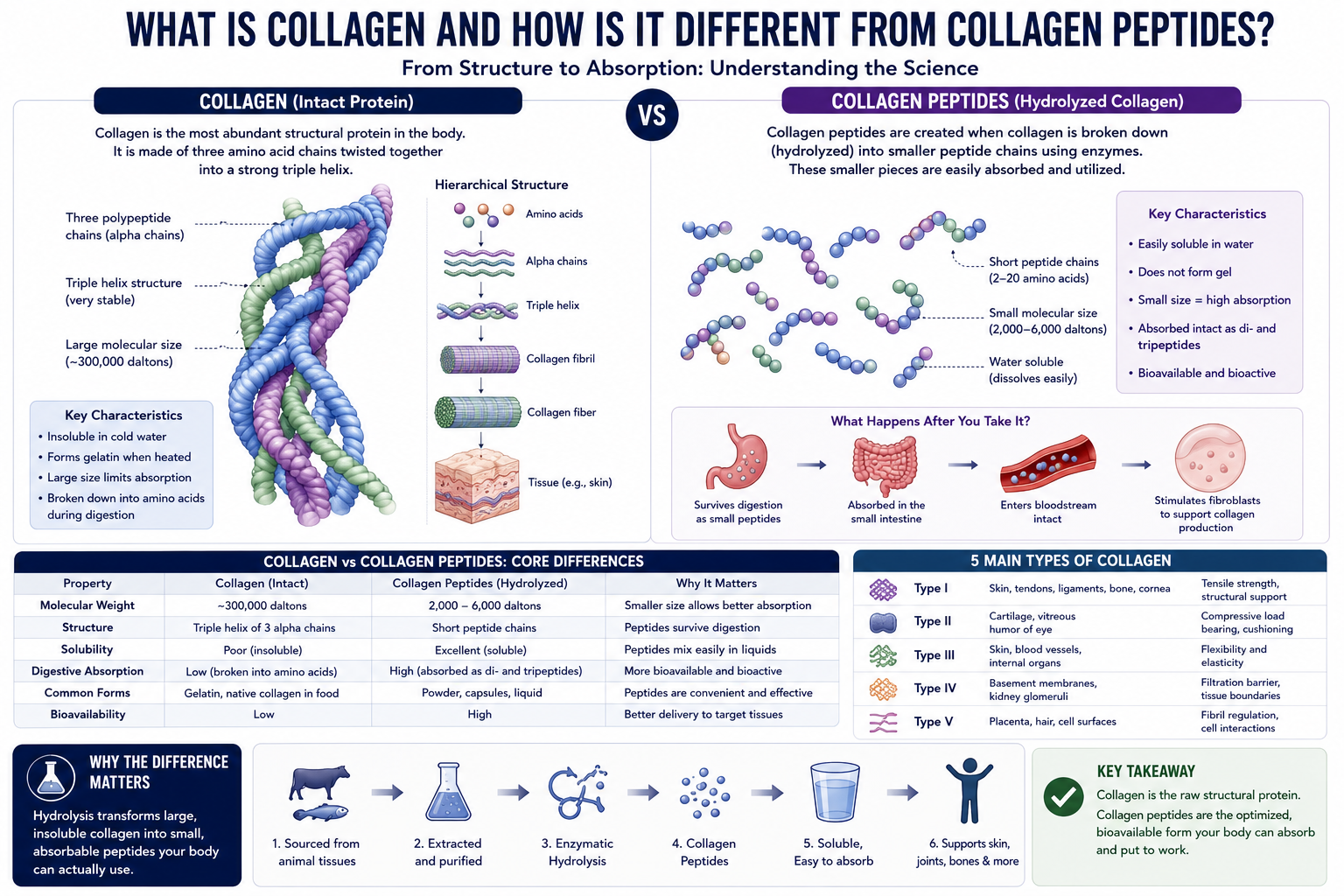
What is collagen doing in specific tissues? It provides tensile strength to skin, making it resistant to tearing. It gives tendons and ligaments the mechanical properties needed to transmit force and withstand load. It forms the organic framework of bone into which minerals are deposited. It maintains the structural integrity of blood vessel walls, cartilage, corneas, and intervertebral discs.
Collagen is the most abundant protein in the human body, accounting for roughly 30% of your total protein mass. It serves as the primary structural glue that holds everything together.
What is collagen at the most fundamental level is a structural scaffolding protein, an essential building material that the body produces continuously throughout life but at a declining rate with age. After approximately age 25, collagen synthesis begins to decrease at a rate of roughly 1 to 1.5 percent per year. By age 40, many individuals have lost a measurable proportion of their collagen density across multiple tissue types.
The Molecular Structure of Collagen
What is collagen built from at the molecular level?
Collagen has a distinctive and highly organized molecular architecture that is unlike most other proteins. Understanding this structure is essential for understanding what is collagen and how is it different from collagen peptides.
At the most basic level, collagen is a protein, meaning it is built from amino acids linked together in chains. What makes collagen structurally unique is its characteristic amino acid composition and the way those chains organize themselves.
The Amino Acid Composition of Collagen
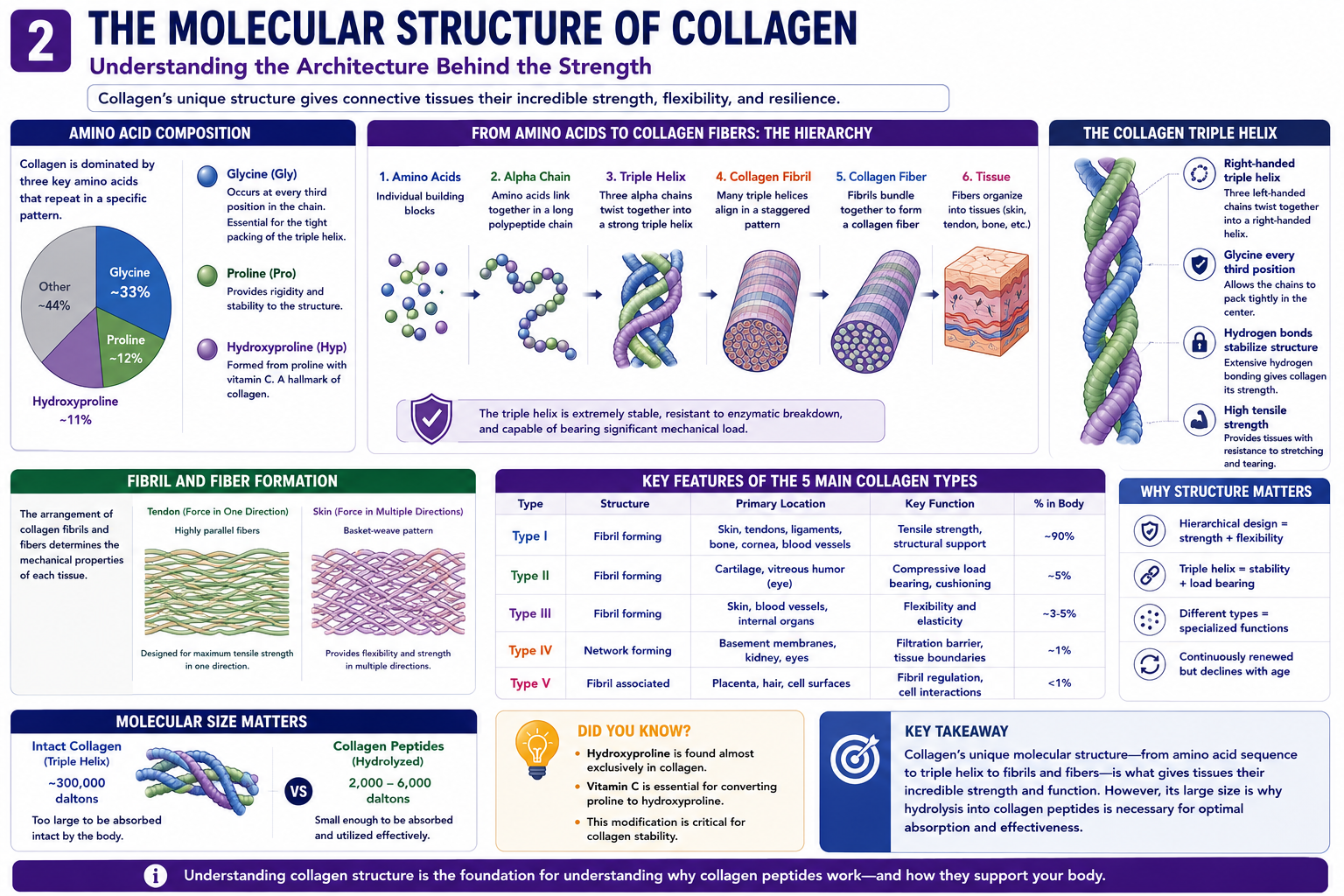
Collagen chains are dominated by three amino acids: glycine, proline, and hydroxyproline. Glycine appears at every third position in the collagen chain, a regularity that is essential for the protein’s structure. Proline and hydroxyproline provide the rigidity that gives collagen its mechanical properties. Hydroxyproline, formed by the modification of proline using vitamin C, is so characteristic of collagen that its presence is used as a biochemical marker for collagen content in tissue analysis.
The Triple Helix
Three individual collagen polypeptide chains, called alpha chains, coil around each other to form a triple helix. This is the distinctive structural signature of collagen. The triple helix is an extraordinarily stable molecular structure, resistant to enzymatic degradation and capable of bearing significant mechanical load.
Fibril and Fiber Formation
Triple helices assemble in a staggered arrangement to form collagen fibrils, which in turn bundle into collagen fibers. The diameter of these fibers and their arrangement within tissue determines the mechanical properties of that tissue. Tendons, which must transmit force in one direction, have highly parallel collagen fiber arrangements. Skin, which must resist force from multiple directions, has a more basket-weave arrangement.
This hierarchical structure, from amino acid to chain to triple helix to fibril to fiber to tissue, is why intact collagen is a very large molecule with a molecular weight of approximately 300,000 daltons. That size has direct implications for how collagen behaves when consumed.
The 5 Main Types of Collagen and Where They Are Found
What is collagen organized into in terms of biological types?
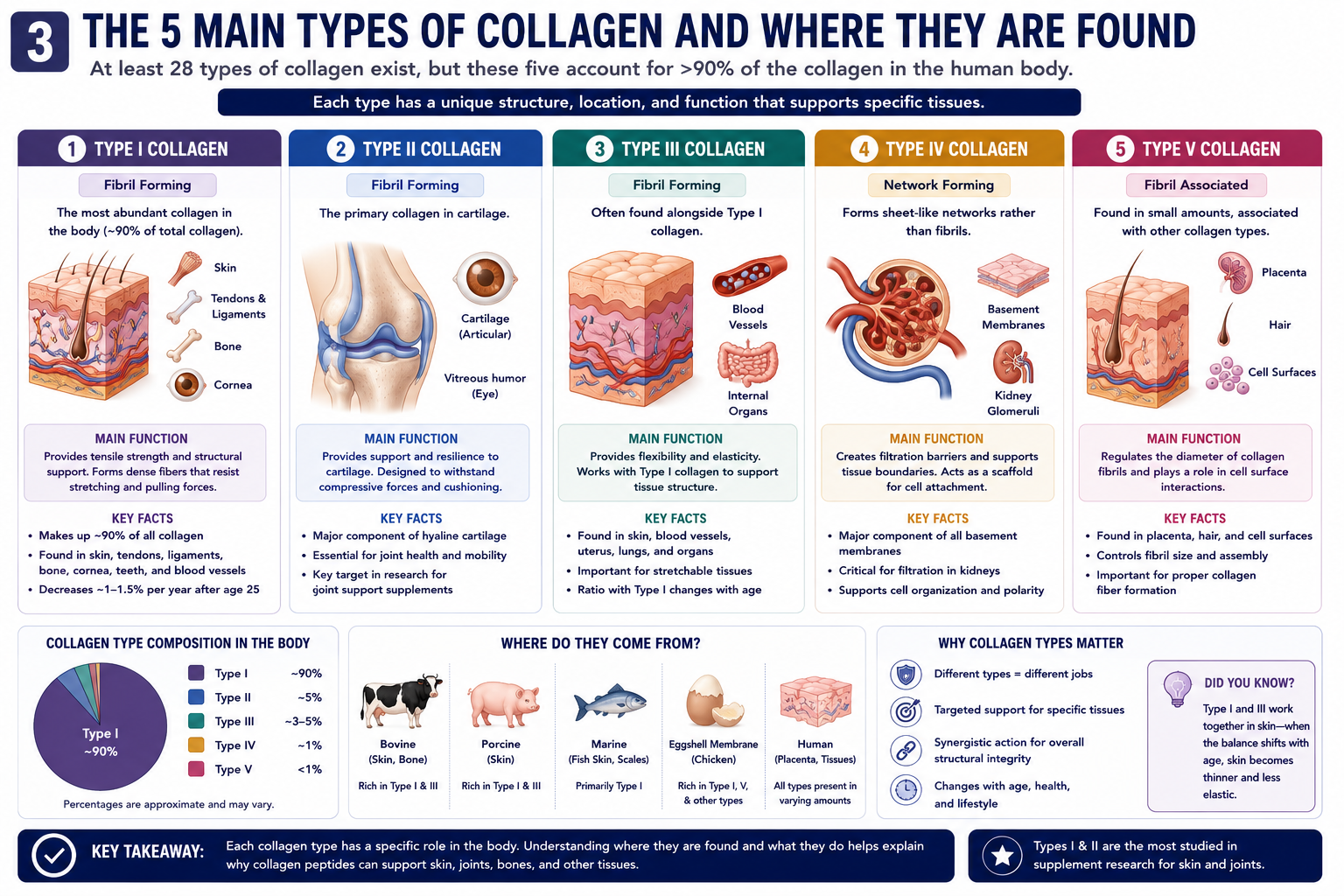
There are at least 28 identified collagen types, though five account for the vast majority of collagen in the human body. Each type has a specific tissue distribution and specific mechanical properties.
The 5 Main Collagen Types Comparison Table
| Type | Structure | Primary Location | Main Function |
|---|---|---|---|
| Type I | Fibril forming | Skin, tendons, ligaments, bone, cornea | Tensile strength, structural support |
| Type II | Fibril forming | Cartilage, vitreous humor of eye | Compressive load bearing, joint cushioning |
| Type III | Fibril forming | Skin, blood vessels, internal organs | Flexibility and elasticity alongside Type I |
| Type IV | Network forming | Basement membranes, kidney glomeruli | Filtration barrier, tissue boundary formation |
| Type V | Fibril associated | Placenta, hair, cell surfaces | Fibril diameter regulation, cell interactions |
Type I collagen is the most abundant, comprising approximately 90 percent of all collagen in the body. It is the primary collagen of skin, tendons, ligaments, and bone. When collagen supplements are described as supporting skin or joint health, they are typically targeting Type I and Type II collagen respectively.
Type II collagen is the dominant collagen of cartilage. It has different mechanical properties from Type I, being particularly suited to resisting compressive forces rather than tensile loads. Research into collagen supplementation for joint health has focused substantially on Type II collagen and its precursors.
Type III collagen frequently occurs alongside Type I and contributes to the flexibility and elasticity of skin and blood vessel walls. The ratio of Type I to Type III collagen in skin changes with age, contributing to the changes in skin texture and resilience that accompany aging.
What Is Collagen and How Is It Different From Collagen Peptides?
What is collagen and how is it different from collagen peptides at the level that actually matters for understanding the science?
Collagen peptides, also known as hydrolyzed collagen, represent a scientifically advanced approach to collagen supplementation. These are collagen proteins that have been broken down through a process called hydrolysis into smaller, more manageable fragments. During hydrolysis, enzymes break the large collagen molecules into smaller peptide chains containing 2 to 20 amino acids. This process dramatically reduces the molecular weight, making the peptides small enough for your digestive system to absorb and utilize effectively.
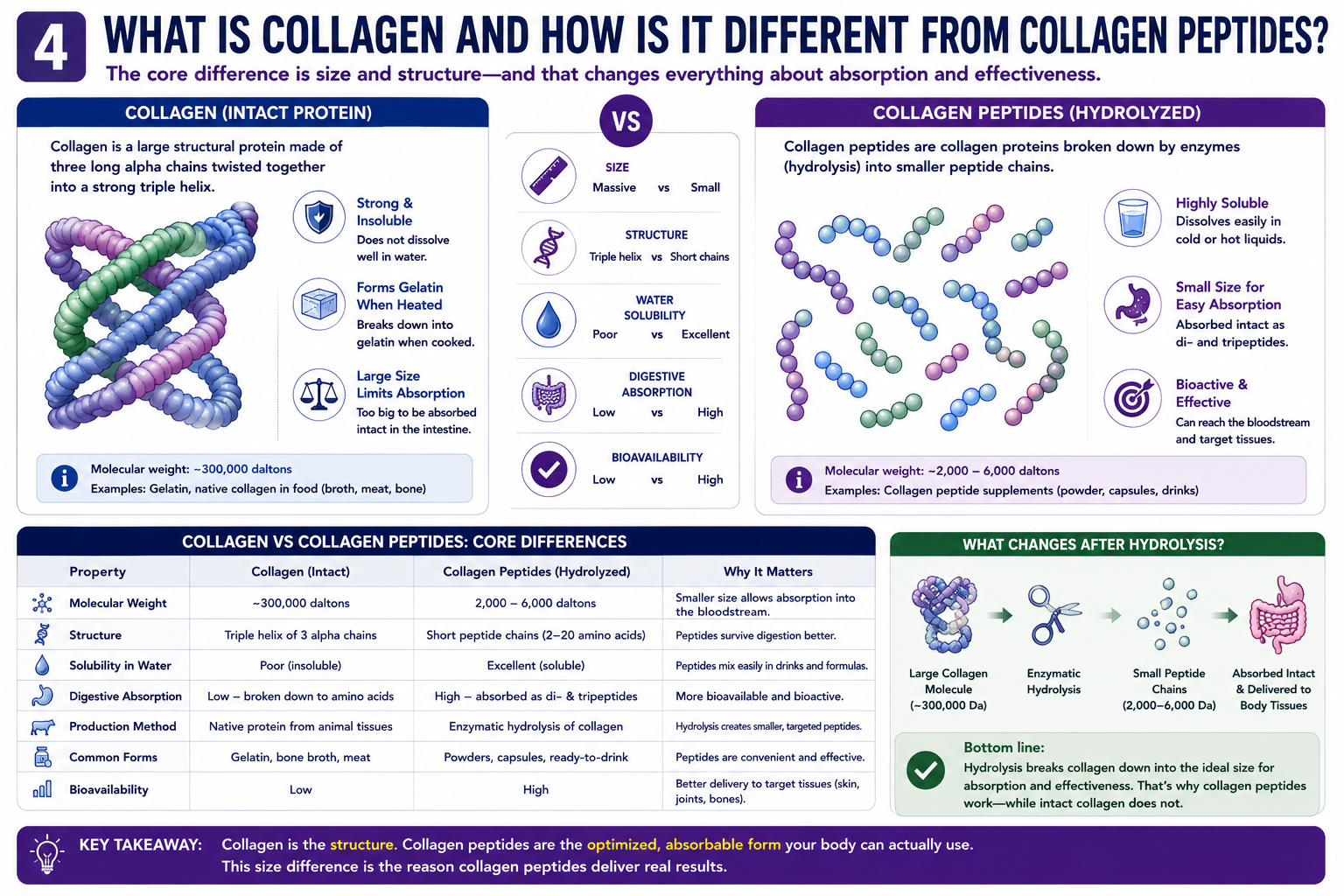
The core distinction is size and therefore biological behavior:
Collagen vs Collagen Peptides, Core Differences
| Property | Intact Collagen | Collagen Peptides (Hydrolyzed) |
|---|---|---|
| Molecular weight | Approximately 300,000 daltons | 2,000 to 6,000 daltons |
| Structure | Triple helix of three alpha chains | Short individual peptide chains |
| Solubility in water | Poor, forms gels (gelatin) when heated | Excellent, dissolves easily in liquid |
| Digestive absorption | Limited, largely broken down before absorption | High, absorbed intact as di and tripeptides |
| Production method | Native protein from animal tissue | Enzymatic hydrolysis of collagen |
| Common forms | Gelatin, native collagen in food | Collagen supplement powders, capsules |
| Bioavailability | Low | High |
Both hydrolyzed collagen and collagen peptides are created through a process called hydrolysis, which breaks down the large collagen molecules found in animal tissues into smaller chains of amino acids. Think of it like cutting a long chain into shorter links. The smaller pieces dissolve easily in liquids and are easier for your body to absorb.
A critical clarification is worth making here. The terms collagen peptides and hydrolyzed collagen are largely interchangeable in common use. There is no functional difference between hydrolyzed collagen and collagen peptides. These terms are synonymous and refer to collagen that has been broken down into smaller, easily absorbable chains of amino acids. Hydrolyzed describes the process of breaking it down, while peptides describes the final result.
The distinction that actually matters scientifically is not between hydrolyzed collagen and collagen peptides as labels, but between intact collagen and hydrolyzed forms. That is the distinction that determines bioavailability, absorption, and biological behavior.
How Hydrolysis Creates Collagen Peptides
What is collagen and how is it different from collagen peptides at the manufacturing level?
The transformation from intact collagen to collagen peptides occurs through enzymatic hydrolysis, a controlled chemical process that uses water and specific enzymes to break peptide bonds within the collagen chain.
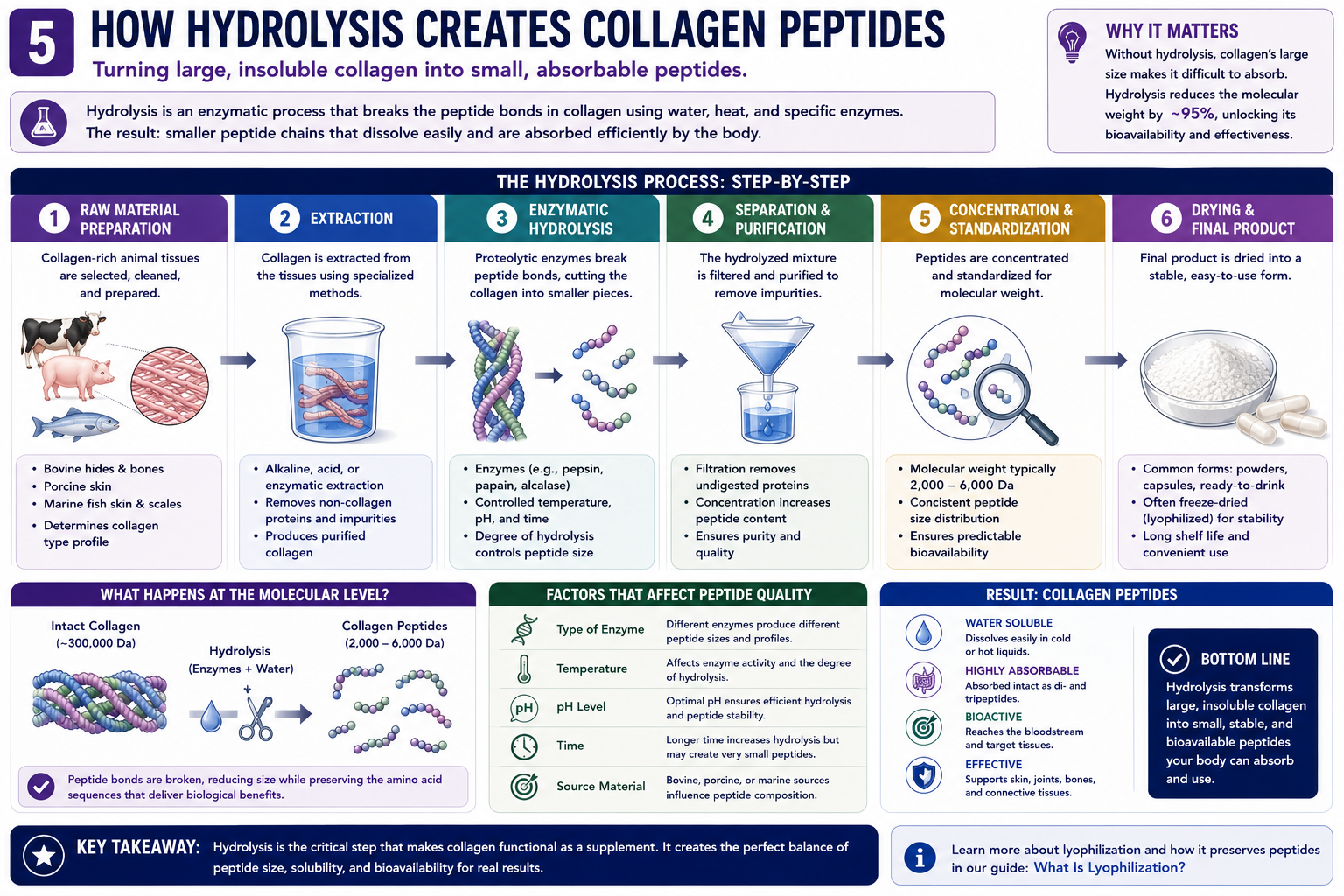
The process typically follows these steps:
Step 1: Raw Material Preparation
Collagen-rich animal tissues, typically bovine hides and bones, porcine skin, or marine fish scales and skin, are processed and cleaned. The source material determines the predominant collagen type in the final product.
Step 2: Extraction
Collagen is extracted from the raw material, typically using alkaline, acid, or enzymatic methods depending on the tissue type and desired product characteristics.
Step 3: Enzymatic Hydrolysis
Specific proteolytic enzymes are added to the extracted collagen under controlled conditions of temperature and pH. These enzymes cleave peptide bonds at specific points along the collagen chain, producing fragments of controlled size. The degree of hydrolysis and the enzymes chosen determine the average molecular weight of the resulting peptides.
Step 4: Purification and Processing
The hydrolyzed collagen is filtered, concentrated, and processed to remove impurities. The molecular weight distribution of the final product is an important quality parameter. As covered in our post on [lyophilization], the final product is often freeze dried into a stable powder form.
Hydrolyzed collagen consists of peptides with low molecular weight, typically ranging from 3 to 6 kDa. This form of collagen is produced by enzymatic action in either acidic or alkaline conditions, which breaks down the collagen into smaller, more bioavailable peptides. The low molecular weight of hydrolyzed collagen peptides enhances their solubility and functional activity.
Understanding what is collagen and how is it different from collagen peptides at the manufacturing level helps clarify why the process matters. The enzymatic hydrolysis step is not simply breaking collagen into random fragments. Controlled hydrolysis produces specific peptide sizes with specific absorption and biological properties. This is why manufacturing quality and molecular weight specifications matter when evaluating collagen peptide products.
Bioavailability, Why Collagen Peptides Absorb Differently
What is collagen and how is it different from collagen peptides in terms of how the body actually processes them?
Intact collagen has a molecular weight of around 300,000 daltons. Collagen peptides, after hydrolysis, usually sit between 3,000 and 6,000 daltons. This massive reduction in size is the reason why hydrolyzed collagen is so effective. The hydrolysis process is what transforms a massive, insoluble protein into small, soluble peptides. This transition is what makes collagen functional as a supplement, allowing it to dissolve in water and, more importantly, be absorbed into the bloodstream.
When intact collagen protein is consumed, the digestive system breaks it down through normal protein digestion. Stomach acid and digestive proteases cleave the protein into individual amino acids and small peptide fragments before absorption. The triple helix structure of collagen is largely disrupted during this process, and the resulting amino acids are used by the body for general protein synthesis rather than specifically directed to collagen producing cells.
Collagen peptides, by contrast, are already hydrolyzed to small sizes before consumption. Collagen peptides, particularly those enriched with specific dipeptides like prolyl-hydroxyproline and hydroxyprolyl-glycine, have shown significant resistance to digestive and systemic enzymes. This resistance suggests improved absorption efficiency and enhanced skin properties. Studies have demonstrated that these peptides can be absorbed into the bloodstream and transported to the skin, where they exert beneficial effects.
The specific dipeptides and tripeptides that survive digestion and reach the bloodstream are believed to act as bioactive signals, potentially stimulating fibroblasts and other collagen producing cells. This signaling mechanism, rather than simple amino acid provision, is the current leading hypothesis for how collagen peptide supplementation produces its documented effects.
What the 2026 Research Shows About Collagen Peptides
What is collagen and how is it different from collagen peptides in terms of the current evidence base?
Collagen Peptide Research Evidence Summary Table
| Research Area | Evidence Level | Key Finding | Timeframe |
|---|---|---|---|
| Skin hydration | Strong, multiple RCTs | Significant improvement in skin hydration after supplementation | 4 to 12 weeks |
| Skin elasticity | Strong, multiple RCTs | Measurable improvement in skin elasticity and reduction in wrinkle depth | 8 to 12 weeks |
| Joint comfort | Moderate, several studies | Reduction in joint discomfort in active individuals | 12 to 24 weeks |
| Cartilage support | Moderate | Accumulation of collagen peptides in cartilage tissue documented | Ongoing |
| Bone density | Early stage | Promising results in postmenopausal women when combined with calcium | 12 months |
| Muscle support | Early stage | Some evidence for lean mass support when combined with resistance training | 12 weeks |
Research suggests collagen peptides as a dietary supplement may support skin health through clinical studies showing that daily supplementation typically for 8 to 12 weeks can improve skin hydration, elasticity, and reduce wrinkle depth. Joint support has also been observed, with some studies suggesting collagen peptides may help reduce joint discomfort and support cartilage health especially in active individuals. A 2025 study concluded that collagen supplementation demonstrated promising results on bones, muscles, and joints.
The skin hydration and elasticity evidence for collagen peptides is among the most consistent in the supplement research literature. Multiple randomized controlled trials have documented measurable improvements, and the biological mechanism, through specific bioactive dipeptides reaching skin fibroblasts, provides a plausible explanation for these effects.
Joint research is somewhat more variable in its findings, with studies differing in population, dosage, and outcome measures. The cartilage accumulation data, showing that collagen derived peptides do reach cartilage tissue after oral consumption, has strengthened the biological plausibility of joint benefits. More detail on this research is available through the National Library of Medicine and peer reviewed research databases.
Collagen vs Collagen Peptides vs Research Peptides
What is collagen and how is it different from collagen peptides, and how do both differ from the research peptides discussed elsewhere on this site?
This distinction is important for anyone reading across peptide science topics.
Three Categories Compared
| Category | What It Is | Primary Use | Regulatory Status | Research Context |
|---|---|---|---|---|
| Intact Collagen | Full length structural protein, triple helix | Food ingredient, gelatin | Food grade, unregulated as supplement | General protein research |
| Collagen Peptides | Hydrolyzed collagen, 2,000 to 6,000 daltons | Dietary supplement | Supplement grade, FDA GRAS category | Skin, joint, and bone research |
| Research Peptides | Synthetic peptides, specific sequences, often 1,000 to 5,000 daltons | Laboratory research | Research use only designation | Mechanistic biology research |
Collagen peptides are dietary supplements produced from food-derived collagen proteins. They are regulated as food ingredients or dietary supplements depending on jurisdiction. They are widely consumed by the general public and have an established safety profile.
Research peptides, as discussed throughout this educational library, are synthetic compounds produced through solid phase peptide synthesis with specific amino acid sequences designed to interact with particular biological targets. They carry research use only designations and are not approved for human therapeutic use. Understanding what is collagen and how is it different from collagen peptides includes recognizing that both are distinct from the synthetic research peptide category, even though all three involve chains of amino acids.
The connection between them is [peptide synthesis], the shared chemistry of amino acid chains, but the regulatory context, manufacturing processes, intended uses, and evidence bases are fundamentally different.
Frequently Asked Questions
What is collagen and how is it different from collagen peptides in simple terms?
What is collagen is a very large structural protein, approximately 300,000 daltons, built from three amino acid chains coiled into a triple helix. What is collagen and how is it different from collagen peptides is that collagen peptides are the same protein broken down by enzymes into much smaller fragments, typically 2,000 to 6,000 daltons, that the body can absorb directly into the bloodstream.
Are collagen peptides and hydrolyzed collagen the same thing?
Yes. What is collagen peptides and what is hydrolyzed collagen refer to the same product. Hydrolyzed collagen describes the process used to make it, while collagen peptides describes the resulting product. The terms are used interchangeably in research and commercial contexts.
What collagen types are most important for research?
Type I collagen, the most abundant in skin, tendons, and bone, is most relevant to skin aging and structural tissue research. Type II collagen, found in cartilage, is most relevant to joint research. What is collagen type research is an active area with ongoing investigation into the biological differences between collagen types and their specific health applications.
How quickly do collagen peptides show effects in research?
Research on skin hydration has shown measurable improvements within 4 weeks of consistent supplementation. Skin elasticity changes typically appear after 8 to 12 weeks. Joint comfort research generally uses 12 to 24 week study periods. What is collagen peptides research consistently showing is that consistency of use over weeks rather than days is necessary to observe documented effects.
Does cooking destroy collagen?
Cooking collagen rich foods does not destroy collagen but transforms it. The application of heat to collagen breaks the triple helix structure into a denatured form called gelatin. Gelatin is still a collagen derived protein but has different properties from either intact collagen or enzymatically hydrolyzed collagen peptides.
What is the difference between marine and bovine collagen peptides?
Both are collagen peptides, differentiated by source. Marine collagen peptides come from fish scales and skin, are predominantly Type I, and have a smaller average molecular size which some research suggests may enhance absorption. Bovine collagen peptides come from cow hides and bones and contain a mix of Type I and Type III. What is collagen peptides source research shows that both types produce comparable outcomes in the areas that have been studied.
What is collagen and how is it different from collagen peptides in terms of digestion?
What is collagen when consumed as intact protein is broken down by the digestive system into amino acids and small peptide fragments, similar to other dietary proteins. What is collagen and how is it different from collagen peptides in digestion is that collagen peptides are pre-hydrolyzed to sizes that survive digestion and reach the bloodstream as intact bioactive di and tripeptides, which may have specific signaling effects beyond simple amino acid provision.
Key Takeaways
- is collagen is the most abundant structural protein in the human body, comprising approximately 30 percent of total protein mass, organized into a distinctive triple helix structure
- Five main collagen types exist, with Type I being most abundant in skin, tendons, and bone, and Type II being the primary cartilage collagen
- What is collagen and how is it different from collagen peptides is primarily a matter of molecular size. Intact collagen is approximately 300,000 daltons. Collagen peptides after hydrolysis are 2,000 to 6,000 daltons
- Collagen peptides and hydrolyzed collagen are the same product described by different terminology. Hydrolyzed describes the process, peptides describes the result
- The size reduction through enzymatic hydrolysis dramatically improves water solubility and digestive absorption, allowing specific bioactive peptides to reach the bloodstream intact
- 2026 research shows strong evidence for skin hydration and elasticity benefits after 8 to 12 weeks, moderate evidence for joint support, and early stage evidence for bone and muscle applications
- Collagen peptides are dietary supplements distinct from synthetic research peptides, which are produced through solid phase synthesis with specific sequences for laboratory research purposes
Continue Learning
This post is part of a growing educational library on peptide science and biology. Related reading:
- [What Is a Peptide?] The foundational guide to what peptides are and how they function as biological signals
- [What Is Peptide Synthesis?] How synthetic research peptides are built using solid phase chemistry
- [What Is Lyophilization?] How freeze drying preserves both collagen peptides and research peptides in stable powder form
- What Is Nitric Oxide and Why Does It Matter for Vascular Health? Coming next in this educational series
Subscribe for updates as this educational library continues to grow, evidence based science explained clearly without hype.
This content is for educational and informational purposes only. It does not constitute medical advice, diagnosis, or treatment recommendations. Always consult a qualified healthcare professional before making any decisions related to your health.