
No products in the cart.

Vial products: price per kit of 10 vials. Quantity 1 = 10 vials. Capsule products are priced per capsule pack as listed. Dismiss
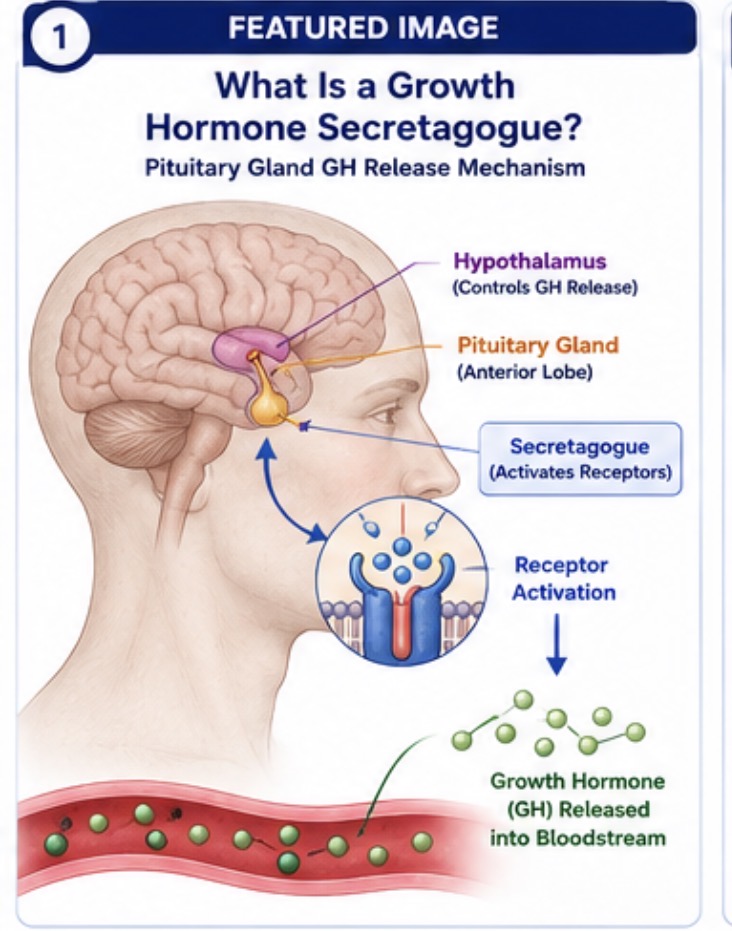
What is a growth hormone secretagogue and why does this category of compounds occupy such a significant place in peptide research?
Growth hormone secretagogues represent one of the most extensively studied classes of compounds in the field of endocrinology and peptide science. They have been investigated in peer reviewed research for over four decades. They have produced one FDA approved therapeutic. And they continue to be among the most searched topics in peptide education worldwide.
Yet for all the attention they receive, the actual science of what is a growth hormone secretagogue how these compounds work, which biological pathways they engage, and what the research evidence shows is rarely explained clearly and completely.
This guide answers the question fully. By the end you will understand what is a growth hormone secretagogue at a mechanistic level, how the two primary receptor pathways differ, what role somatostatin plays in growth hormone regulation, and what distinguishes secretagogues from synthetic growth hormone itself.
If you are new here, start with our guide on [what a peptide actually is] and then read our post on [how peptides work in the body] before continuing. Understanding receptor binding and signal transduction first makes the secretagogue mechanism significantly clearer.
What is a growth hormone secretagogue in plain terms?
A growth hormone secretagogue is a compound that stimulates the pituitary gland to secrete growth hormone by activating one or both of two specific receptor pathways in the hypothalamus and pituitary. The word secretagogue comes from the Latin root meaning to stimulate secretion. A growth hormone secretagogue, therefore, is literally a compound that causes growth hormone to be secreted.
What is a growth hormone secretagogue not? It is not growth hormone itself. This distinction is fundamental and frequently misunderstood. Growth hormone secretagogues do not introduce exogenous growth hormone into the body. They signal the pituitary gland to produce and release more of the growth hormone it naturally manufactures.
Growth hormone secretagogues are synthetic peptidyl and nonpeptidyl molecules with strong, dose dependent, and reproducible growth hormone releasing activity. They release GH via actions on specific receptors at the pituitary and mainly at the hypothalamic levels.
This distinction between stimulating natural production and introducing synthetic hormone is not merely technical. It determines the physiological pattern of hormone release, the feedback mechanisms that remain active, and the regulatory oversight that continues to operate. Understanding what is a growth hormone secretagogue requires holding this distinction clearly throughout.
What is a growth hormone secretagogue in its historical context?
The story of growth hormone secretagogue research begins in the early 1980s with the work of Dr. Cyril Y. Bowers and colleagues. In the early 1980s, Bowers and colleagues identified the first member of a class of synthetic growth hormone releasing compounds whose actions were potent and selective for GH secretion. Direct GH releasing activity at the pituitary level was observed in vitro, providing evidence for a direct pituitary action and the GH releasing mechanism was clearly different to that of growth hormone releasing hormone.
This was a significant discovery because it revealed an entirely separate pathway for stimulating growth hormone release, distinct from the naturally occurring growth hormone releasing hormone (GHRH) that was already known.
The field expanded rapidly through the 1990s as researchers at Merck and other institutions began identifying non-peptide compounds that could activate the same receptor. Merck scientists elucidated the mechanism of action by showing that these compounds stimulated GH release from pituitary somatotrophs by amplifying GHRH signaling and by antagonizing somatostatin action. This mechanism and the knowledge that certain chemical structures could mimic small peptides led to the discovery of several non-peptide growth hormone secretagogues.
The identification of the specific receptor that these compounds activate, published in Science in 1996, was a landmark moment. It established the biological basis for the entire secretagogue class and opened the door to a new understanding of growth hormone regulation in the hypothalamic pituitary axis.
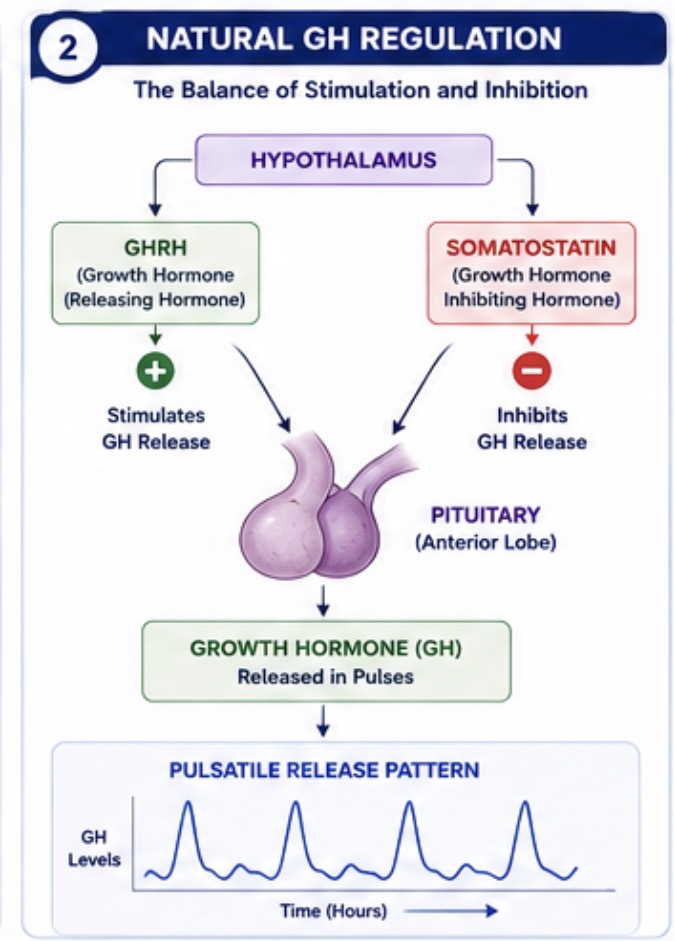
To fully understand what is a growth hormone secretagogue, it is essential to first understand the natural system it interacts with.
Growth hormone secretion from the pituitary gland is controlled by a finely balanced interplay between two opposing signals from the hypothalamus:
Growth Hormone Releasing Hormone (GHRH) is the primary stimulatory signal. It is produced in the hypothalamus and travels to the pituitary where it binds to GHRH receptors on somatotroph cells, stimulating them to produce and release growth hormone.
Somatostatin is the primary inhibitory signal. Also produced in the hypothalamus, somatostatin acts as a brake on growth hormone release. When somatostatin levels are high, growth hormone secretion is suppressed even in the presence of GHRH.
The result is a pulsatile pattern of growth hormone release. GH is not secreted continuously. It is released in pulses, typically with the largest pulse occurring during deep sleep. Each pulse represents a moment when GHRH signaling is dominant and somatostatin suppression is temporarily reduced.
GH secretagogues present a tool for furthering our understanding of the control of GH secretion. These compounds activate the receptors of a putative endogenous ligand in the hypothalamus and pituitary. Acting as functional somatostatin antagonists, GH secretagogues potentiate the actions of GHRH on GH secretion, enhancing pulsatile GH secretion.
Growth hormone production also declines significantly with age. Research has consistently documented a reduction of approximately 14 percent per decade after age 30, contributing to age related changes in body composition, recovery capacity, and metabolic function. This age related decline in the GH axis is one of the primary areas of interest in growth hormone secretagogue research.
What is a growth hormone secretagogue mechanism at the receptor level?
Understanding the receptor biology is the key to understanding what distinguishes different secretagogue compounds from each other. There are two primary receptor pathways through which growth hormone secretagogues operate.
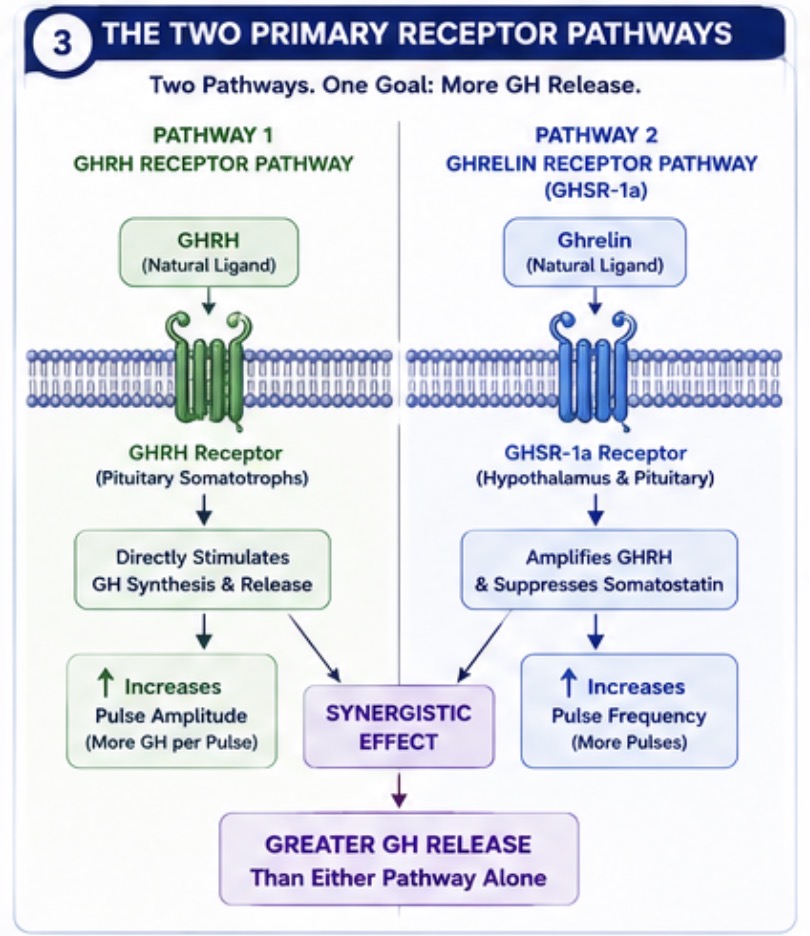
GHRH Pathway vs Ghrelin Receptor Pathway Comparison Table
| GHRH Receptor Pathway | Ghrelin Receptor Pathway (GHSR-1a) | |
|---|---|---|
| Natural ligand | Growth Hormone Releasing Hormone | Ghrelin |
| Primary location | Pituitary somatotroph cells | Hypothalamus and pituitary |
| Mechanism | Directly stimulates GH synthesis and release | Amplifies GHRH signaling, suppresses somatostatin |
| Effect on GH pulse | Increases amplitude of GH pulses | Increases frequency of GH pulses |
| Combined with other pathway | Synergistic, greater effect than either alone | Synergistic, greater effect than either alone |
| Research class | GHRH analogs | GHRPs and ghrelin mimetics |
Pathway 1: The GHRH Receptor
Compounds that activate the GHRH receptor directly mimic the action of natural growth hormone releasing hormone. They bind to GHRH receptors on pituitary somatotroph cells and stimulate the synthesis and pulsatile release of growth hormone. The primary effect of GHRH receptor activation is an increase in the amplitude of each growth hormone pulse, meaning more GH is released with each secretory event.
Pathway 2: The Ghrelin Receptor (GHSR-1a)
The growth hormone secretagogue receptor, also known as the ghrelin receptor, is involved in mediating a wide variety of biological effects including stimulation of growth hormone release, increase of food intake and body weight, modulation of glucose and lipid metabolism, regulation of gastrointestinal motility and secretion, protection of neuronal and cardiovascular cells, and regulation of immune function.
Compounds that activate GHSR-1a work through a different but complementary mechanism. They primarily act at the hypothalamic level, amplifying the activity of GHRH secreting neurons and simultaneously suppressing somatostatin. The primary effect is an increase in the frequency of growth hormone pulses, meaning GH is released more often.
The Synergistic Effect
When both pathways are activated simultaneously, the combined effect on growth hormone release is significantly greater than either pathway alone. This synergy is one of the most important findings in secretagogue research. Compounds operating through these two complementary mechanisms have been shown in research to produce growth hormone release several fold greater than either compound could achieve independently.
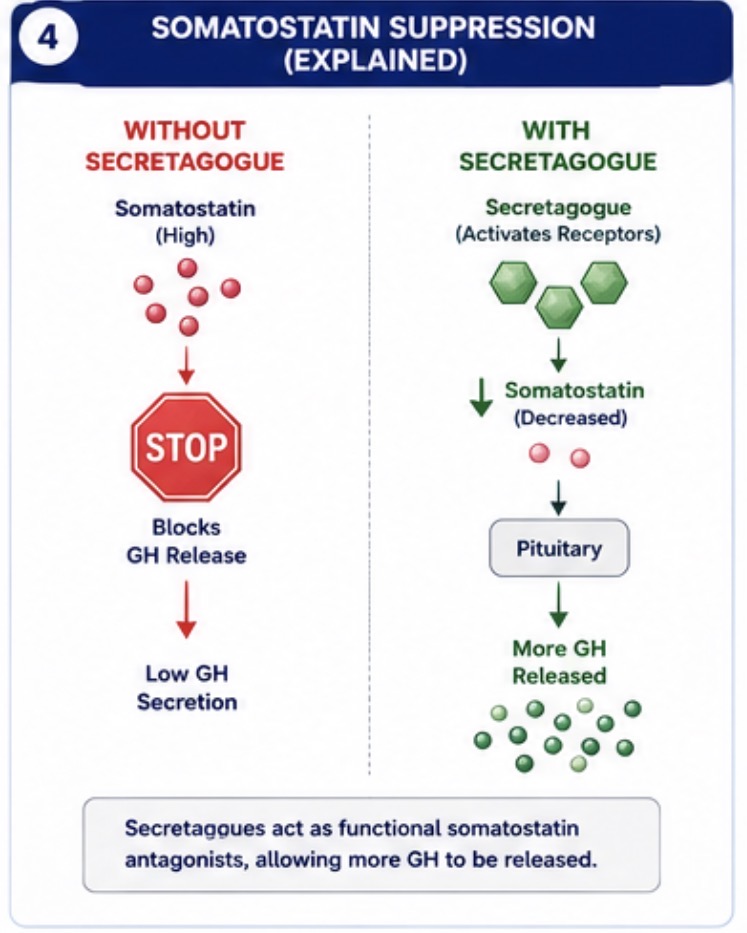
What is a growth hormone secretagogue without understanding somatostatin? Incomplete.
Somatostatin is a peptide hormone produced in the hypothalamus that acts as the primary inhibitory regulator of growth hormone secretion. Understanding somatostatin is essential to understanding why growth hormone secretagogues work the way they do.
When somatostatin levels are elevated, growth hormone release from the pituitary is suppressed regardless of how much GHRH is present. Somatostatin effectively turns off the GH secretion system at the pituitary level.
GH secretagogues act as functional somatostatin antagonists and simultaneously enhance the activity of GHRH secreting neurons. This dual action, stimulating GHRH activity while suppressing somatostatin, is what produces the enhanced pulsatile GH release observed with these compounds.
The somatostatin suppression mechanism is particularly relevant because it explains the pulsatile nature of secretagogue induced GH release. Unlike synthetic growth hormone administration which produces a sustained, supraphysiological elevation of GH levels in the bloodstream, secretagogues that work through somatostatin suppression allow GH to be released in pulses that more closely mimic natural physiological patterns.
This preservation of pulsatile release is considered significant in the research context because natural GH pulsatility is associated with different downstream effects than sustained GH elevation.
What is a growth hormone secretagogue compared to synthetic growth hormone itself?
This comparison is one of the most important distinctions in the field and one that is frequently confused in popular media coverage of peptide science.
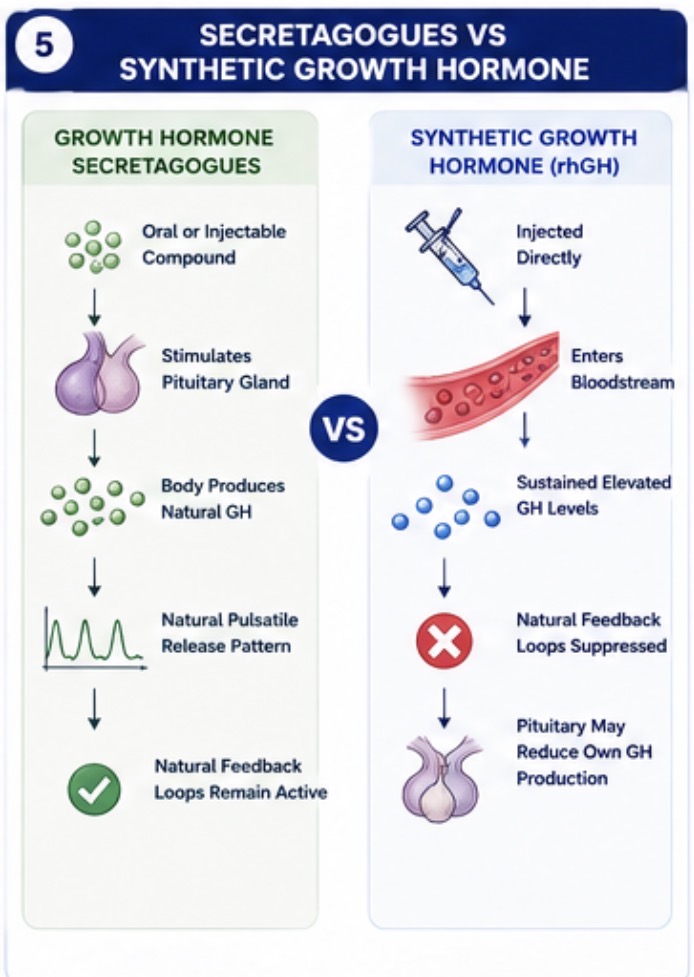
Growth Hormone Secretagogues vs Synthetic Growth Hormone Comparison Table
| Growth Hormone Secretagogues | Synthetic Growth Hormone (rhGH) | |
|---|---|---|
| What it introduces | A signaling compound that stimulates natural GH production | Synthetic GH directly into the bloodstream |
| GH release pattern | Pulsatile, mimics natural physiological pattern | Sustained, supraphysiological elevation |
| Feedback mechanisms | Natural feedback loops remain active | Natural feedback loops can be suppressed |
| Pituitary involvement | Pituitary continues to function naturally | Pituitary function may be suppressed over time |
| IGF-1 response | Physiological, follows GH pulse pattern | Elevated, sustained |
| FDA approval status | One approved therapeutic (tesamorelin). Others are research compounds | Several approved therapeutics for specific indications |
| Research classification | Peptide or non peptide signaling compounds | Recombinant protein therapeutic |
The key distinction is that secretagogues preserve the body’s own regulatory machinery. The hypothalamic pituitary axis continues to function. Natural feedback loops remain active. The pituitary continues to respond to somatostatin. When secretagogue administration stops, the system returns to its baseline state because the underlying physiology was never bypassed, only stimulated.
Synthetic growth hormone administration, by contrast, introduces exogenous GH directly. This can suppress the pituitary’s natural GH production through feedback inhibition. The hypothalamic pituitary axis recognizes elevated GH levels and responds by reducing its own production signals.
This physiological difference is one of the central reasons growth hormone secretagogues have attracted sustained research interest as an alternative approach to investigating the GH axis.
What is a growth hormone secretagogue’s relationship to IGF-1?
Understanding the GH to IGF-1 axis is essential for a complete picture of what is a growth hormone secretagogue and how its effects propagate through the body.
When growth hormone is released from the pituitary, it travels through the bloodstream to the liver where it stimulates the production of Insulin-like Growth Factor 1, abbreviated IGF-1. IGF-1 is itself a peptide hormone with widespread anabolic effects across multiple tissues including muscle, bone, and connective tissue.
Many of the downstream effects associated with growth hormone signaling are actually mediated by IGF-1 rather than by GH directly. IGF-1 acts in an endocrine fashion, traveling through the bloodstream to distant tissues, as well as in paracrine and autocrine fashions in local tissue environments
The GH to IGF-1 Signaling Cascaded
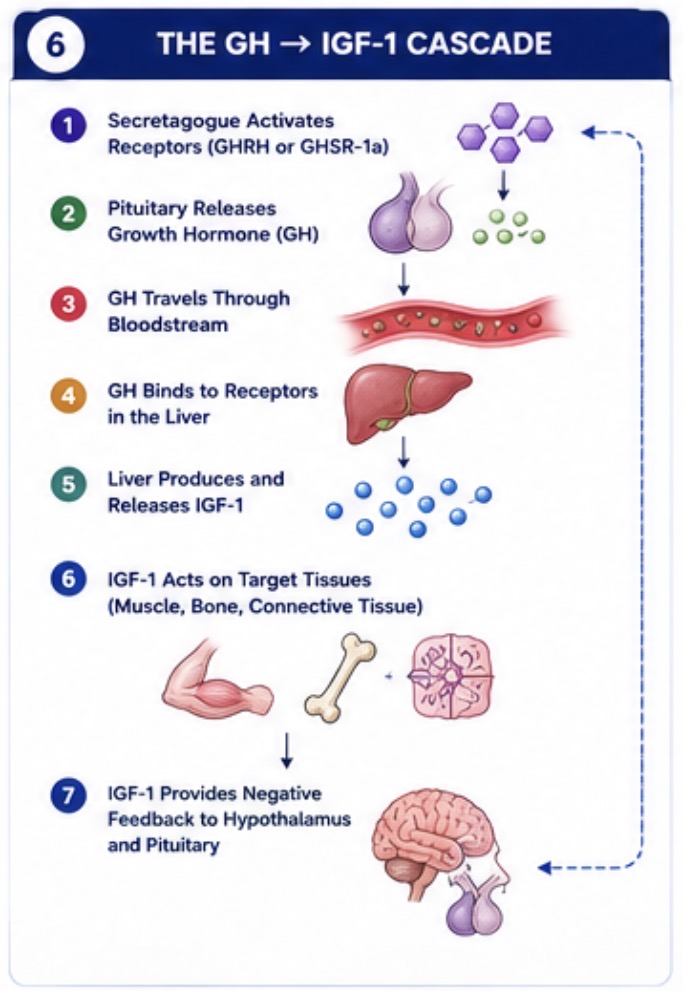
| Step | Event | Location |
|---|---|---|
| 1 | Secretagogue activates GHRH receptor or GHSR-1a | Hypothalamus and pituitary |
| 2 | Pituitary somatotroph cells release growth hormone | Pituitary gland |
| 3 | GH travels through bloodstream | Systemic circulation |
| 4 | GH binds GH receptors in the liver | Liver |
| 5 | Liver produces and releases IGF-1 | Liver to systemic circulation |
| 6 | IGF-1 acts on target tissues including muscle, bone, and connective tissue | Multiple tissue types |
| 7 | IGF-1 provides negative feedback to hypothalamus and pituitary | Hypothalamus and pituitary |
The negative feedback loop in step 7 is important. IGF-1 signals back to the hypothalamus and pituitary to reduce GH secretion when levels are sufficiently elevated. This self regulating mechanism is one of the reasons secretagogue induced GH release tends to remain within a physiological range, as opposed to the unchecked elevation that can occur with exogenous GH administration that bypasses this feedback.
Research available through the National Library of Medicine documents this GH to IGF-1 cascade in extensive detail across multiple tissue types and age groups.
What is a growth hormone secretagogue in the current research landscape of 2026?
The research literature on growth hormone secretagogues in 2026 shows several important developments:
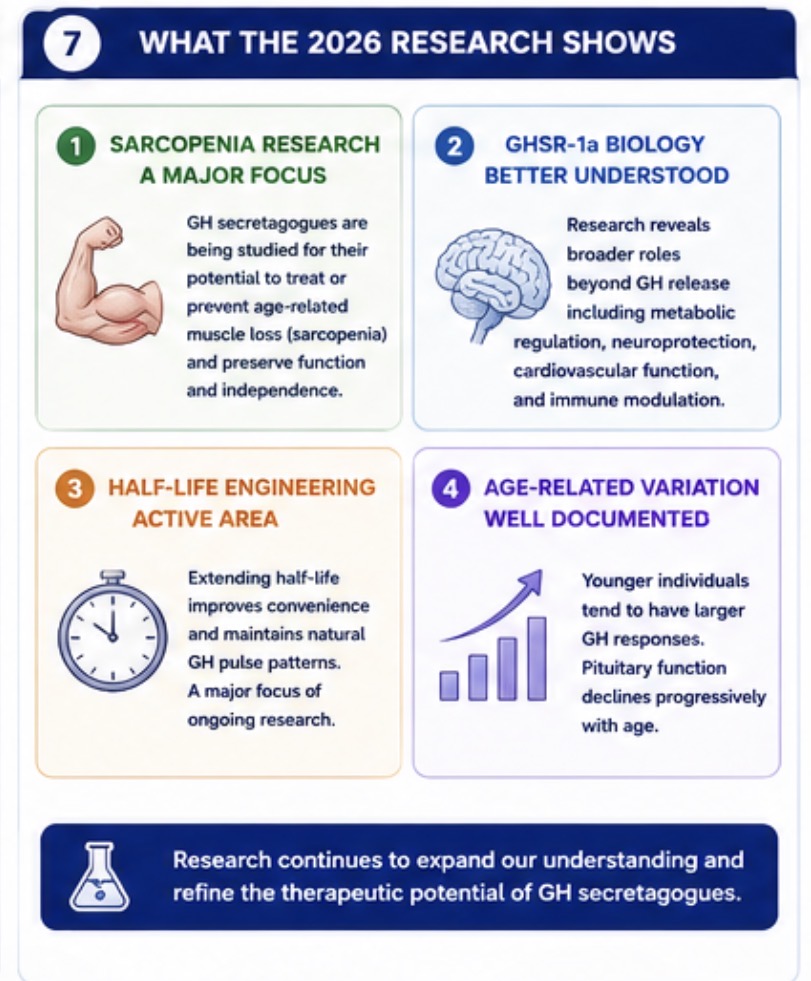
Sarcopenia research is a major focus. Age related musculoskeletal impairment as a result of muscle wasting, known clinically as sarcopenia, represents a significant clinical challenge. GH secretagogues could provide a well tolerated clinical approach for treating or preventing sarcopenia and perhaps forestalling age associated decline in function and independence. Such efficacy would have a great social impact.
GHSR-1a signaling complexity is better understood. Research published through peer reviewed research databases has continued to map the diverse downstream effects of ghrelin receptor activation, revealing that GHSR-1a plays roles beyond GH release including metabolic regulation, neuroprotection, and cardiovascular function. This broader receptor biology is becoming increasingly relevant to research design.
Half life engineering remains an active area. Extending the functional half life of secretagogue compounds to reduce administration frequency while maintaining physiological GH pulse patterns is one of the most active areas of research and development in this class.
Age related variation in response is well documented. Research has consistently shown that the GH releasing effect of secretagogues undergoes marked age related variations. Younger subjects tend to show larger GH responses to secretagogue stimulation than older subjects, reflecting the progressive decline in pituitary somatotroph function that occurs with aging.
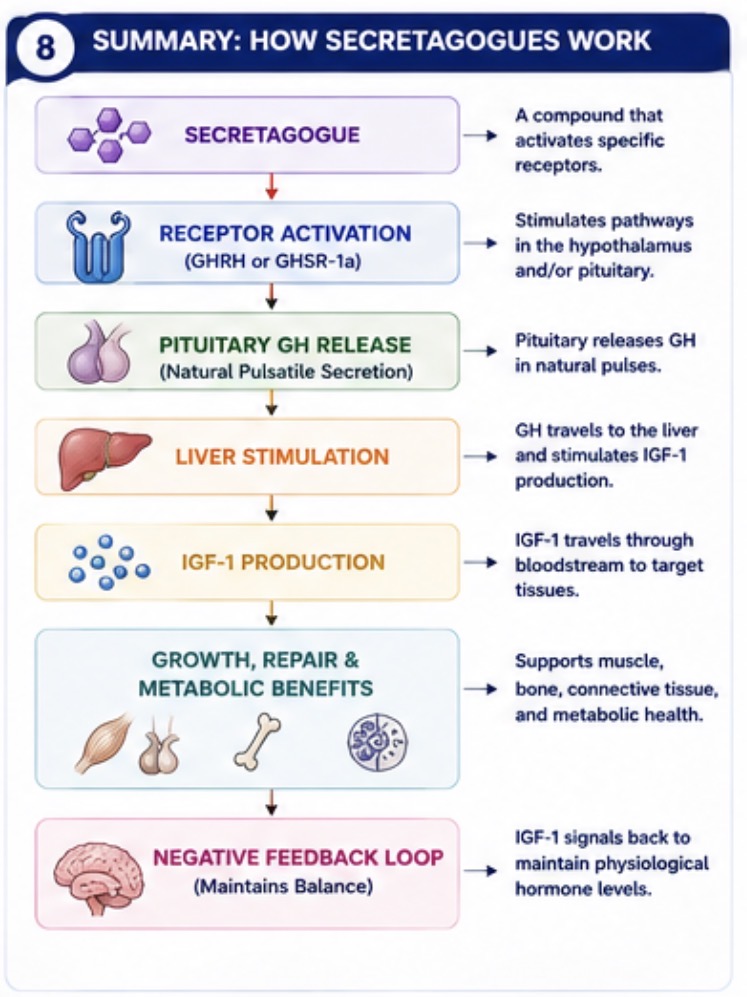
What is a growth hormone secretagogue at its most basic is a compound that signals the pituitary gland to release growth hormone by activating specific receptors in the hypothalamus and pituitary. It stimulates natural GH production rather than introducing synthetic GH.
What is a growth hormone secretagogue doing is fundamentally different from exogenous GH administration. A secretagogue activates the body’s own GH production system. Synthetic GH bypasses that system by introducing growth hormone directly. Secretagogues preserve natural feedback loops and pulsatile release patterns. Exogenous GH does not.
What is a growth hormone secretagogue mechanism involves two receptor pathways. GHRH receptor activation stimulates GH amplitude at the pituitary. Ghrelin receptor activation amplifies GHRH signaling and suppresses somatostatin at the hypothalamus, increasing GH pulse frequency. Together these pathways produce a synergistic increase in pulsatile GH release.
Somatostatin is the primary inhibitory regulator of growth hormone release from the pituitary. Many growth hormone secretagogues act as functional somatostatin antagonists, suppressing this inhibitory signal and allowing GH to be released more freely. This somatostatin suppression is a key part of how secretagogues produce their effects.
When a growth hormone secretagogue stimulates GH release, that GH travels to the liver and stimulates IGF-1 production. Many of the downstream biological effects associated with GH signaling are mediated by IGF-1 rather than GH directly. IGF-1 also provides negative feedback to the hypothalamus and pituitary, helping maintain GH levels within a physiological range.
What is a growth hormone secretagogue studied for in research spans several areas including sarcopenia and age related muscle loss, metabolic function, the biology of the GH and IGF-1 axis, and the effects of restoring more youthful GH pulsatility in aging populations. Research is conducted in both preclinical and clinical settings.
Continue Learning
This post is part of a growing educational library on peptide science. Related reading:
This content is for educational and informational purposes only. It does not constitute medical advice, diagnosis, or treatment recommendations. Always consult a qualified healthcare professional before making any decisions related to your health.
10-vial kits • Capsule packs as listed • Research use only
© 2026 Pepkitshop. All rights reserved.
Vial product prices are per kit of 10 vials. Quantity 1 = 10 vials. Capsule products retain the pack size stated on their listing.
All products are supplied strictly for laboratory research. They are not intended for human or veterinary use, consumption, diagnosis, or treatment.
WhatsApp us
 Optimized by Seraphinite Accelerator
