
No products in the cart.

Vial products: price per kit of 10 vials. Quantity 1 = 10 vials. Capsule products are priced per capsule pack as listed. Dismiss
By Pepkitshop | Peptide Research Education
Updated August 2026 | Educational Content, Not Medical Advice
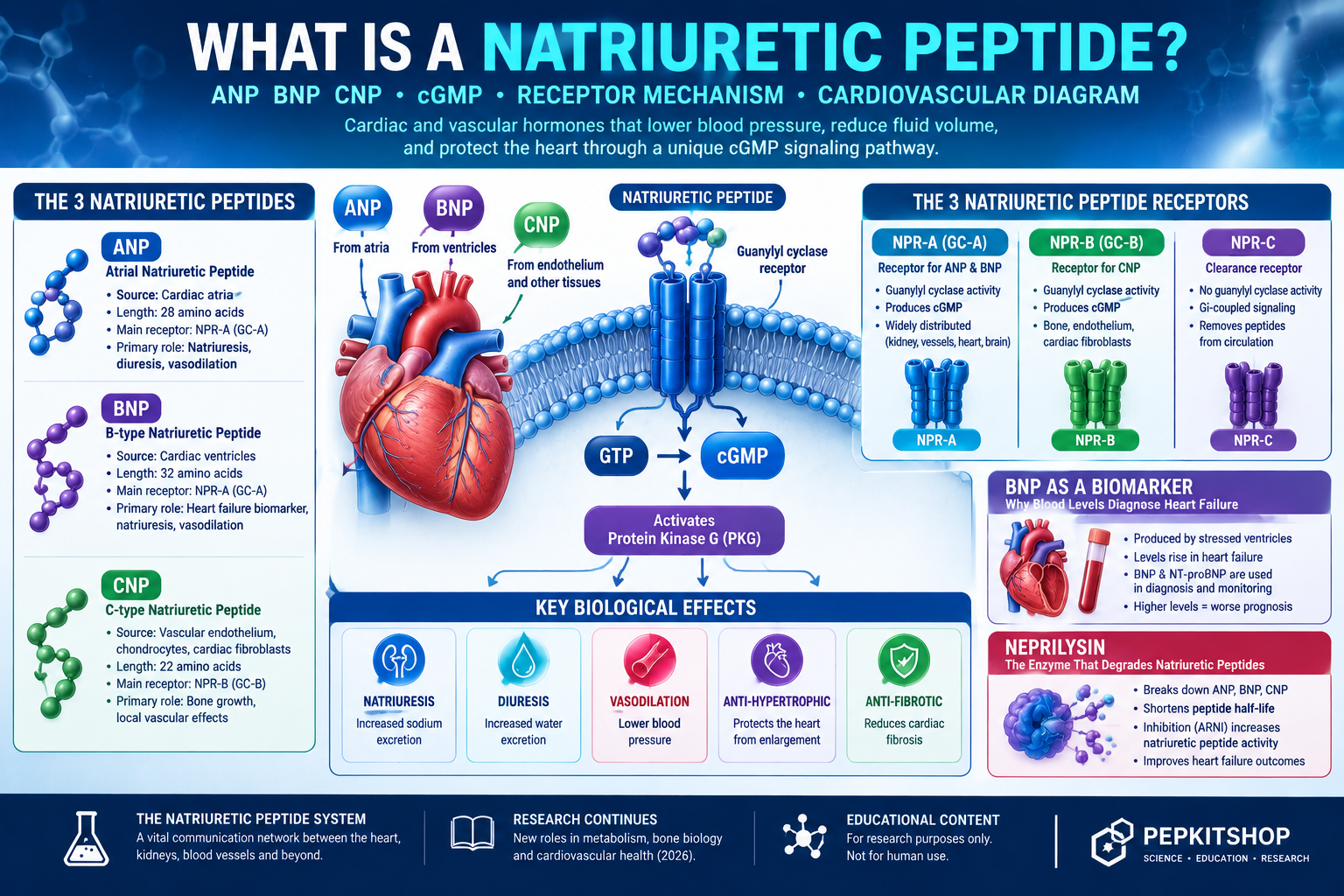
What is a natriuretic peptide and why does this family of cardiovascular hormones occupy such a central position in both basic science research and clinical medicine?
Natriuretic peptides are among the most clinically significant peptide hormones ever characterized. They were discovered through an observation so simple it seems obvious in retrospect: injecting atrial tissue extracts into rats caused dramatic increases in urine output and salt excretion. That 1981 observation by de Bold and colleagues launched a field of research that has produced approved cardiovascular therapeutics, one of the most widely used biomarkers in cardiology, and a therapeutic target so important that drugs designed to inhibit the enzyme that destroys these peptides are now among the standard of care for chronic heart failure.
Understanding what is a natriuretic peptide means understanding a signaling system that the heart uses to communicate with the kidneys, blood vessels, adrenal glands, and brain a cardiovascular feedback loop mediated entirely by peptide hormones and a receptor mechanism that is fundamentally different from the GPCR pathways that govern most peptide signaling.
This guide explains what is a natriuretic peptide completely, from the 1981 discovery through the three family members, the guanylyl cyclase receptor mechanism, the biology of each receptor subtype, neprilysin degradation, clinical applications, and the expanding research into natriuretic peptide roles in metabolism and bone biology that continues to develop in 2026.
If you are new here, start with our guide on [what a peptide actually is] and our post on [how peptides work in the body] before continuing. Understanding peptide receptor mechanisms first makes the natriuretic peptide biology significantly clearer, particularly the contrast between the cGMP pathway used here and the cAMP pathway used by most other peptide hormones we have covered in this series.
What is a natriuretic peptide in plain scientific terms?
Atrial natriuretic peptide (ANP), B-type natriuretic peptide (BNP), and C-type natriuretic peptide (CNP) are the known members of the mammalian natriuretic peptide system.
A natriuretic peptide is a member of a family of peptide hormones that promote natriuresis, the excretion of sodium in urine, as their defining shared biological property. The name derives from the Latin natrium for sodium and the Greek ourein meaning to urinate. What is a natriuretic peptide therefore literally is a sodium-urine promoting peptide.
ANP and BNP are potent endogenous hypotensive hormones that elicit natriuretic, diuretic, vasorelaxant, antihypertrophic, antiproliferative, and antiinflammatory effects, largely directed toward the reduction of blood pressure and cardiovascular diseases.
Beyond sodium excretion, natriuretic peptides produce vasodilation, reduce circulating blood volume through diuresis, inhibit the renin-angiotensin-aldosterone system, reduce sympathetic nervous system activity, and protect cardiac tissue from the hypertrophy and fibrosis that develop in response to pressure and volume overload. Together these effects make the natriuretic peptide system one of the primary counter-regulatory systems opposing the blood pressure and volume-increasing effects of the renin-angiotensin-aldosterone axis.
What is a natriuretic peptide uniquely characterized by at the receptor level is a mechanism that differs fundamentally from most other peptide hormone families. Rather than activating G-protein coupled receptors that produce cAMP or calcium-based second messengers, natriuretic peptides activate membrane-bound guanylyl cyclase receptors that directly produce cyclic GMP (cGMP). This makes them one of the clearest examples of the receptor diversity that exists within peptide hormone biology.
What is a natriuretic peptide discovered when and how?
The discovery of natriuretic peptides dates back to 1981, when de Bold et al. found that administration of atrial extracts into intact rats causes diuresis and natriuresis. In 1983 to 1984, ANP was then isolated and purified, and the amino acid sequence was determined in rats and humans.
The observation that led to this discovery was conceptually simple but experimentally challenging to interpret at the time. Adolfo de Bold and colleagues at Queens University in Canada observed that injecting crude extracts from atrial cardiac tissue into anesthetized rats produced a rapid, dramatic increase in urine volume and sodium excretion. The effect was specific to atrial tissue. Ventricular tissue extracts did not produce the same effect.
This finding was initially controversial because it challenged the prevailing view of the heart as purely a mechanical pump. The heart was not thought to function as an endocrine organ. The de Bold observation implied that the atria contained a bioactive substance that signaled the kidneys to increase sodium and water excretion, suggesting the heart was actively monitoring and regulating blood volume and pressure through hormonal communication.
Within three years of the original observation, the active compound had been isolated, sequenced, and named atrial natriuretic peptide. The speed of characterization reflected both the scientific significance of the discovery and the technological advances in peptide isolation and sequencing that were available by the early 1980s.
BNP, originally called brain natriuretic peptide because it was first isolated from porcine brain tissue, was subsequently found to be produced predominantly in the cardiac ventricles. CNP was identified as a third family member produced primarily by vascular endothelial cells. Together these three peptides constitute the mammalian natriuretic peptide system.
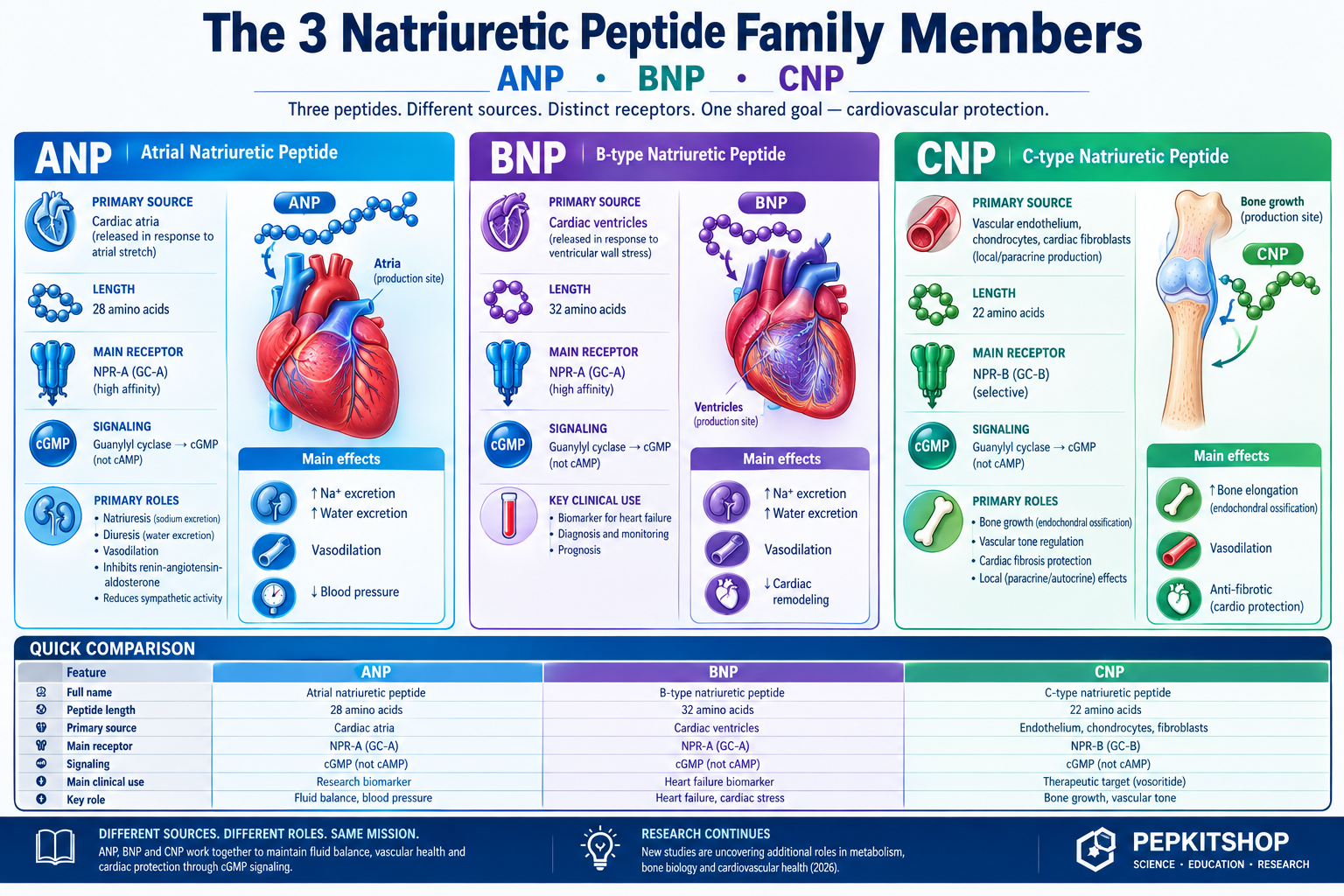
What is a natriuretic peptide in terms of the three specific family members?
ANP and BNP are synthesized, processed and secreted exclusively by the heart. In response to the overactivation of various neurohumoral and mechanical stimuli that occur during heart failure, both the expression and secretion of ANP and BNP are dramatically upregulated, making their plasma levels clinically useful markers for the diagnosis and assessment of cardiac failure.
| Peptide | Full Name | Length | Primary Source | Primary Receptor | Signaling Pattern | Clinical Use |
|---|---|---|---|---|---|---|
| ANP | Atrial natriuretic peptide | 28 amino acids | Cardiac atria | NPR-A (GC-A) | Endocrine, released into circulation | Research biomarker, acute heart failure research |
| BNP | B-type natriuretic peptide | 32 amino acids | Cardiac ventricles | NPR-A (GC-A) | Endocrine, released into circulation | Clinical diagnostic biomarker for heart failure |
| CNP | C-type natriuretic peptide | 22 amino acids | Vascular endothelium, chondrocytes, cardiac fibroblasts | NPR-B (GC-B) | Paracrine and autocrine, low plasma levels | Bone dysplasia treatment (vosoritide FDA approved 2021) |
ANP is produced in the cardiac atria in response to atrial wall stretch caused by increased blood volume or pressure. It is the primary circulating natriuretic hormone under normal physiological conditions. ANP is synthesized as a larger precursor (pro-ANP) that is cleaved into the active 28 amino acid form upon secretion. It acts primarily in an endocrine fashion, traveling through the bloodstream to act on distant targets including the kidneys, blood vessels, and adrenal glands.
BNP is produced predominantly in the cardiac ventricles, also in response to increased wall stress from volume or pressure overload. Despite its original name (brain natriuretic peptide), the heart is its primary physiological source. BNP is produced as a larger precursor (pre-pro-BNP) that is cleaved into the 32 amino acid active form plus an N-terminal fragment called NT-proBNP. Both BNP and NT-proBNP are measurable in blood and serve as clinical biomarkers. Critically, BNP production is dramatically upregulated in heart failure, making elevated plasma BNP a sensitive and specific marker of cardiac dysfunction.
CNP differs significantly from ANP and BNP in its source, receptor, and signaling pattern. CNP acts through natriuretic peptide receptor 2 and was found to be produced by the vascular endothelium, chondrocytes, and cardiac fibroblasts. Based on its relatively low plasma concentration compared with ANP and BNP, CNP is thought to function as both an autocrine and a paracrine factor in the vasculature, bone, and heart.
CNP’s role in bone biology led to the development of vosoritide, a CNP analog approved by the FDA in 2021 for achondroplasia (a form of short-limbed dwarfism), making it one of the most recent examples of a peptide hormone therapeutic emerging from basic research into natriuretic peptide biology.
What is a natriuretic peptide producing at the receptor signaling level?
The principal receptor involved in the regulatory actions of ANP and BNP is guanylyl cyclase/natriuretic peptide receptor-A (GC-A/NPRA), which produces the intracellular second messenger cGMP.
The natriuretic peptide receptor mechanism is one of the most distinctive in peptide biology. Unlike GPCR-based receptors that activate intracellular enzymes indirectly through G-protein coupling, natriuretic peptide receptors are themselves enzymes. They are receptor guanylyl cyclases — membrane-spanning proteins with an extracellular ligand-binding domain connected directly to an intracellular guanylyl cyclase catalytic domain.
When a natriuretic peptide binds the extracellular domain, the receptor undergoes a conformational change that activates the intracellular guanylyl cyclase. This enzyme directly catalyzes the conversion of GTP to cyclic GMP (cGMP). The cGMP produced then activates protein kinase G (PKG), which phosphorylates downstream targets that produce the biological effects of natriuretic peptide signaling.
| Step | Event | Consequence |
|---|---|---|
| 1 | Natriuretic peptide binds extracellular receptor domain | Receptor conformational change |
| 2 | Intracellular guanylyl cyclase domain activated | Enzymatic activity initiated |
| 3 | GTP converted to cGMP | Second messenger produced |
| 4 | cGMP activates protein kinase G (PKG) | Kinase cascade initiated |
| 5 | PKG phosphorylates myosin light chain phosphatase | Smooth muscle relaxation, vasodilation |
| 6 | PKG activates renal sodium channel regulation | Natriuresis and diuresis |
| 7 | PKG inhibits aldosterone secretion pathway | Reduced sodium retention |
| 8 | PKG activates anti-hypertrophic pathways in cardiomyocytes | Cardioprotection |
| 9 | cGMP degraded by phosphodiesterases | Signal termination |
This cGMP-based mechanism contrasts sharply with the cAMP-based mechanisms of the GHRH receptor and melanocortin receptors covered in previous posts in this series. Understanding what is a natriuretic peptide at the mechanistic level requires appreciating that the cardiovascular system uses a fundamentally different second messenger system for its primary volume and pressure regulatory peptides.
The cGMP produced by natriuretic peptide receptor activation also feeds into the same signaling pool as cGMP produced by nitric oxide activation of soluble guanylyl cyclase. Both natriuretic peptides and nitric oxide produce vasodilation through cGMP-PKG signaling, which explains why the two systems often have overlapping and additive cardiovascular effects.
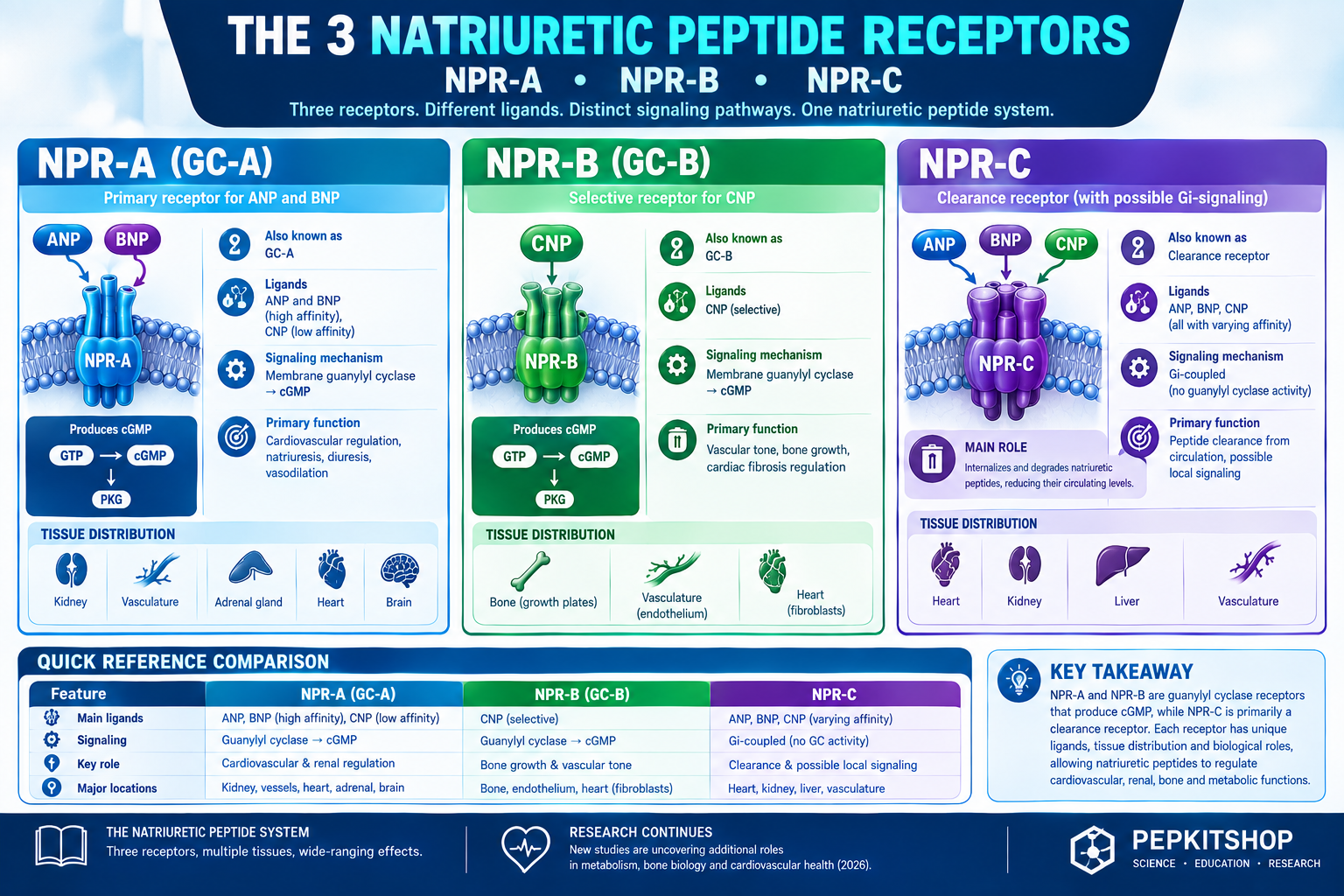
What is a natriuretic peptide signaling through in terms of receptor subtypes?
Both hormones (ANP and BNP) act through natriuretic peptide receptor 1 (NPR1). In contrast, CNP acts through natriuretic peptide receptor 2 (NPR2). The cytoplasmic domains of both NPR1 and NPR2 display a guanylate cyclase activity that catalyzes the formation of cyclic GMP. NPR3 lacks this guanylate cyclase activity and is reportedly coupled to Gi-dependent signaling.
| Receptor | Also Known As | Ligands | Signaling Mechanism | Primary Function |
|---|---|---|---|---|
| NPR-A (NPR1) | GC-A | ANP and BNP (high affinity), CNP (low affinity) | Membrane guanylyl cyclase producing cGMP | Cardiovascular regulation, natriuresis, diuresis, vasodilation |
| NPR-B (NPR2) | GC-B | CNP (selective) | Membrane guanylyl cyclase producing cGMP | Vascular tone, bone growth, cardiac fibrosis regulation |
| NPR-C (NPR3) | Clearance receptor | ANP, BNP, CNP (all with varying affinity) | Gi-coupled, no guanylyl cyclase activity | Peptide clearance from circulation, possibly local signaling |
NPR-A is the primary receptor for the cardiovascular effects of ANP and BNP. Its broad tissue distribution including kidney, vasculature, adrenal gland, heart, and brain reflects the systemic reach of ANP and BNP signaling. NPR-A activation in the kidney promotes sodium excretion. NPR-A activation in vascular smooth muscle produces relaxation and vasodilation. NPR-A activation in the adrenal cortex inhibits aldosterone secretion, reducing sodium retention.
Mice deficient for GC-A are mildly hypertensive and show marked cardiac hypertrophy and fibrosis that is disproportionately severe given their modestly higher blood pressure. The cardiac hypertrophy seen in these mice is enhanced in a blood pressure-independent manner and is suppressed by cardiomyocyte-specific overexpression of GC-A. These results suggest that the actions of a local cardiac ANP/BNP-GC-A system are essential for maintenance of normal cardiac architecture.
This finding from GC-A knockout mice is particularly significant because it reveals that the natriuretic peptide system is not only reactive to cardiac stress but is also required for maintaining normal cardiac architecture under basal conditions. The heart continuously produces ANP and BNP at low levels, and this continuous natriuretic signaling appears to be protective against the hypertrophy and fibrosis that develop when it is absent.
NPR-B is the selective receptor for CNP. Its expression in bone growth plates, vascular endothelium, and cardiac fibroblasts reflects CNP’s distinct biological roles compared to ANP and BNP. NPR-B activation in chondrocytes promotes bone elongation through endochondral ossification, which is the biological rationale for CNP analog development in achondroplasia.
NPR-C was originally identified as a clearance receptor, a receptor that binds natriuretic peptides and internalizes them for degradation without producing the guanylyl cyclase-mediated biological effects of NPR-A and NPR-B. It is now understood that NPR-C also mediates some biological effects through Gi-protein coupling, though these are less well characterized than the NPR-A and NPR-B effects.
What is a natriuretic peptide doing biologically across its primary effects?
| Effect | Mechanism | Target Tissue | Consequence |
|---|---|---|---|
| Natriuresis | cGMP-PKG inhibits renal sodium reabsorption, reduces aldosterone | Kidney collecting duct, adrenal cortex | Increased sodium excretion, reduced blood volume |
| Diuresis | Increased renal blood flow, inhibition of vasopressin effects | Kidney glomerulus and tubule | Increased water excretion, reduced blood volume |
| Vasodilation | cGMP-PKG relaxes vascular smooth muscle, inhibits vasoconstriction | Arteries, arterioles, veins | Reduced peripheral resistance, lower blood pressure |
| Anti-hypertrophic | cGMP-PKG inhibits MAPK and Gαq hypertrophic signaling in cardiomyocytes | Cardiac myocytes | Prevention of pathological cardiac enlargement |
| Anti-fibrotic | Inhibition of cardiac fibroblast proliferation and collagen synthesis | Cardiac fibroblasts | Reduced myocardial fibrosis |
ANP and BNP are hormones secreted from the heart into the bloodstream in response to increased preload and afterload. Saito et al. reported in 1987 that intravenous infusion of ANP markedly improved hemodynamics in patients with heart failure. In their study, intravenous administration of ANP at 0.1 micrograms per kg per minute for 30 minutes in patients with NYHA class III or IV heart failure decreased pulmonary artery wedge pressure by an average of 13.7 mmHg and increased the stroke volume index by an average of 7.8 mL per m squared.
The anti-hypertrophic and anti-fibrotic effects of natriuretic peptides are among the most important for understanding the system’s role beyond acute cardiovascular regulation. Cardiac hypertrophy and fibrosis are the primary pathological changes that occur in the heart in response to chronic pressure or volume overload. These changes initially represent adaptive responses to increased workload but eventually impair cardiac function. The natriuretic peptide system opposes these changes through direct signaling in cardiomyocytes and cardiac fibroblasts, independent of and in addition to the hemodynamic effects of blood pressure and volume reduction.
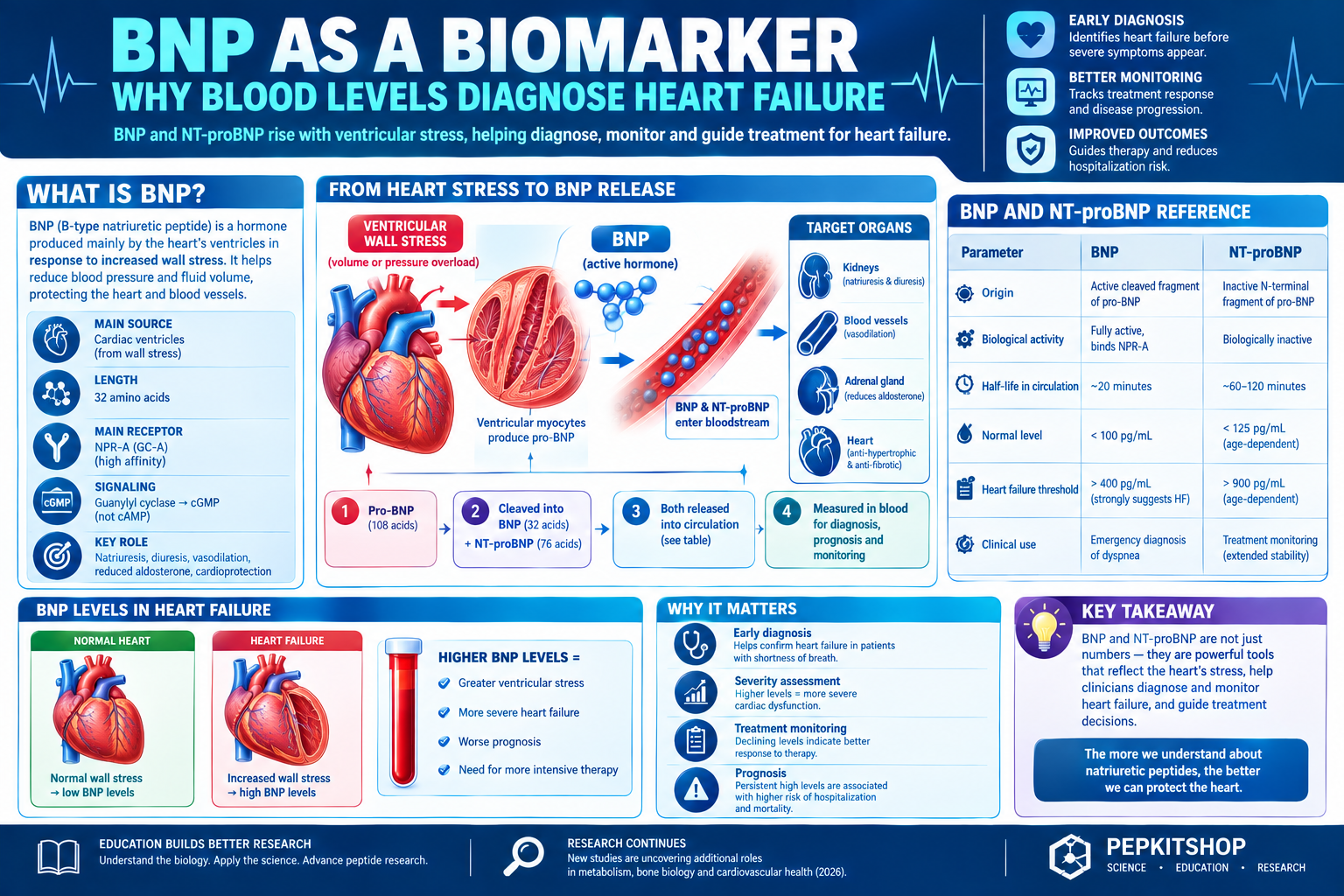
What is a natriuretic peptide doing as a clinical biomarker?
In response to the overactivation of various neurohumoral and mechanical stimuli that occur during heart failure, both the expression and secretion of ANP and BNP are dramatically upregulated, making their plasma levels clinically useful markers for the diagnosis and assessment of cardiac failure.
BNP has become one of the most important biomarkers in clinical cardiology for a straightforward biological reason. The ventricles produce BNP in response to wall stress. In heart failure, the failing ventricle experiences chronic elevated wall stress from the increased pressures and volumes of decompensated cardiac function. This chronic mechanical stress drives sustained upregulation of BNP gene expression and secretion. Plasma BNP levels therefore rise in proportion to the severity of ventricular dysfunction.
| Parameter | BNP | NT-proBNP |
|---|---|---|
| Origin | Active cleaved fragment of pro-BNP | Inactive N-terminal fragment of pro-BNP |
| Biological activity | Fully active, binds NPR-A | Biologically inactive |
| Half-life in circulation | Approximately 20 minutes | Approximately 60 to 120 minutes |
| Normal level | Below 100 pg per mL | Below 125 pg per mL (age-dependent) |
| Heart failure threshold | Above 400 pg per mL strongly suggests HF | Above 900 pg per mL (age-dependent) |
| Clinical use | Emergency department diagnosis of dyspnea | Monitoring heart failure treatment response |
The clinical utility of BNP measurement extends beyond diagnosis to prognosis and treatment monitoring. Patients with heart failure who show declining BNP levels in response to treatment have better outcomes than those whose BNP remains elevated. BNP levels that fail to decline with standard therapy identify patients who may need escalated treatment or different therapeutic approaches.
NT-proBNP, the inactive N-terminal fragment produced alongside active BNP, has a longer half-life and is often preferred for monitoring treatment response because its longer circulating time makes it more stable as a measurement target. Both BNP and NT-proBNP levels are now part of standard heart failure management guidelines worldwide.
What is a natriuretic peptide degraded by and why does this matter therapeutically?
Neprilysin is a neutral endopeptidase that degrades several vasoactive peptides, including natriuretic peptides. A compound that inhibits neutral endopeptidase, the enzyme that degrades ANP, has been developed (angiotensin receptor-neprilysin inhibitor, ARNI). ARNI has been approved worldwide for the treatment of chronic heart failure and has been authorized in Japan as an antihypertensive drug.
Neprilysin is a zinc-containing membrane-bound endopeptidase that cleaves multiple vasoactive peptides including ANP, BNP, CNP, bradykinin, and substance P. By degrading natriuretic peptides, neprilysin reduces their circulating half-life and limits the duration of their cardiovascular protective effects.
| Concept | Mechanism | Clinical Consequence |
|---|---|---|
| Natriuretic peptide production | Heart produces ANP and BNP in response to wall stress | Protective cGMP signaling activated |
| Neprilysin degradation | Enzyme cleaves natriuretic peptides in circulation | Biological activity shortened, protective effects limited |
| Neprilysin inhibition (sacubitril) | ARNI drug component blocks neprilysin | Natriuretic peptides persist longer in circulation |
| Combined ARNI therapy | Sacubitril (neprilysin inhibitor) plus valsartan (angiotensin receptor blocker) | Dual pathway protection, sustained natriuretic peptide activity plus angiotensin blockade |
| Clinical outcome | PARADIGM-HF trial showed 20% reduction in cardiovascular death versus ACE inhibitor alone | ARNI is now standard of care for heart failure with reduced ejection fraction |
The angiotensin receptor-neprilysin inhibitor (ARNI) sacubitril-valsartan (marketed as Entresto) represents one of the most significant advances in heart failure pharmacology in decades. By inhibiting neprilysin, sacubitril extends the circulating half-life of naturally produced natriuretic peptides, amplifying their cardiovascular protective effects without introducing exogenous hormones. Combined with the angiotensin receptor blocking effect of valsartan, ARNI therapy produces dual pathway protection that was shown in the landmark PARADIGM-HF trial to reduce cardiovascular mortality by 20% compared to the previous standard ACE inhibitor therapy.
This therapeutic approach is important conceptually because it illustrates a principle directly relevant to peptide research: rather than administering a peptide hormone exogenously, preventing its degradation amplifies the endogenous physiological system. The same principle has been applied to DPP-IV inhibition for GLP-1 peptides in diabetes management.
What is a natriuretic peptide doing outside cardiovascular regulation?
Atrial natriuretic peptide, B-type natriuretic peptide, and C-type natriuretic peptide are the known members of the mammalian natriuretic peptide system. These peptides regulate important physiological functions beyond cardiovascular homeostasis including metabolic regulation.
| Research Area | Peptide | Mechanism | Finding |
|---|---|---|---|
| Adipose tissue metabolism | ANP and BNP | NPR-A on adipocytes activates lipolysis through cGMP-PKG | Exercise-induced ANP and BNP may contribute to fat mobilization |
| Skeletal muscle | ANP and BNP | cGMP promotes mitochondrial biogenesis in muscle | Possible role in exercise adaptation |
| Bone elongation | CNP | NPR-B activation in chondrocytes promotes endochondral ossification | Basis for vosoritide therapy in achondroplasia |
| Glucose metabolism | ANP | Adipocyte NPR-A activation affects insulin sensitivity | Research into natriuretic peptides in metabolic syndrome |
| Inflammation | ANP | Anti-inflammatory effects through cGMP in immune cells | Parallel to anti-inflammatory effects of nitric oxide-cGMP |
| Osteocrin | Endogenous NPR-C ligand from bone and muscle | NPR-C signaling, continuous infusion lowers blood pressure in mice | Novel cardiovascular role for musculoskeletal-derived peptide |
The finding that natriuretic peptides promote lipolysis in adipose tissue through NPR-A receptors on fat cells connects the cardiac endocrine system to metabolic regulation in an unexpected way. ANP and BNP plasma levels rise during exercise when the heart is working harder. The increased natriuretic peptide levels may contribute to exercise-induced fat mobilization, suggesting that the cardiac hormonal response to exercise participates in fuel mobilization for working muscles.
The osteocrin finding mentioned in the receptor section is also noteworthy. Osteocrin is a peptide produced by bone and muscle cells that binds NPR-C (the clearance receptor) and competes with ANP and BNP for NPR-C binding. By displacing natriuretic peptides from NPR-C, osteocrin effectively increases circulating natriuretic peptide levels, since less peptide is being cleared. This indirect mechanism of blood pressure regulation through a musculoskeletal-derived peptide represents a previously unrecognized communication pathway between the skeletal system and the cardiovascular system.
What is a natriuretic peptide research producing in the most current literature?
The StatPearls 2026 update on atrial natriuretic peptide confirms that ANP is a hormone secreted from the right atrium in response to atrial stretch from hypervolemia as well as in response to hypertension. Since its discovery in the early 1980s, subsequent discoveries of brain or B-type natriuretic peptide (BNP) and C-type natriuretic peptide (CNP) have expanded the field significantly.
The current 2026 research on the cellular, molecular, genetic mechanisms and functional roles of the ANP-BNP/NPRA system in the physiology and pathophysiology of cardiovascular homeostasis encompasses transgenic and gene-targeting strategies that have produced genetically altered novel mouse models and have advanced knowledge of the importance of natriuretic peptides and their receptors at physiological and pathophysiological levels in both normal and disease states.
Several specific 2026 research developments are worth noting:
ARNI Expansion
The clinical use of ARNI therapy continues to expand beyond heart failure with reduced ejection fraction into preserved ejection fraction heart failure and hypertension, reflecting growing understanding of how amplifying endogenous natriuretic peptide signaling benefits multiple cardiovascular conditions.
CNP in Bone: Vosoritide Three Year Data
Three year follow-up data on vosoritide (a CNP analog) in achondroplasia published in 2025 and 2026 confirmed sustained increases in annual growth velocity in children with the condition, establishing CNP analog therapy as an effective long-term treatment. This represents the most successful translation of natriuretic peptide biology into a novel therapeutic outside cardiovascular medicine.
Natriuretic Peptides in Metabolic Syndrome
Research published through the National Library of Medicine and peer reviewed research databases has continued to characterize the inverse relationship between natriuretic peptide levels and metabolic syndrome risk. Lower ANP and BNP levels are associated with higher rates of obesity, insulin resistance, and type 2 diabetes, suggesting the natriuretic peptide system plays a broader role in metabolic homeostasis than its cardiovascular functions alone would suggest.
What is a natriuretic peptide at its most basic is a family of peptide hormones, primarily produced by the heart, that lower blood pressure and reduce blood volume by promoting sodium and water excretion in the kidneys, relaxing blood vessels, and protecting the heart from the enlargement and stiffening that develop under chronic pressure or volume load.
What is a natriuretic peptide in each of its three forms differs by source and primary role. ANP comes from the cardiac atria and acts as the primary circulating natriuretic hormone. BNP comes from the cardiac ventricles and rises dramatically in heart failure, making it the most clinically useful biomarker. CNP comes from vascular endothelium, bone, and cardiac fibroblasts, acts primarily locally through NPR-B, and plays important roles in bone growth.
What is a natriuretic peptide receptor is a membrane-spanning guanylyl cyclase enzyme. When a natriuretic peptide binds, the receptor’s own intracellular enzymatic domain directly produces cGMP. This differs from GPCRs like those activated by GHRPs, GHRH analogs, and melanocortin peptides, which activate G-proteins that indirectly stimulate or inhibit enzymes producing cAMP or other second messengers.
What is a natriuretic peptide doing in heart failure is being overproduced by the stressed ventricular myocardium. The failing heart experiences chronic elevated wall stress, which drives continuous upregulation of BNP gene expression and secretion. Plasma BNP levels rise in proportion to the severity of cardiac dysfunction, making them a sensitive and specific blood test for diagnosing heart failure and monitoring treatment response.
Neprilysin is the enzyme that degrades natriuretic peptides in circulation, limiting their cardiovascular protective effects. The ARNI drug sacubitril inhibits neprilysin, extending the half-life of naturally produced ANP and BNP. This amplifies the protective cardiovascular effects of endogenous natriuretic peptides without requiring exogenous hormone administration. Combined with angiotensin receptor blockade, ARNI therapy has been shown to reduce cardiovascular mortality in heart failure by 20% compared to previous standard therapy.
CNP specifically plays an important role in bone elongation through NPR-B receptors in cartilage growth plates. CNP activation promotes endochondral ossification, the process through which long bones grow. A synthetic CNP analog, vosoritide, was FDA approved in 2021 for achondroplasia, a genetic condition that impairs bone growth, representing the first natriuretic peptide-based therapy outside cardiovascular medicine.
Research has documented that ANP and BNP activate lipolysis in adipose tissue through NPR-A receptors on fat cells, suggesting cardiac hormones may contribute to fat mobilization during exercise. Lower natriuretic peptide levels are associated with higher obesity and metabolic syndrome risk, indicating the natriuretic peptide system may play a broader role in metabolic homeostasis than its classical cardiovascular functions suggest.
This post is part of the Pepkitshop compound education series. Related reading:
Subscribe for updates as this educational library continues to grow, evidence based peptide science explained clearly without hype.
10-vial kits • Capsule packs as listed • Research use only
© 2026 Pepkitshop. All rights reserved.
Vial product prices are per kit of 10 vials. Quantity 1 = 10 vials. Capsule products retain the pack size stated on their listing.
All products are supplied strictly for laboratory research. They are not intended for human or veterinary use, consumption, diagnosis, or treatment.
WhatsApp us
 Optimized by Seraphinite Accelerator
