
No products in the cart.

Vial products: price per kit of 10 vials. Quantity 1 = 10 vials. Capsule products are priced per capsule pack as listed. Dismiss
By Pepkitshop | Peptide Coach and Educator
Updated July 2026 | Educational Content, Not Medical Advice
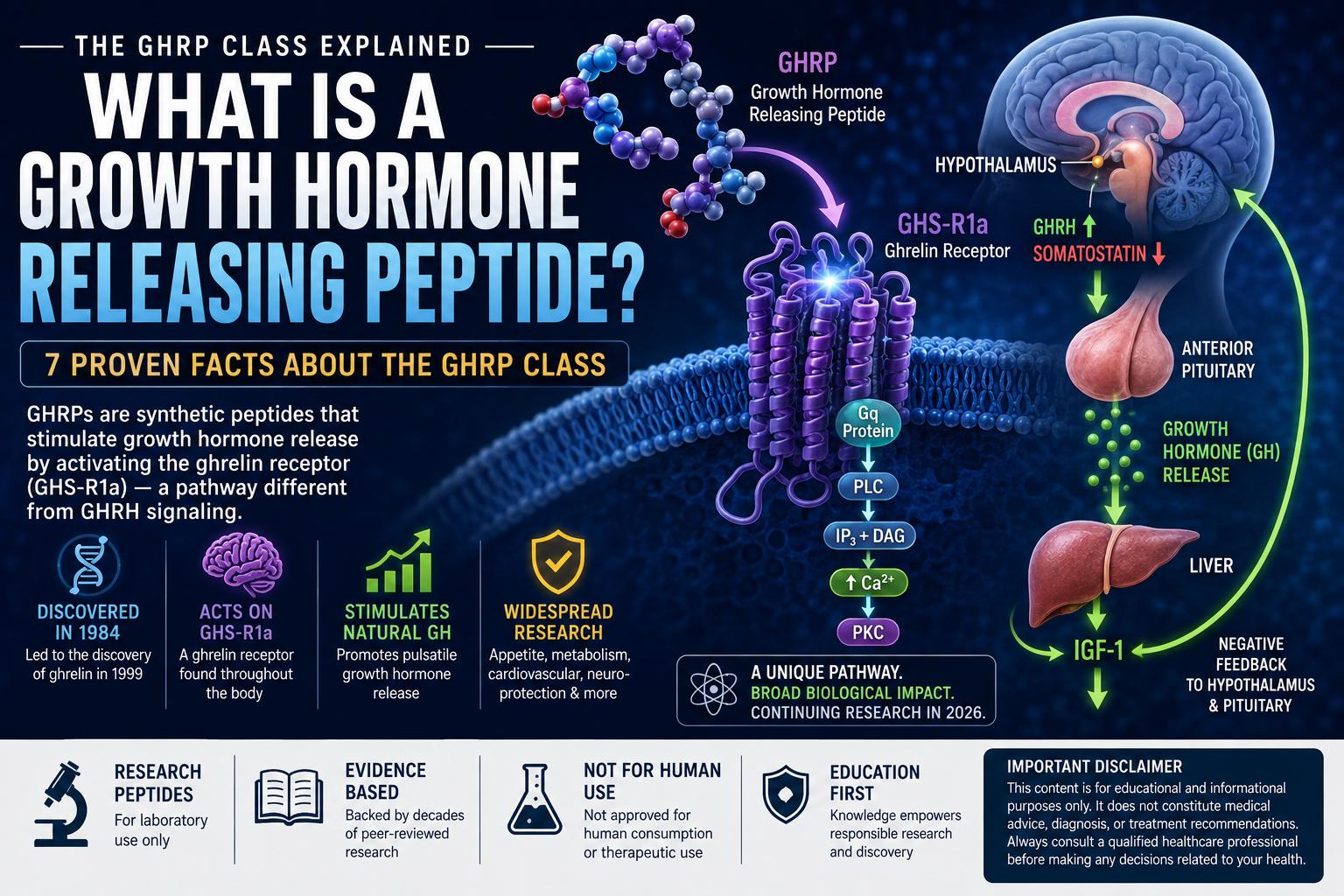
What is a growth hormone releasing peptide and why does this class of synthetic compounds occupy such a significant position in the history and current practice of research peptide science?
Growth hormone releasing peptides represent one of the most scientifically consequential classes of synthetic compounds ever developed. Their discovery in 1984 identified an entirely new biological pathway for growth hormone regulation. Their mechanism of action led directly to the identification of ghrelin, a naturally occurring hormone with far reaching biological effects that had been completely unknown until researchers following the GHRP trail found it. And the receptor they activate, the ghrelin receptor now known as GHS-R1a, has been found to play roles in metabolism, neuroprotection, cardiovascular function, and appetite regulation that extend well beyond growth hormone release.
Understanding what is a growth hormone releasing peptide means understanding a biological discovery story that continues to generate active research in 2026, anchored by some of the most detailed structural biology work yet published on receptor-ligand interactions.
This guide explains what is a growth hormone releasing peptide completely, from the 1984 origin through the ghrelin receptor mechanism, the four primary compounds in the class, how they differ from each other and from GHRH analogs, and what the most current 2025 and 2026 structural research shows about how this receptor actually recognizes its ligands.
If you are new here, start with our guide on [what a peptide actually is] and our post on [how peptides work in the body] before continuing. Understanding receptor binding and signal transduction first makes the GHRP mechanism significantly clearer.
What is a growth hormone releasing peptide in plain terms?
Growth hormone releasing peptides are a series of hepta and hexapeptides that have been shown to be effective releasers of GH in animals and humans.
In more precise terms, what is a growth hormone releasing peptide is a class of synthetic peptide compounds that stimulate the pituitary gland to release growth hormone by activating a specific G-protein coupled receptor now known as the ghrelin receptor or GHS-R1a. They do not introduce exogenous growth hormone. They signal the body’s own pituitary somatotroph cells to produce and release more of the growth hormone they naturally manufacture.
These molecules had a structure devoid of opiate activity, and GHRP-6 is the most representative compound. These compounds identified a new physiological system involved in GH regulation, and their action is independent of GHRH or somatostatin.
What is a growth hormone releasing peptide therefore defined by two characteristics that make this class distinct from all other growth hormone related research compounds:
First, GHRPs work through a receptor pathway that is entirely separate from growth hormone releasing hormone (GHRH). They activate GHS-R1a while GHRH activates a completely different receptor, the GHRH receptor on pituitary somatotrophs. This means the two pathways can be studied independently and, when activated together, produce effects that are synergistic rather than simply additive.
Second, GHRPs were synthetic compounds that preceded the discovery of their own natural receptor ligand. Researchers created these peptides and demonstrated their biological activity before anyone knew that a naturally occurring compound with the same receptor affinity existed in the human body. That natural compound, ghrelin, was not discovered until 1999, fifteen years after GHRP-6 was first synthesized.
What is a growth hormone releasing peptide in its historical context?
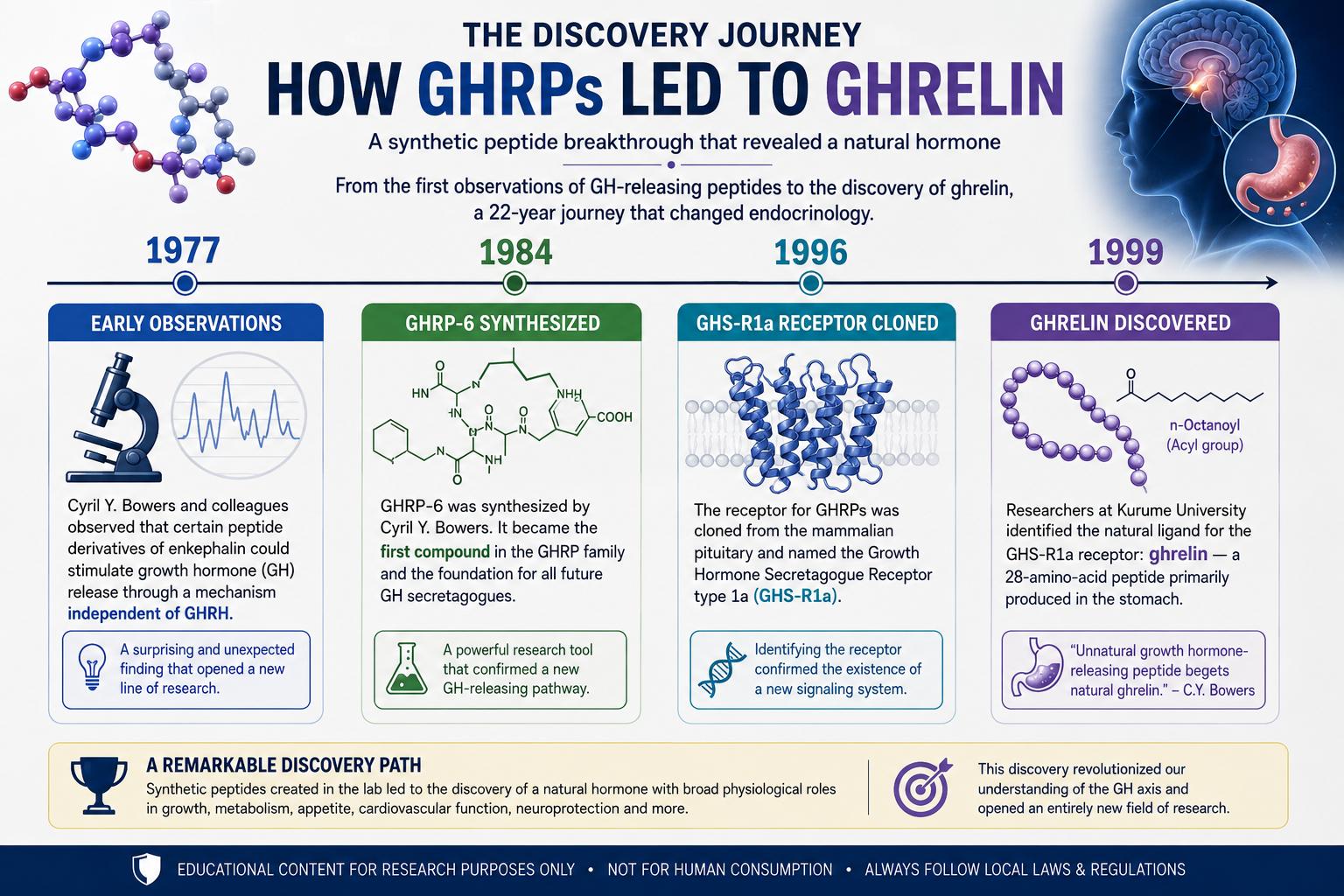
The story begins in 1977 when Cyril Y. Bowers, then at Tulane University, first observed that certain peptide derivatives of enkephalin could stimulate growth hormone release through a mechanism that did not involve GHRH, which had not yet been isolated. This finding was unexpected and initially difficult to explain.
GHRP-6 was developed in 1984 by American endocrinologist Cyril Y. Bowers and was the first compound in the GHRP family and the foundation from which all subsequent GH secretagogues including GHRP-2, hexarelin, and ipamorelin were derived.
The synthesis of GHRP-6 in 1984 gave researchers the first reliable tool for studying this alternative GH release pathway. Over the following decade, multiple research groups worked to identify the receptor that these synthetic peptides were activating.
These peptides act synergistically with GH-releasing hormone in vivo, and additively in vitro, on GH release through their interaction with GHS-R1a, a G-protein-coupled receptor that was cloned from mammalian pituitary in 1996. The identification of this receptor led to the discovery of its natural ligand, ghrelin, which is an acylated, 28-amino-acid peptide.
The receptor was cloned in 1996. Three years later, in 1999, researchers at Kurume University in Japan identified the natural ligand for this receptor, a 28 amino acid acylated peptide produced primarily in the stomach that they named ghrelin, from a Proto-Indo-European root meaning grow.
Ghrelin is a growth-hormone-releasing acylated peptide from stomach. Bowers later described this as unnatural growth hormone-releasing peptide begets natural ghrelin.
This discovery reversed the typical order of biological research. Usually scientists identify a natural hormone and then create synthetic analogs to study it. With GHRPs, synthetic compounds were created and used for fifteen years before anyone knew the natural system they were mimicking existed. What is a growth hormone releasing peptide therefore represents one of the most remarkable examples of synthetic chemistry leading biological discovery rather than following it.
What is a growth hormone releasing peptide activating at the receptor level?
Ghrelin, discovered in 1999 as an endogenous ligand of the growth hormone secretagogue receptor now known as the ghrelin receptor, is a peptide hormone with diverse physiological activities, such as stimulation of growth hormone release, increased appetite, fat accumulation, thermoregulation, and cardioprotection.
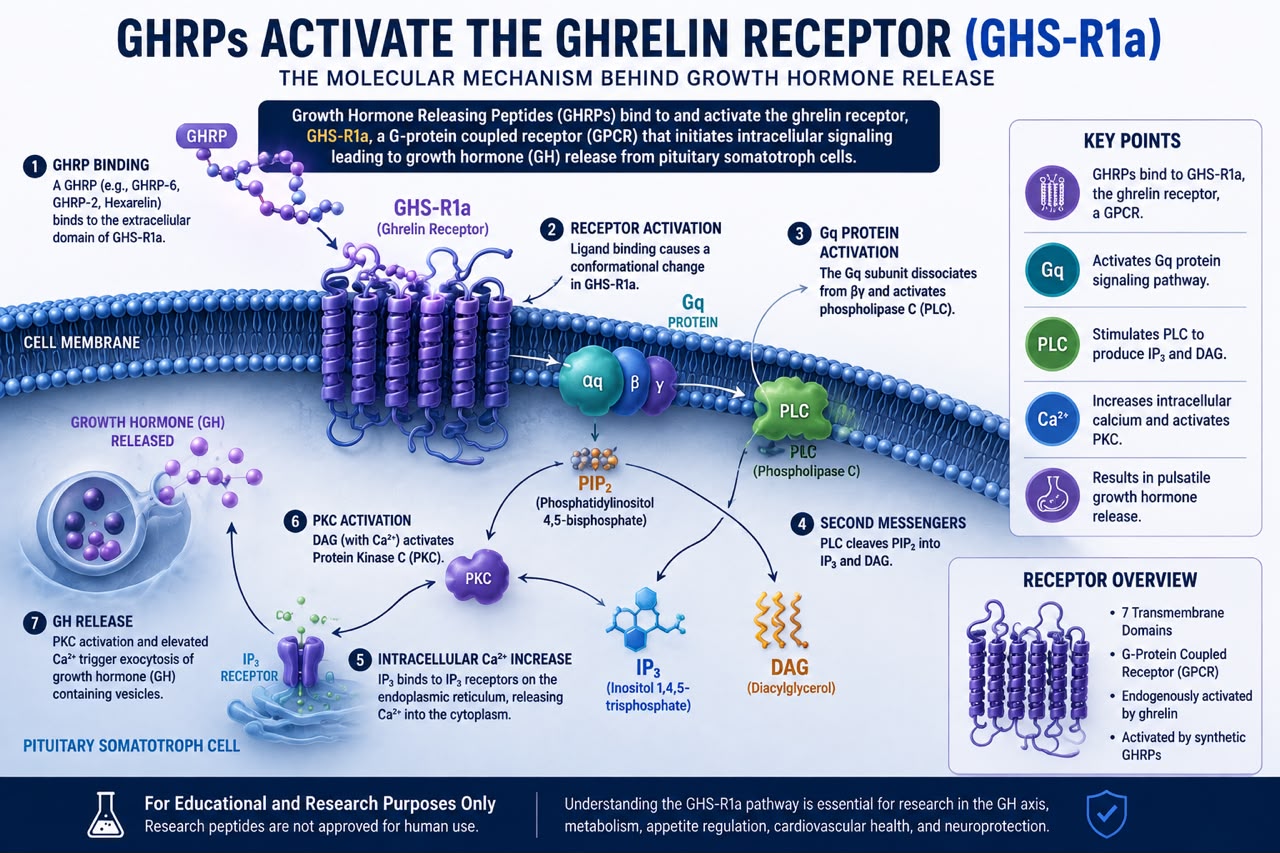
GHS-R1a, the ghrelin receptor, is a G-protein coupled receptor (GPCR) expressed in multiple tissues throughout the body. It was initially called the growth hormone secretagogue receptor because it was identified through its interaction with synthetic growth hormone secretagogue compounds including the GHRPs. After ghrelin was discovered as its natural ligand, the receptor was renamed the ghrelin receptor while retaining the GHS-R1a designation in the scientific literature.
The receptor is expressed most densely in the hypothalamus and pituitary, which explains its central role in GH regulation. However, GHS-R1a expression has also been documented in the stomach, heart, hippocampus, substantia nigra, adrenal gland, thyroid, gonads, and multiple other peripheral tissues.
Growth hormone secretagogues such as GHRP compounds are synthetic GHSR ligands that activate orexigenic neuropeptide Y neurons that coexpress agouti-related peptide in the arcuate nucleus of the hypothalamus when administered systemically.
The mechanism through which GHS-R1a produces its effects follows the standard GPCR signaling architecture described in our guide on [how peptides work in the body]. When a GHRP binds GHS-R1a, the receptor activates an associated Gq protein, which stimulates phospholipase C, which produces inositol trisphosphate (IP3) and diacylglycerol (DAG). These second messengers increase intracellular calcium and activate protein kinase C, ultimately stimulating growth hormone release from somatotroph cells.
Simultaneously, GHRP activation of GHS-R1a in the hypothalamus amplifies the output of GHRH neurons and suppresses somatostatin release, creating a coordinated enhancement of GH pulsatility through both pituitary and hypothalamic mechanisms.
What is a growth hormone releasing peptide doing biologically from receptor binding through GH release?
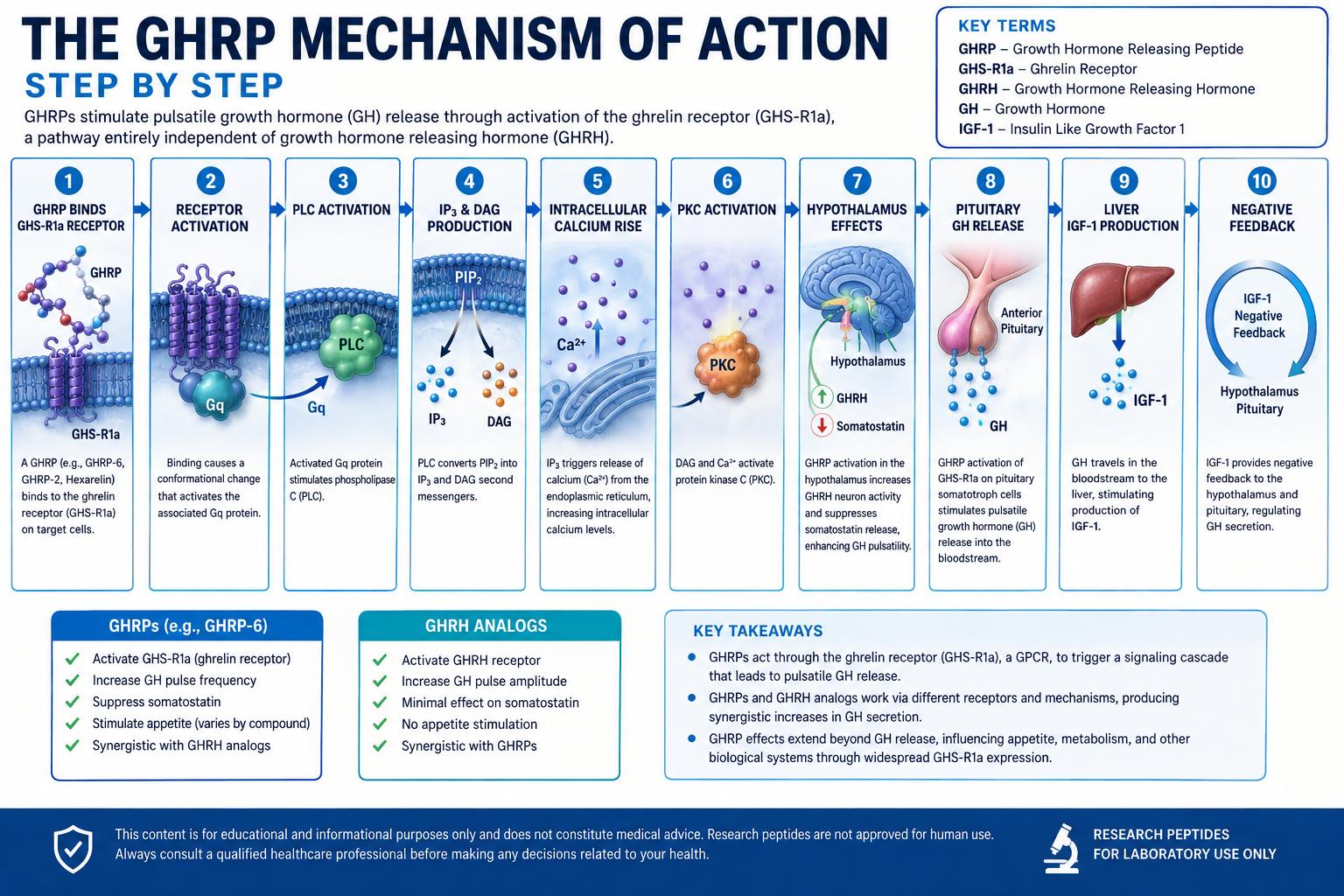
GHRP Mechanism of Action Step by Step
| Step | Event | Location |
|---|---|---|
| 1 | GHRP binds GHS-R1a receptor | Hypothalamus and anterior pituitary |
| 2 | Gq protein activated by receptor conformational change | Cell membrane |
| 3 | Phospholipase C stimulated, producing IP3 and DAG | Intracellular |
| 4 | Intracellular calcium increases, PKC activated | Somatotroph cytoplasm |
| 5 | GHRH neuron activity amplified in hypothalamus | Hypothalamus |
| 6 | Somatostatin suppression occurs in hypothalamus | Hypothalamus |
| 7 | Pituitary somatotrophs release stored growth hormone | Anterior pituitary |
| 8 | GH enters circulation in pulsatile pattern | Systemic circulation |
| 9 | GH reaches liver, stimulates IGF-1 production | Liver |
| 10 | IGF-1 provides negative feedback to hypothalamus and pituitary | Hypothalamic pituitary axis |
GHS’s stimulate secretion of growth hormone by a mechanism different from that of growth hormone-releasing hormone. Like growth hormone-releasing hormone, they antagonize release of somatostatin from the pituitary and hypothalamus.
The dual action at steps 5 and 6 is particularly important for understanding what is a growth hormone releasing peptide at the systems level. GHRPs simultaneously increase stimulatory signaling through GHRH amplification and reduce inhibitory signaling through somatostatin suppression. This combined action is why GHRPs and GHRH analogs together produce GH release that is significantly greater than either compound alone.
The pulsatile GH release at step 8 is also significant. GHRPs do not produce sustained elevation of growth hormone levels. They produce discrete pulses that mirror the natural physiological pattern of GH secretion. This is one of the primary features that distinguishes GHRP induced GH release from exogenous synthetic GH administration, which produces sustained supraphysiological elevation rather than pulsatile release.
What is a growth hormone releasing peptide in terms of the specific compounds that have been studied?
GHRP-1, GHRP-2, GHRP-6, and hexarelin are synthetic growth hormone secretagogues that stimulate secretion of growth hormone by a mechanism different from that of growth hormone-releasing hormone.
The 4 Primary Research Studied GHRPs Comparison Table
| Compound | Structure | GH Release Potency | Appetite Effect | Cortisol and Prolactin Effect | Selectivity |
|---|---|---|---|---|---|
| GHRP-1 | Heptapeptide | Moderate | Mild | Moderate | Lower selectivity |
| GHRP-2 | Hexapeptide | High | Moderate | Moderate to significant | Moderate selectivity |
| GHRP-6 | Hexapeptide | High | Significant | Moderate to significant | Lower selectivity |
| Hexarelin | Hexapeptide | Highest of the class | Minimal | Most significant of class | Complex, additional receptors |
GHRP-6
GHRP-6 acts as an agonist at the growth hormone secretagogue receptor 1a, which was later identified as the ghrelin receptor after Kojima and colleagues discovered ghrelin as its endogenous ligand in 1999. GHRP-6 produces the strongest appetite stimulation of any GHRP and generates robust pulsatile GH pulses, but also elevates cortisol and prolactin at higher doses.
GHRP-6 is the original and most historically significant compound in the class. As the first GHRP synthesized, it served as the template from which all subsequent GHRPs and non-peptide GH secretagogues were derived. Its significant appetite stimulating effect, mediated through GHS-R1a expressed in hypothalamic appetite regulation centers, is one of its most studied secondary properties.
GHRP-2
GHRP-2 is a synthetic agonist of ghrelin, the newly-discovered gut peptide which binds to the growth hormone secretagogue receptor. Ghrelin has two major effects, stimulating both GH secretion and appetite. GHRP-2 has been extensively studied for its utility as a growth hormone secretagogue. Animal studies have shown its effect on food intake. Similar to what has been reported for ghrelin administration, subjects ate significantly more when infused with GHRP-2.
GHRP-2 produces potent GH release with moderate appetite stimulation. It is one of the most extensively studied GHRPs in peer reviewed human research, with published clinical data on GH secretion, food intake, and safety across multiple study designs.
Hexarelin
Hexarelin produces the most potent GH release of any peptide in the GHRP class, but also produces the most significant cortisol and prolactin elevation and shows partial desensitization with repeated administration. Research has also documented direct cardiac effects of hexarelin through GHS-R1a receptors expressed in myocardial tissue, making it of interest in cardiovascular research independent of its GH releasing properties.
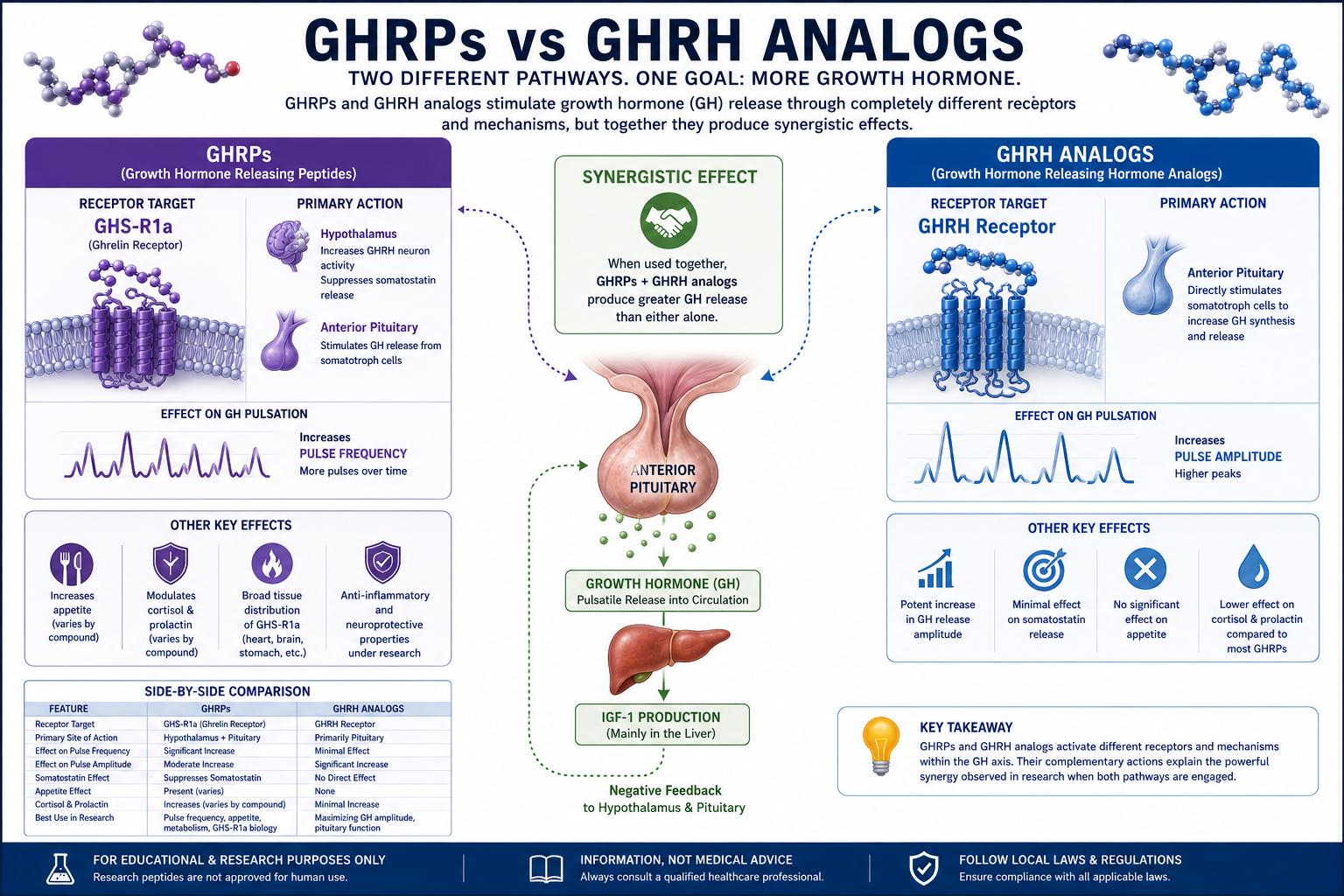
What is a growth hormone releasing peptide compared to GHRH analogs is one of the most important distinctions in GH axis research.
| Property | GHRPs | GHRH Analogs |
|---|---|---|
| Receptor target | GHS-R1a (ghrelin receptor) | GHRH receptor |
| Primary action site | Hypothalamus and pituitary | Primarily pituitary somatotrophs |
| Effect on GH pulse amplitude | Moderate increase | Significant increase |
| Effect on GH pulse frequency | Significant increase | Minimal effect |
| Somatostatin effect | Suppresses somatostatin | No direct somatostatin effect |
| Appetite effect | Present, varies by compound | Absent |
| Combined effect | Synergistic with GHRH analogs | Synergistic with GHRPs |
| Natural receptor ligand | Ghrelin | GHRH |
| First synthesized | 1984 (GHRP-6) | 1982 (after GHRH isolation) |
The synergy between GHRPs and GHRH analogs is one of the most practically significant findings in GH secretagogue research. When both receptor pathways are activated simultaneously, the combined GH release is several fold greater than either compound produces alone.
These peptides act synergistically with GH-releasing hormone in vivo, and additively in vitro, on GH release through their interaction with GHS-R1a.
The mechanistic explanation for this synergy involves the complementary nature of the two pathways. GHRH analogs primarily increase the amplitude of each GH pulse by directly stimulating pituitary somatotroph GH synthesis and release. GHRPs primarily increase pulse frequency and reduce somatostatin suppression. Together, higher amplitude pulses occurring more frequently with reduced inhibitory tone produces substantially greater total GH output than either mechanism alone.
What is a growth hormone releasing peptide activating beyond the growth hormone axis?
Ghrelin, a newly discovered bioactive peptide, is a natural endogenous ligand of the growth hormone secretagogue receptor. Subsequent research has shown that ghrelin and its various receptors are ubiquitous in many other organs and tissues. Moreover, they participate in the regulation of appetite, energy, bodyweight, metabolism of glucose and fat, as well as modulation of gastrointestinal, cardiovascular, pulmonary, immune functions and cell proliferation and apoptosis.
The widespread tissue distribution of GHS-R1a means that GHRP activation of this receptor produces biological effects well beyond growth hormone release.
| Tissue | GHS-R1a Role | Research Area |
|---|---|---|
| Hypothalamus | Controls GH pulsatility, regulates appetite via NPY and AgRP neurons | GH secretion, appetite regulation |
| Anterior pituitary | Direct GH release from somatotrophs | Growth hormone research |
| Stomach | Primary site of ghrelin production, autocrine role | Gastrointestinal physiology |
| Heart | Cardioprotection, myocardial function | Cardiovascular research |
| Hippocampus | Memory consolidation, neuroprotection | Cognitive research |
| Substantia nigra | Dopamine neuron protection | Neurodegeneration research |
| Adrenal gland | Cortisol and aldosterone modulation | Endocrine research |
| Immune cells | Immune modulation, anti-inflammatory signaling | Immunology research |
GHRP-2 attenuated protein kinase C induced expression of COX-2 and IL-8. GHRP-2 reduced the phosphorylation of p38 and JNK and activator protein 1 reporter activation and NF-kB nuclear translocation. The findings demonstrate an anti-inflammatory role for ghrelin in PKC-mediated inflammation.
The anti-inflammatory properties documented for GHRP-2 in cell based research represent one of the most actively studied areas of GHRP biology beyond GH release. The mechanisms involve multiple inflammatory signaling pathways including NF-kB suppression, which is one of the central regulators of inflammatory gene expression across multiple cell types.
Cardiac research on hexarelin and other GHRPs has documented GHS-R1a expression in myocardial tissue and cardioprotective effects through mechanisms that appear to be independent of GH release. This cardiac biology represents a research direction that would not have been predicted from the original GH-focused GHRP research program.
What is a growth hormone releasing peptide research showing in the most current literature?
A review published in Frontiers in Molecular Neuroscience in April 2025 from researchers at Kurume University and Kyoto University, the same institutions involved in ghrelin’s original discovery, synthesized 25 years of structural biology on the ghrelin receptor. The review documented that recent advancements in structural biology have facilitated the elucidation of the recognition mechanism for the ghrelin receptor, resolving a structural question that had remained open for the entire 25 years since ghrelin’s discovery. The review highlighted that ghrelin needs to undergo octanoylation, a specific acyl modification, to exert its biological activities. Although the ghrelin receptor specifically recognizes this modification, the underlying molecular mechanism had remained unclear for decades.
This structural clarification has significant implications for understanding what is a growth hormone releasing peptide at the molecular level. Synthetic GHRPs, which lack the octanoyl modification of natural ghrelin but still activate GHS-R1a, must do so through molecular features that partially mimic the acyl chain recognition mechanism of the receptor. The 2025 structural data provides a framework for understanding why specific structural features of GHRP compounds produce the receptor activation patterns they do.
Additional 2026 research published through the National Library of Medicine and peer reviewed research databases has continued to characterize the downstream signaling consequences of GHS-R1a activation, including interactions with other GPCR systems through receptor heterodimerization that may explain some of the compound-specific effects observed across different GHRPs.
What is a growth hormone releasing peptide at its most basic is a class of synthetic peptide compounds that stimulate the pituitary gland to release growth hormone by activating the ghrelin receptor, GHS-R1a. They work through a pathway entirely separate from natural GHRH signaling and were discovered before the natural ligand for their receptor, ghrelin, was identified.
What is a growth hormone releasing peptide compared to a GHRH analog differs at the receptor level. GHRPs activate GHS-R1a, the ghrelin receptor, primarily increasing GH pulse frequency and suppressing somatostatin. GHRH analogs activate the GHRH receptor, primarily increasing GH pulse amplitude through direct pituitary stimulation. Together they produce synergistic GH release significantly greater than either alone.
The ghrelin receptor, GHS-R1a, is the G-protein coupled receptor through which both synthetic GHRPs and natural ghrelin exert their effects. It is expressed in the hypothalamus, pituitary, heart, hippocampus, stomach, and multiple other tissues. What is a growth hormone releasing peptide activating through this receptor therefore produces biological effects across multiple systems beyond GH release, including appetite regulation, cardiovascular effects, and neuroprotection.
What is a growth hormone releasing peptide historical contribution was providing the biological tools that identified a previously unknown receptor and ultimately the natural hormone that activates it. GHRP-6 was synthesized in 1984. The receptor was cloned in 1996. Ghrelin was discovered in 1999 by researchers following the receptor biology that GHRP research had opened up. Synthetic peptides created before the receptor was known led directly to one of the most significant endocrine discoveries of the late 20th century.
What is a growth hormone releasing peptide producing beyond GH release includes variable elevation of cortisol and prolactin, particularly at higher doses. This occurs because GHS-R1a is expressed in the adrenal gland and other endocrine tissues. The degree of cortisol and prolactin elevation varies between different GHRP compounds, with hexarelin producing the most significant elevation and more selective compounds producing less.
What is a growth hormone releasing peptide used for in research covers GH axis biology, ghrelin receptor pharmacology, appetite and metabolic regulation, cardiovascular effects of GHS-R1a activation, neuroprotection in models of neurodegeneration, and anti-inflammatory mechanisms in cell based assays. The broad tissue distribution of GHS-R1a makes GHRPs relevant to research programs well beyond their original GH-focused applications.
Continue Learning
This post is part of the Pepkitshop compound education series. Related reading:
Subscribe for updates as this educational library continues to grow, evidence based peptide science explained clearly without hype.
This content is for educational and informational purposes only. It does not constitute medical advice, diagnosis, or treatment recommendations. Research peptides are for laboratory use only and are not approved for human consumption or therapeutic use. Always consult a qualified healthcare professional before making any decisions related to your health.
10-vial kits • Capsule packs as listed • Research use only
© 2026 Pepkitshop. All rights reserved.
Vial product prices are per kit of 10 vials. Quantity 1 = 10 vials. Capsule products retain the pack size stated on their listing.
All products are supplied strictly for laboratory research. They are not intended for human or veterinary use, consumption, diagnosis, or treatment.
WhatsApp us
 Optimized by Seraphinite Accelerator
