
No products in the cart.

Vial products: price per kit of 10 vials. Quantity 1 = 10 vials. Capsule products are priced per capsule pack as listed. Dismiss
By Pepkitshop | Peptide Research Education
Updated August 2026 | Educational Content, Not Medical Advice
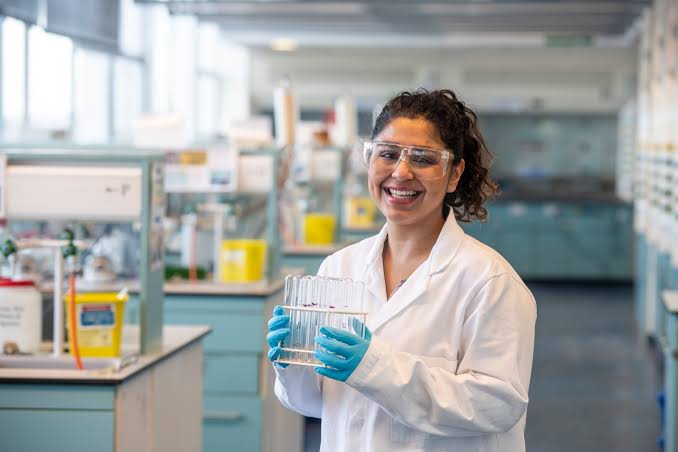
Peptide research in the United Kingdom is thriving in 2026, with world-class universities, innovative spin-out companies, and a government actively investing in the life sciences sector. From the University of Southampton’s Curve Therapeutics securing a $1.6 billion deal with MSD, to the University of Bath’s Revolver Therapeutics winning the Royal Society of Chemistry’s Emerging Technologies Competition, the UK is demonstrating why it remains a global leader in peptide science [citation:1][citation:5].
This guide provides a comprehensive overview of peptide research in the United Kingdom as of 2026, including the regulatory framework governed by the MHRA, major research institutions, breakthrough discoveries, and the companies commercializing peptide therapeutics.
Peptide research in the United Kingdom is experiencing a resurgence, driven by breakthroughs in cyclic peptide discovery, constrained peptide therapeutics, and advanced manufacturing technologies [citation:1][citation:11].
The UK has a strong peptide science community, evidenced by the busy annual conference schedule and the activities of both the Peptide and Protein Science Group (PPSG) and Chemical Biology and Bio-organic Chemistry Group (CBBG) of the Royal Society of Chemistry [citation:4]. Core meetings in the UK calendar include the annual British Peptide Society/PPSG Chemistry and Biology of Peptides Symposium and the Peptides Congress, organized by Oxford Global [citation:4].
Excellence in peptide science is recognized in the UK through the biennial RSC Medimmune Protein and Peptide Science Award, with Professor Ali Tavassoli (University of Southampton) winning in 2017 for his exceptional work on genetically encoded cyclic peptide libraries [citation:4]. The UK community has also created a vibrant network for early career researchers through the annual PPSG Early Stage Researcher Meeting and CBBG Postgraduate Symposium [citation:4].
With the UK government’s Life Sciences Sector Plan aiming to unlock the potential of the life sciences sector to drive economic growth, the country is positioning itself as a global leader in peptide therapeutics manufacturing [citation:7]. The government has stated its ambition to stimulate the discovery of new medicines and encourage investment in manufacturing facilities, particularly for emerging modalities such as peptides [citation:7].

The Medicines and Healthcare products Regulatory Agency (MHRA) is the UK’s regulatory authority for medicines and therapeutic goods. Peptide research in the United Kingdom operates within a clear regulatory framework that distinguishes between research-use-only compounds and therapeutic medicines [citation:3][citation:6].
| Category | Description | Examples |
|---|---|---|
| Approved medicines | Peptides that have completed clinical trials and received MHRA marketing authorization | GLP-1 receptor agonists, insulin |
| Research peptides | Peptides sold for laboratory research only, not approved for human use | Various, sold under “research use only” designation |
| Cosmetics or supplements | Peptides marketed for non-medicinal purposes | Some topical peptides, collagen supplements |
In April 2026, the MHRA launched an investigation into UK clinics following reports that some were promoting unregulated, experimental peptides and making unsupported claims about their benefits online [citation:6][citation:10]. The MHRA confirmed that clinics are not permitted to make medicinal claims for peptide treatments they offer [citation:6].
The MHRA has made it clear that “If clinics offering peptide injections make medicinal claims for those treatments, the products will be considered medicines and subject to regulation under the Human Medicines Regulations 2012” [citation:6]. The MHRA will take action against clinics which are identified as breaching the legal requirements [citation:6].
The MHRA determines whether a product is a medicine on a case-by-case basis. This includes consideration of a number of factors including the product’s effect on the body, the way it is used, and all available evidence and relevant legal precedents [citation:10]. The MHRA disregards claims that products are for “research purposes” if it is clear that such claims are being used as an attempt to avoid medicines regulations [citation:10].
In the UK, peptides such as BPC-157 cannot be sold for use in humans. The MHRA will not permit them for human use because the active ingredients are not manufactured at sites regulated by a recognized authority such as the MHRA or FDA or equivalent [citation:3]. Without that regulatory infrastructure, these ingredients cannot and should not move through legitimate pharmaceutical channels [citation:3].
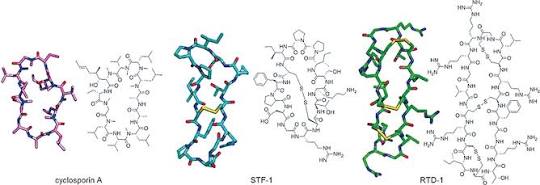
Peptide research in the United Kingdom is exemplified by the University of Southampton, where Professor Ali Tavassoli and his team have created a platform to make and test millions of molecules called cyclic peptides inside live mammalian cells [citation:5].
Curve Therapeutics, a spin-out from the University of Southampton, was founded by Professor Ali Tavassoli and Dr Simon Kerry to unlock new pathways to drug discovery [citation:5]. The company uses specialist technology to engineer cells to fluoresce if the molecule they are testing stops a disease-causing protein from working [citation:5].
Key Achievements:
The platform makes and tests millions of cyclic peptides directly inside live mammalian cells. If a molecule stops a disease-causing protein from working, the cells fluoresce. This allows researchers to quickly create a library of molecules that could potentially become new therapies [citation:5].
Professor Tavassoli chose Southampton over a prestigious post in the USA because “from the outset it was clear to me that I had found a partner for my career, an institution that would provide the facilities and support I needed to make my vision a reality” [citation:5]. The University backed him by building mammalian cell culture facilities within the Chemistry department, which was “unheard of at the time” in 2007 [citation:5].
Peptide research in the United Kingdom at the University of Bath is making significant strides in targeting previously “undruggable” cancer targets through constrained peptide therapeutics [citation:1][citation:2].
Revolver Therapeutics, a spin-out from the University of Bath, develops peptide therapeutics against disease-driving proteins that have historically been considered “undruggable” [citation:1]. These include transcription factors proteins that control gene expression and play central roles in many cancers which have proved extremely difficult to target with conventional drugs [citation:1].
Key Achievements:
Transcription factors act like master regulators of disease inside cells, controlling which genes are turned on or off. In cancer, they can drive tumour growth, survival and resistance to treatment. But they have been notoriously hard to target with conventional drugs: they sit deep inside the cell’s nucleus and lack the “binding pockets” that conventional small molecules typically dock into [citation:2].
Revolver’s treatments are built around specially designed peptides discovered using its proprietary Transcription Block Survival platform. The platform finds peptides that can get inside cells and switch off previously unreachable targets, overcoming a long-standing barrier that has held back this kind of therapy [citation:2].
Professor Jody Mason, Chief Scientific Officer of Revolver Therapeutics and Professor of Biochemistry at the University of Bath, said: “We’ve already shown we can stop tumour cells growing in the lab while cracking the challenge of getting our molecules inside cells a hurdle that has held this field back for years” [citation:2].
Richard Haycock, Co-Founder and CEO of QantX Ltd, said: “Revolver is going after targets that have defeated drug discovery for decades that’s exactly the kind of hard science QantX exists to back. They’re a standout example of world-class innovation coming out of the South West of England” [citation:2].
Peptide research in the United Kingdom at the University of Edinburgh is advancing multiple frontiers in peptide science, from fluorescent peptides to stapled peptide design [citation:4].
Professor Marc Vendrell’s group at the University of Edinburgh focuses on the development and application of fluorescent cyclic peptides as imaging agents [citation:4]. His review in the special issue of Peptide Science covers the multitude of synthesis strategies, methods of characterization, and validation of these imaging agents in biological studies [citation:4].
Professor Alison Hulme from the University of Edinburgh provides a critical analysis of stapled peptide design methods. Particular attention is paid to lessons learned from available crystal structures of stapled peptides bound to their target proteins [citation:4]. The article includes an excellent overview of methods to improve pharmacokinetic properties of stapled peptides that target a broad range of therapeutically relevant protein-protein interactions [citation:4].
Peptide research in the United Kingdom at the University of Nottingham is driving innovation in peptide macrocyclization and green chemistry [citation:11].
Nick Mitchell from the University of Nottingham delivered a fascinating talk at CatSci’s Innovations in Peptide Science conference on peptide macrocyclization [citation:11]. His research focuses on C2-alkylation of Tryptophan and visible light-mediated desulphurisation of Cysteine [citation:11].
Nick Mitchell is also organizing the 1st Protein and Peptide Science Group Conference on December 15th and 16th, 2026 in Nottingham, with support from the Royal Society of Chemistry [citation:11].
Peptide research in the United Kingdom at the University of Glasgow is exploring novel approaches to designing chain-specific ubiquitin binding peptides [citation:11].
Drew Thomson from the University of Glasgow introduced a novel approach to the design of chain-specific ubiquitin binding peptides. This work provides hints for how they could be employed as tools for modulating the ubiquitin-proteasome system [citation:11]. Some of this work was recently published in 2024, demonstrating the ongoing innovation in UK peptide research [citation:11].
Peptide research in the United Kingdom at Newcastle University focuses on cyclic peptides discovered through display technologies [citation:4].
Professor Akane Kawamura at Newcastle University reviews cyclic peptides discovered through display technologies. A strong focus is placed on the importance of peptide secondary structure for bioactivity, highlighting structure-based design as an extremely useful strategy to obtain improved activity and physicochemical properties [citation:4].
Peptide research in the United Kingdom at the University of Manchester covers drug design, development and delivery, including peptide-based therapeutics [citation:9].
Peptide research in the United Kingdom is supported by significant industry and government investment [citation:7].
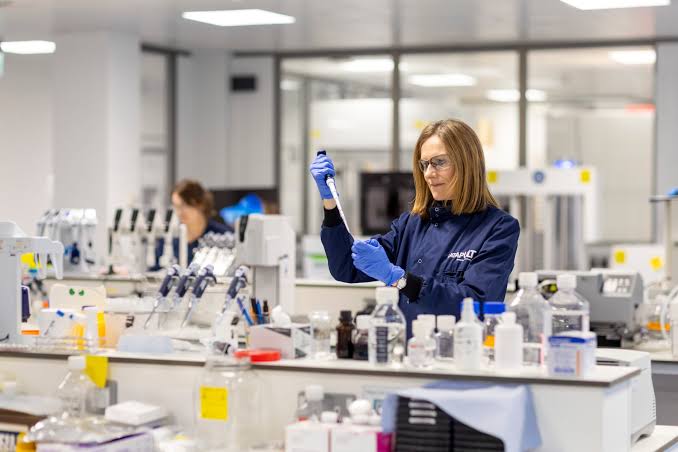
In July 2025, CatSci hosted its inaugural Peptide Symposium “Innovations in Peptide Science” at BioCity, Nottingham [citation:11]. The event welcomed over 100 scientists, innovators, academics, and industry leaders, offering a snapshot of recent advances in the field and the kind of work that has led to a resurgence of interest in Peptide Science [citation:11].
Key topics included:
The UK government’s Life Sciences Sector Plan outlines a series of measures aimed at stimulating the discovery of new medicines and encouraging investment in manufacturing facilities [citation:7]. These initiatives are designed to enhance the speed and capacity for delivering commercial trials and research [citation:7].
The government has stated that the UK has the potential to become a global leader in the manufacturing of emerging modalities, such as peptides, oligonucleotides, antibody-drug conjugates, and peptide-drug conjugates [citation:7]. These fast-growing modalities are transforming the treatment landscape for a range of diseases, including diabetes, antimicrobial resistance, and cardiovascular disorders [citation:7].
To support this, experts recommend a focused research effort on understanding and predicting peptides’ properties, accompanied by a “Peptide Genome Initiative,” as well as the development of better synthesis and separation technologies [citation:7]. Such an initiative could build on the £600 million investment from the UK Government and the Wellcome Trust to establish the Health Data Research Service [citation:7].
A further recommendation is the creation of a National Centre for Emerging Medicines Manufacturing (NCEMM), which would integrate scientific discovery with engineering innovation and translation [citation:7]. The centre would support the full pipeline from basic research to commercial-scale production [citation:7].
Peptide research in the United Kingdom compares favorably to other major research nations:
| Country | Regulatory Authority | Key Institutions | 2026 Status |
|---|---|---|---|
| United Kingdom | MHRA | Southampton, Bath, Edinburgh, Nottingham, Glasgow, Newcastle, Manchester | Strong government investment, growing industry partnerships |
| United States | FDA | Vanderbilt, KU, UC Santa Barbara, MIT | Compounding decision pending |
| Australia | TGA | CIPPS, UQ, Sydney, ANU, Monash | Enforcement priority |
| Canada | Health Canada | University of Saskatchewan, UBC, U of T | Compliance activity increasing |
The MHRA regulates peptides intended for human use. Peptides that are not MHRA-approved cannot be sold or marketed for therapeutic use in the UK. “Research use only” disclaimers do not circumvent this requirement if the product is intended for human use. More detail is available through the MHRA official website.
In April 2026, the MHRA launched an investigation into UK clinics following reports that some were promoting unregulated, experimental peptides and making unsupported claims about their benefits online. The MHRA confirmed that clinics are not permitted to make medicinal claims for peptide treatments. The MHRA disregards claims that products are for “research purposes” if such claims are used to avoid medicines regulations [citation:6][citation:10].
Curve Therapeutics is a spin-out from the University of Southampton founded by Professor Ali Tavassoli. The company develops cyclic peptides using a platform that tests molecules inside live mammalian cells. It has achieved a $1.6 billion deal with MSD and raised £45 million in venture capital investment, including a financing round led by Pfizer Ventures [citation:5].
Revolver Therapeutics is a spin-out from the University of Bath founded by Professor Jody Mason. The company develops peptide therapeutics targeting “undruggable” transcription factors. It won the Royal Society of Chemistry’s Emerging Technologies Competition 2026 and secured a £572k funding round to advance novel peptides into colorectal cancer [citation:1][citation:2].
The UK government’s Life Sciences Sector Plan aims to unlock the potential of the life sciences sector, with a focus on emerging modalities including peptides. The government recommends creating a National Centre for Emerging Medicines Manufacturing (NCEMM) and investing in the development of better synthesis and separation technologies [citation:7].
The Royal Society of Chemistry supports the UK peptide science community through the Peptide and Protein Science Group (PPSG) and Chemical Biology and Bio-organic Chemistry Group (CBBG). The RSC also hosts the Emerging Technologies Competition, which Revolver Therapeutics won in 2026, and supports the Protein and Peptide Science Group Conference [citation:1][citation:4][citation:11].
Continue Learning
This post is part of a growing educational library on peptide research and regulatory compliance. Related reading:
Subscribe for updates as this educational library continues to grow, evidence based peptide research guidance explained clearly and practically.
This content is for educational and informational purposes only. It does not constitute medical advice, diagnosis, or treatment recommendations. Research peptides are for laboratory use only and are not approved for human consumption or therapeutic use. Always consult a qualified healthcare professional before making any decisions related to your health.
10-vial kits • Capsule packs as listed • Research use only
© 2026 Pepkitshop. All rights reserved.
Vial product prices are per kit of 10 vials. Quantity 1 = 10 vials. Capsule products retain the pack size stated on their listing.
All products are supplied strictly for laboratory research. They are not intended for human or veterinary use, consumption, diagnosis, or treatment.
WhatsApp us
 Optimized by Seraphinite Accelerator
