Vial products: price per kit of 10 vials. Quantity 1 = 10 vials. Capsule products are priced per capsule pack as listed. Dismiss
By Pepkitshop | Peptide Coach and Educator
Updated July 2026 | Educational Content, Not Medical Advice
What is cellular senescence and why has it become one of the most actively researched topics in longevity and aging science?
If you follow peptide science, longevity research, or regenerative medicine, you have almost certainly encountered this term. Cellular senescence appears at the center of conversations about aging, cancer biology, tissue degeneration, and the emerging field of senolytics. Yet for all the attention it receives, a clear and complete explanation of what is cellular senescence remains surprisingly rare outside academic literature.
This guide provides that explanation. By the end you will understand what is cellular senescence at a biological level, what triggers it, what the senescence associated secretory phenotype actually does, how senescent cells accumulate over a lifetime, and what the most current 2026 research shows about therapeutic approaches targeting this process.
If you are new here, start with our guide on [what a peptide actually is] and our post on [how peptides work in the body] before continuing. Understanding cellular signaling first makes the senescence biology significantly clearer.
What is cellular senescence in plain terms?
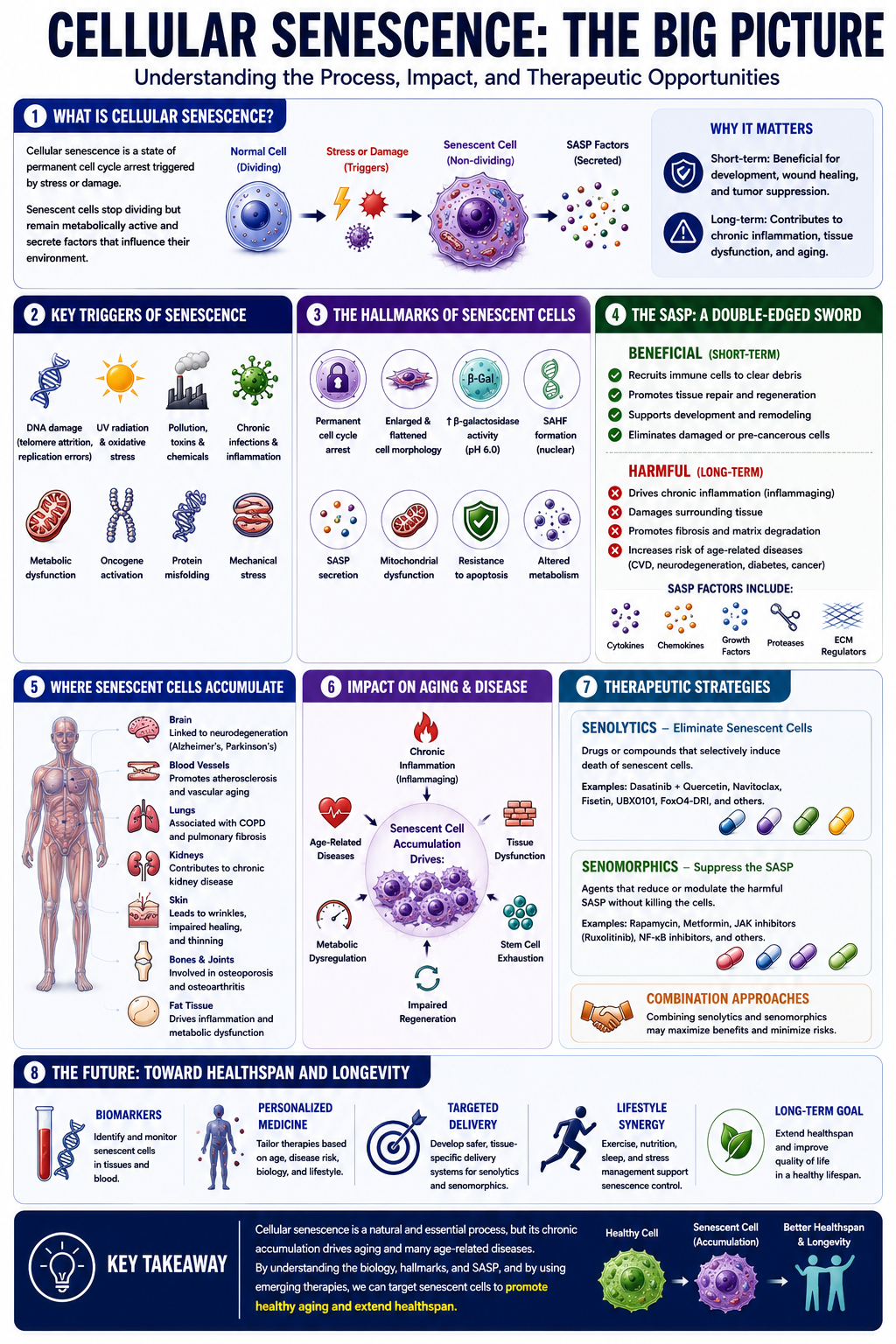
Cellular senescence is a fundamental biological process in which damaged or stressed cells permanently stop dividing while remaining metabolically active.
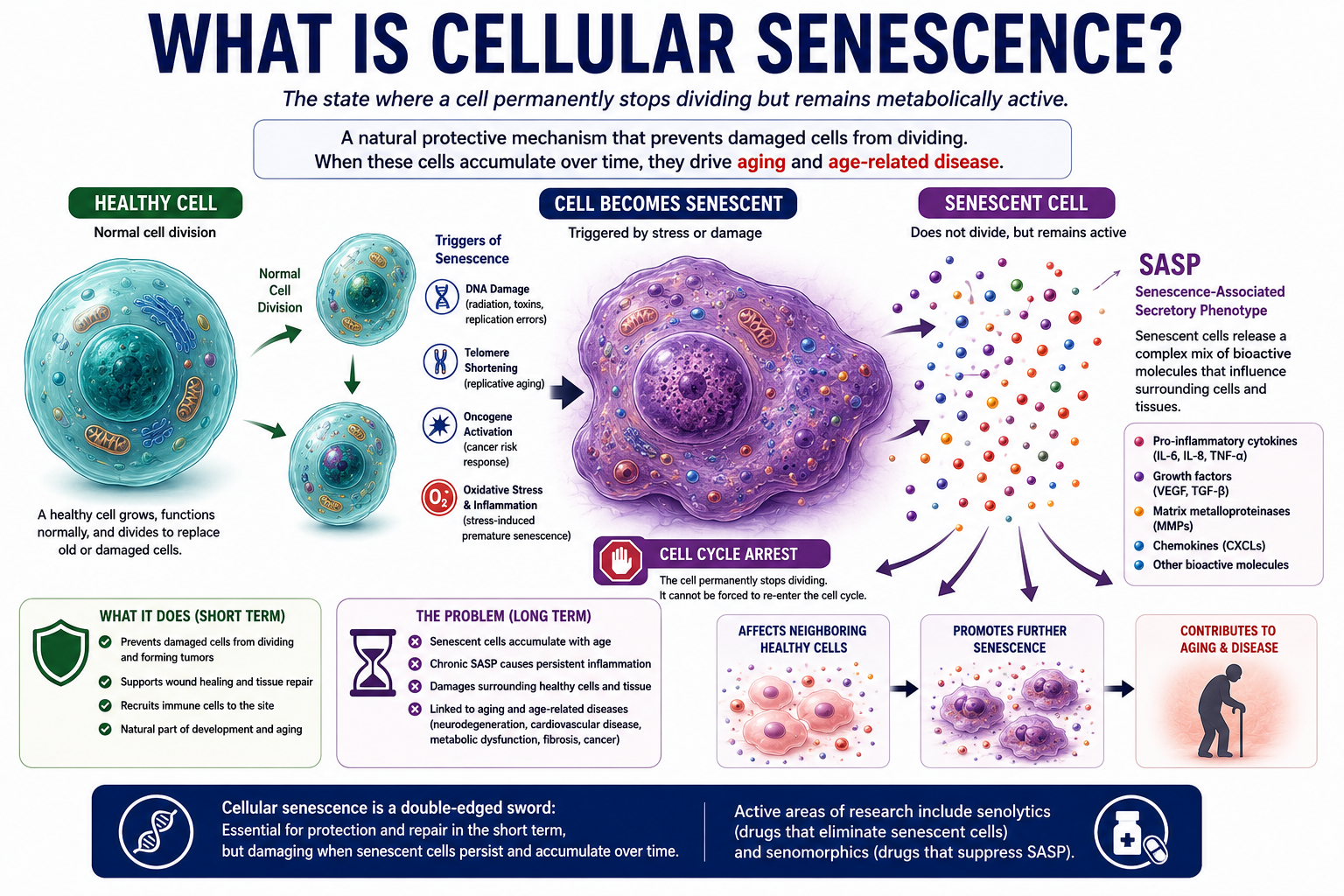
In everyday language, what is cellular senescence is a biological state where a cell stops reproducing but does not die. It enters a kind of permanent pause. The cell remains alive, remains metabolically active, continues consuming oxygen and nutrients, but it will never divide again regardless of any signals it receives telling it to do so.
Cellular senescence refers to a state of stable cell cycle arrest in which proliferating cells become resistant to growth promoting stimuli, typically in response to DNA damage.
This permanent arrest is not a malfunction. At least not initially. What is cellular senescence evolved as a protective mechanism, a way for the body to stop damaged or potentially cancerous cells from reproducing and passing on their damage to daughter cells. A cell that has accumulated too much DNA damage or has been triggered by oncogenes becomes senescent rather than continuing to divide and potentially forming a tumor.
The problem arises not from any single senescent cell but from the accumulation of senescent cells over decades of life. As the body ages, senescent cells build up faster than they can be cleared. And these cells, while no longer dividing, are far from silent. They actively secrete a complex mix of inflammatory signals that affect neighboring cells, surrounding tissue, and systemic biology in ways that become progressively more damaging over time.
What is cellular senescence therefore has two faces. It is simultaneously a protective mechanism that prevents cancer and supports healing, and a driver of aging and age related disease when it accumulates beyond the body’s ability to manage it.
What is cellular senescence in its historical context?
The scientific story of what is cellular senescence begins in 1961 with a landmark observation by Leonard Hayflick and Paul Moorhead at the Wistar Institute. Working with human fibroblast cells in laboratory culture, they noticed something that contradicted the prevailing scientific consensus of the time.
It was widely believed that normal human cells, given adequate nutrition and conditions, could divide indefinitely. Hayflick and Moorhead found the opposite. Normal human cells divided approximately 40 to 60 times and then permanently stopped. This limit became known as the Hayflick Limit.
The scientific community initially resisted this finding. The leading cell biologist of the era, Alexis Carrel, had claimed to have kept chicken heart cells alive and dividing for over 34 years, a result that was later found to be unreproducible and likely contaminated. When Hayflick published his results showing that normal cells have a finite replicative capacity, he faced significant skepticism.
His observation has since been confirmed repeatedly. What is cellular senescence replicative senescence specifically is the gradual shortening of telomeres, the protective caps on chromosome ends, with each cell division. When telomeres reach a critically short length, the cell detects this as DNA damage and enters senescence.
The discovery of the senescence associated secretory phenotype in the 2000s transformed the field. Researchers realized that senescent cells were not simply quiescent bystanders. They were actively secreting molecules that influenced the surrounding tissue environment in profound ways, both protective and destructive depending on context and duration.
What is cellular senescence triggered by?
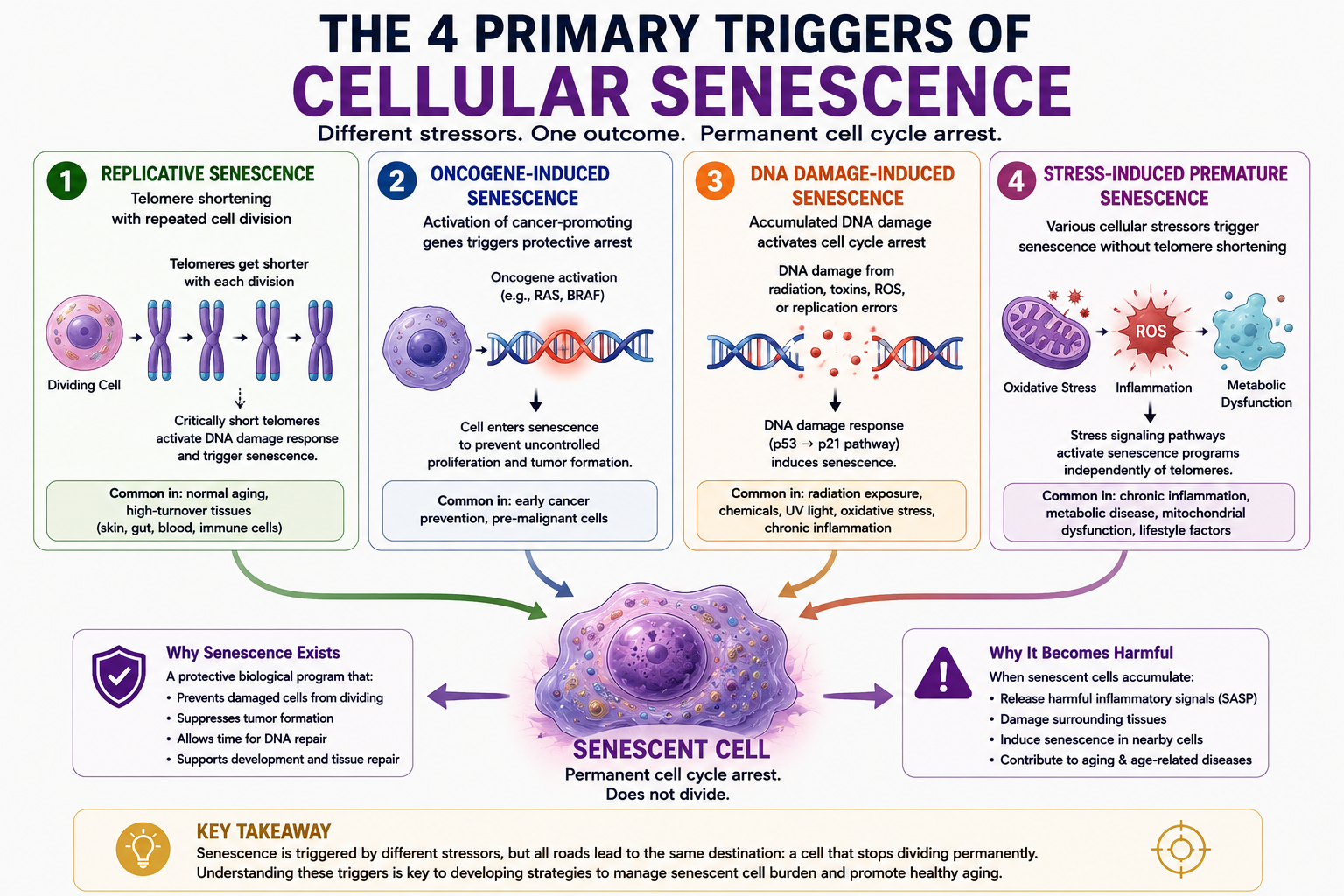
Cellular senescence is a fundamental biological process characterized by the irreversible arrest of cell division, typically triggered by various stressors including telomere attrition, DNA damage, and oxidative stress.
Research has identified four primary categories of senescence triggers:
The 4 Triggers of Cellular Senescence
| Trigger | Mechanism | Common Context |
|---|---|---|
| Replicative Senescence | Telomere shortening reaches critical threshold after repeated cell division | Normal aging, high turnover tissues |
| Oncogene Induced Senescence | Activation of cancer promoting genes triggers protective senescence arrest | Early stage cancer prevention |
| DNA Damage Induced Senescence | Accumulated DNA damage activates p53 and p21 pathways | Radiation, toxins, oxidative stress |
| Stress Induced Premature Senescence | Various cellular stressors trigger senescence without telomere involvement | Oxidative stress, inflammation, metabolic dysfunction |
Trigger 1: Replicative Senescence
This is the original senescence mechanism identified by Hayflick. Each time a cell divides, its telomeres shorten slightly. Telomeres are repetitive DNA sequences that cap chromosome ends and protect genetic material from degradation. When telomeres reach a critically short length after many divisions, the cell interprets this as DNA damage and permanently exits the cell cycle.
Trigger 2: Oncogene Induced Senescence
When proto-oncogenes mutate into cancer promoting oncogenes, they can trigger an abnormal proliferation signal. Rather than allowing this signal to drive uncontrolled division, the cell activates senescence as a tumor suppressive response. This is one of the most important protective functions of what is cellular senescence, acting as a barrier against malignant transformation.
Trigger 3: DNA Damage Induced Senescence
Direct DNA damage from radiation, chemical exposure, oxidative stress, or replication errors activates the DNA damage response pathway. Key proteins including p53 and its downstream target p21 are activated, halting the cell cycle. If the damage is too severe to repair, the arrest becomes permanent and the cell enters senescence.
Trigger 4: Stress Induced Premature Senescence
Various cellular stressors can trigger senescence through pathways that do not involve telomere shortening. Oxidative stress, metabolic dysfunction, chronic inflammation, and mitochondrial dysfunction can all activate senescence programs independently. A new review published in Volume 18 of Aging on June 22, 2026, titled The multifaceted inducers of cellular senescence, confirmed that the diversity of senescence triggers is considerably broader than previously appreciated, with multiple intrinsic and extrinsic stimuli capable of inducing the state through distinct but overlapping molecular pathways.
What is cellular senescence recognizable by at the cellular level?
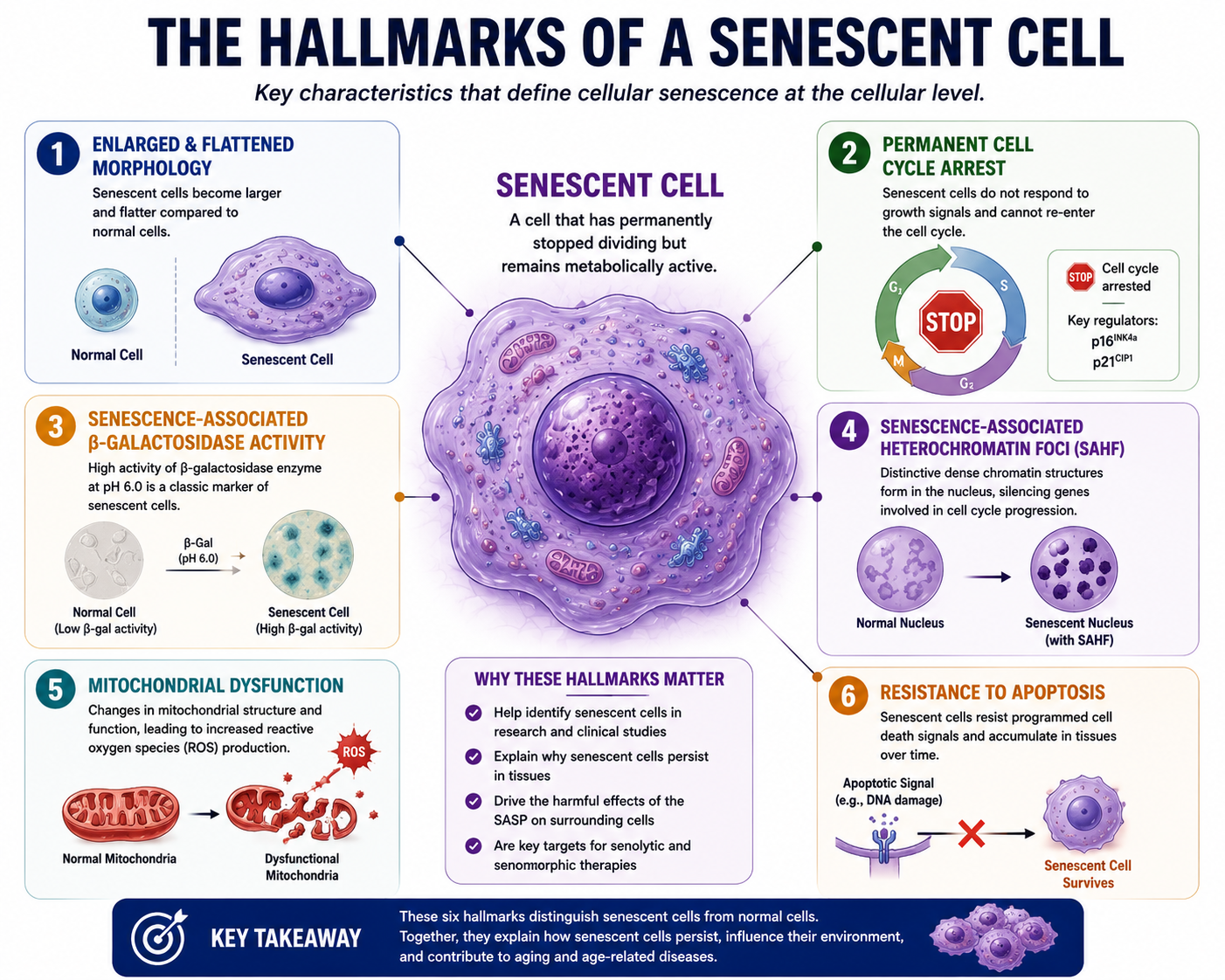
Senescent cells are characterized by morphological and metabolic changes, chromatin reorganization, altered gene expression, and adoption of a pro-inflammatory phenotype known as the senescence associated secretory phenotype.
Several distinguishing characteristics allow researchers to identify senescent cells:
Enlarged and Flattened Morphology
Senescent cells typically become significantly larger and flatter than their normal counterparts. This morphological change reflects widespread alterations in cytoskeletal organization and cell volume regulation.
Permanent Cell Cycle Arrest
The defining feature. Senescent cells do not respond to growth factors or mitogenic signals that would normally trigger division. Key cell cycle regulators including p16INK4a and p21 maintain this arrest.
Senescence Associated Beta Galactosidase Activity
An enzyme called beta galactosidase becomes highly active in senescent cells at a pH of 6.0, a condition not seen in normal cells. Detection of this enzyme activity is one of the primary laboratory methods used to identify senescent cells in tissue samples.
Senescence Associated Heterochromatin Foci
Distinctive chromatin structures form in the nuclei of senescent cells. These structures, called senescence associated heterochromatin foci or SAHF, are regions of condensed chromatin that contribute to silencing genes involved in cell cycle progression.
Resistance to Apoptosis
Paradoxically, senescent cells become more resistant to the programmed cell death signals that would normally clear damaged cells from tissues. This resistance is one of the reasons senescent cells accumulate with age rather than being removed through normal cellular housekeeping.
Mitochondrial Dysfunction
Senescent cells show characteristic changes in mitochondrial function, including altered membrane potential, increased reactive oxygen species production, and changes in the dynamics of mitochondrial fusion and fission.
What is cellular senescence without understanding SASP? Incomplete.
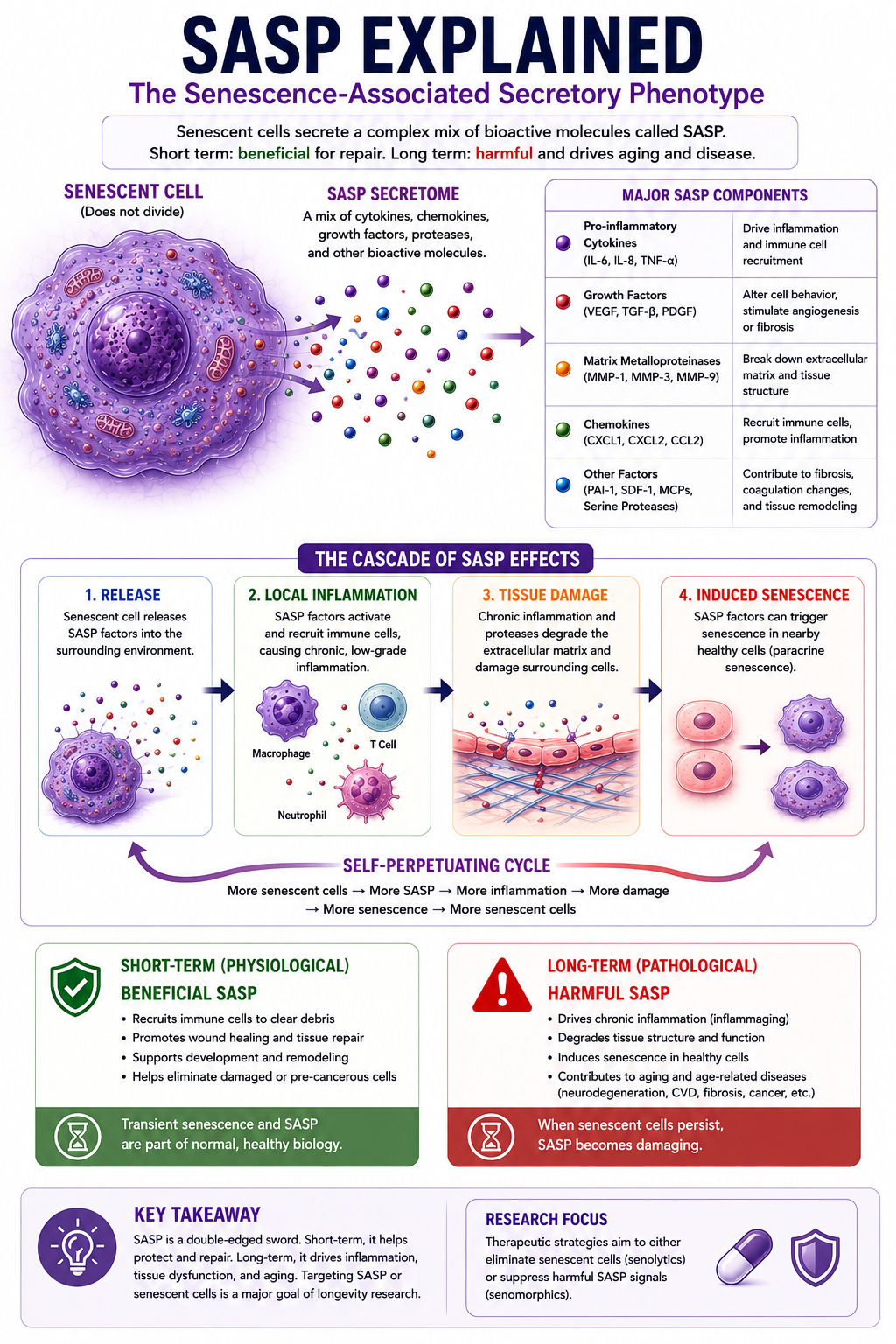
The senescence associated secretory phenotype is arguably the most important concept in understanding what is cellular senescence and its role in aging. SASP refers to the complex mixture of bioactive molecules that senescent cells secrete into their surrounding environment.
Senescent cells secrete a cocktail of inflammatory and stromal regulators denoted as the senescence associated secretory phenotype or SASP, which adversely impact neighboring cells, the surrounding extracellular matrix, and other structural components, resulting in chronic inflammation, the induction of senescence in healthy cells, and vulnerable tissue.
| SASP Component | Type | Effect on Surrounding Tissue |
|---|---|---|
| Interleukin-6 (IL-6) | Pro-inflammatory cytokine | Drives chronic local inflammation |
| Interleukin-8 (IL-8) | Pro-inflammatory cytokine | Recruits immune cells, promotes inflammation |
| MMP-1, MMP-3, MMP-9 | Matrix metalloproteinases | Degrades extracellular matrix structure |
| VEGF | Growth factor | Stimulates abnormal angiogenesis in some contexts |
| TGF-beta | Growth factor | Promotes fibrosis and tissue stiffening |
| Plasminogen Activator Inhibitor-1 | Coagulation regulator | Contributes to tissue fibrosis |
| CXCL1, CXCL2 | Chemokines | Recruit inflammatory immune cells |
SASP serves important short term functions. When a cell first becomes senescent following injury or stress, its SASP signals recruit immune cells to clear the senescent cell and stimulate local tissue repair processes. In wound healing, transient senescence and SASP are part of normal repair biology, as covered in our post on [angiogenesis].
The problem emerges when senescent cells persist rather than being cleared. Chronic SASP creates a state of persistent low grade inflammation, sometimes called inflammaging, that progressively damages surrounding tissue. SASP can also induce senescence in neighboring healthy cells through paracrine signaling, creating a self propagating expansion of the senescent cell population.
This chronic inflammatory environment promoted by accumulated SASP is now understood to contribute to a wide range of age related conditions including neurodegeneration, cardiovascular disease, metabolic dysfunction, and cancer progression.
What is cellular senescence in its two distinct biological roles?
Understanding that senescence serves both beneficial and harmful functions depending on context and duration is essential to appreciating the complexity of the field.
Physiological vs Pathological Senescence Comparison Table
| Physiological Senescence | Pathological Senescence | |
|---|---|---|
| Duration | Transient, cells cleared by immune system | Persistent, chronic accumulation |
| SASP effect | Beneficial, promotes repair and immune recruitment | Harmful, drives chronic inflammation |
| Net tissue effect | Repair promotion, tumor suppression | Tissue degeneration, chronic disease |
| Immune clearance | Efficient | Impaired, often age related |
| Examples | Embryonic development, wound healing, tumor suppression | Aging tissue, age related disease |
| Research approach | Preserve and support | Target for elimination or modulation |
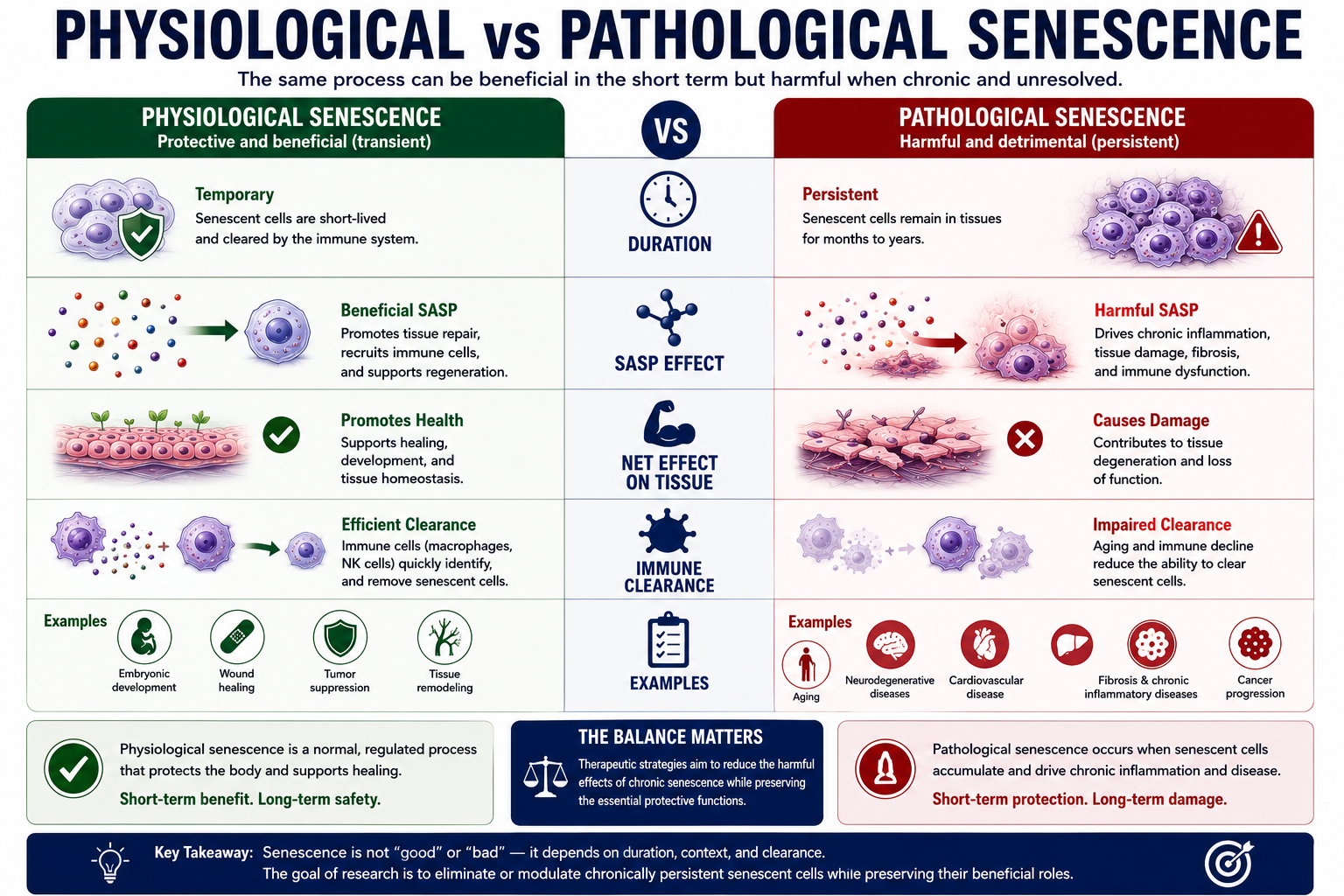
Physiologically, senescence acts as a safeguard against tumorigenesis by preventing the proliferation of damaged or defective cells. However, persistent activation of senescence can contribute to various pathological conditions, particularly those associated with aging, cancer, and other chronic diseases such as liver and pulmonary diseases.
The dual nature of what is cellular senescence explains why therapeutic approaches targeting senescence must be precise. Simply eliminating all senescent cells would remove their tumor suppressive and wound healing functions. The research goal is to eliminate or modulate chronically persisting senescent cells while preserving the beneficial transient senescence that supports normal physiology.
What is cellular senescence burden in aging tissues?
Senescent cells accumulate with age and contribute to the normal aging process as well as age related disorders. The link between senescence, aging, and age related pathologies including cancer, neurodegeneration, and metabolic and cardiovascular diseases have largely fueled the senescence research field.
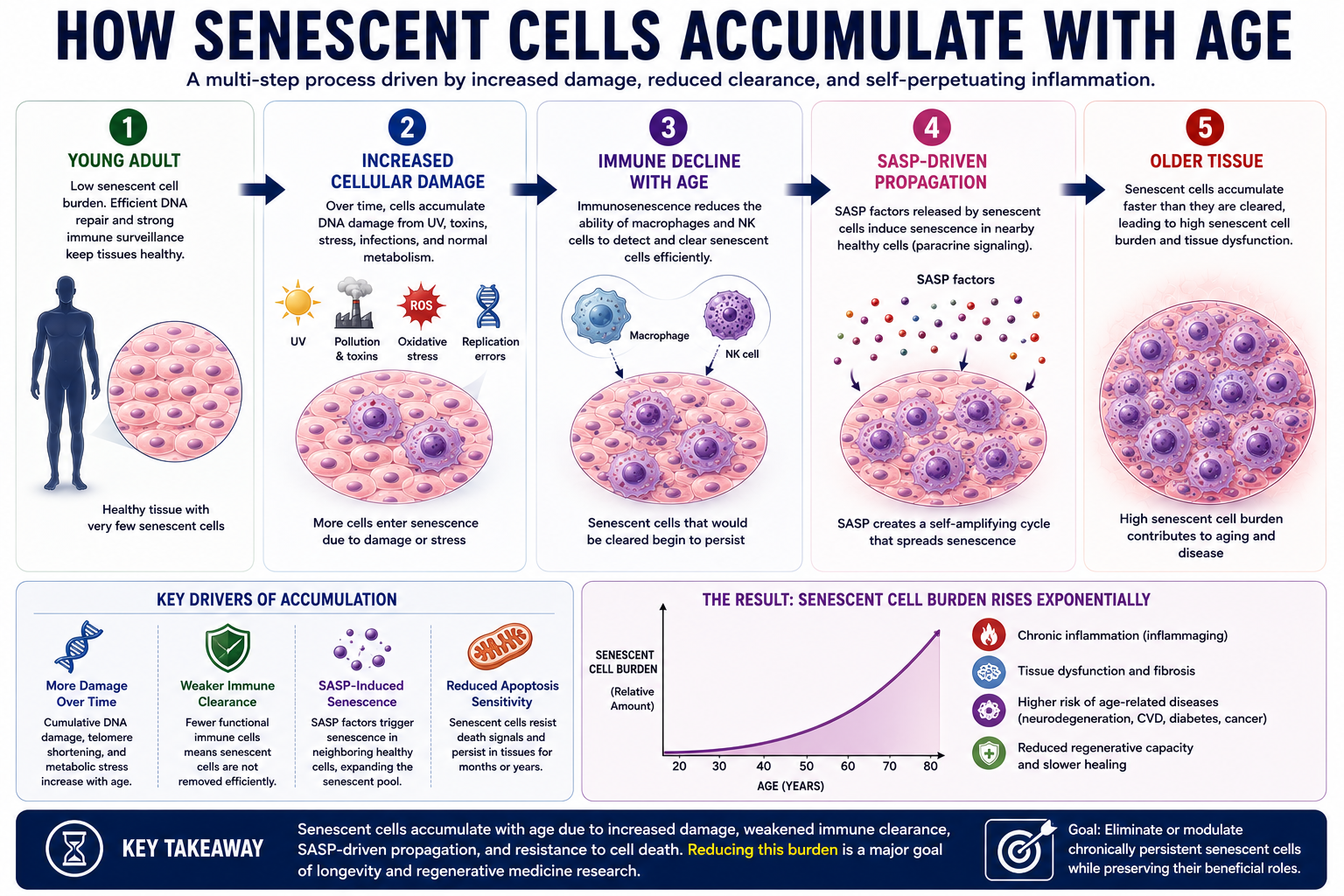
Several interconnected mechanisms explain why senescent cell burden increases with age:
Increased Senescence Induction
As organisms age, cells accumulate more DNA damage, experience more oxidative stress, and have shorter telomeres from decades of division. Each of these factors increases the rate at which cells enter senescence.
Impaired Immune Clearance
The immune system normally identifies and eliminates senescent cells through a process involving natural killer cells and macrophages. With age, immune function declines, a process called immunosenescence, reducing the efficiency of senescent cell clearance. Cells that would have been rapidly cleared in a younger organism persist for months or years in older tissue.
SASP Driven Propagation
The inflammatory SASP secreted by existing senescent cells can induce senescence in neighboring healthy cells through paracrine signaling. This creates a self amplifying cycle where existing senescent cells generate new ones, accelerating accumulation beyond what aging alone would produce.
Reduced Apoptosis Sensitivity
Senescent cells develop resistance to the apoptosis signals that would normally clear damaged cells. This resistance means they persist even when conditions that would normally trigger cell death are present.
Growing evidence links aging to heightened activation of cellular senescence, leading to the accumulation of senescent cells. Research in rodent models has shown that selectively eliminating senescent cells in vivo can reduce inflammation, enhance immune system function, and thereby slow the progression of age related diseases, leading to increased health and lifespan.
What is cellular senescence research focused on therapeutically in 2026?
Two primary therapeutic strategies have emerged from the understanding of what is cellular senescence and its role in aging:
Senolytics vs Senomorphics Comparison Table
| Senolytics | Senomorphics | |
|---|---|---|
| Goal | Eliminate senescent cells | Modulate SASP without killing cells |
| Mechanism | Target pro-survival pathways in senescent cells | Suppress inflammatory SASP signaling |
| Effect | Reduce senescent cell burden | Reduce damage from persisting senescent cells |
| Research stage | Phase 1 and 2 human clinical trials | Preclinical and early clinical |
| Potential benefit | Reduce senescence burden systemically | Lower inflammation without cell elimination |
| Potential risk | Loss of beneficial senescence functions | Senescent cells remain but are less active |
| Examples in research | Dasatinib plus quercetin, navitoclax | Rapamycin, JAK inhibitors |
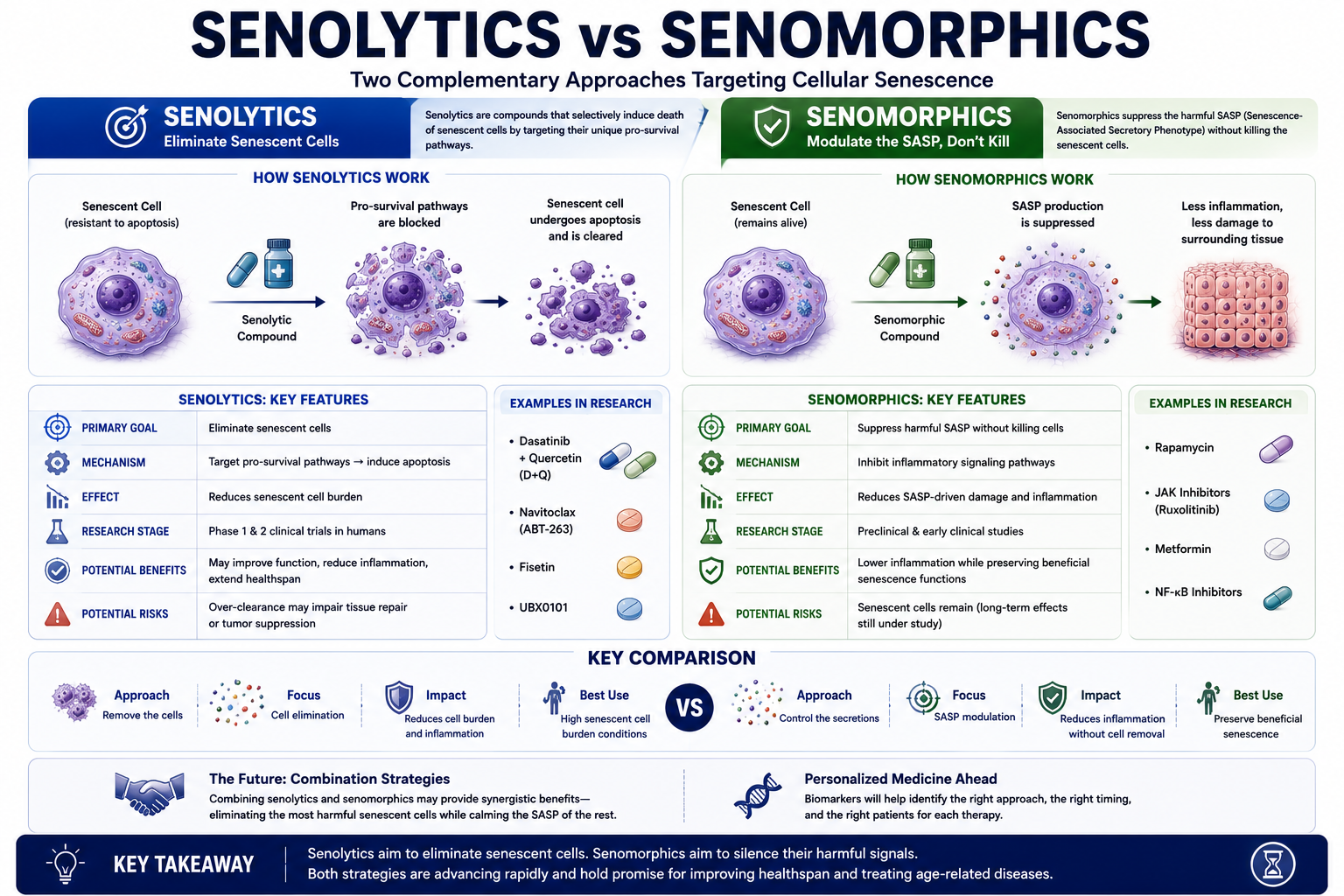
Senolytics are compounds designed to selectively eliminate senescent cells by targeting the pro-survival pathways that make senescent cells resistant to apoptosis. The rationale is that removing the accumulated senescent cell burden will reduce SASP driven inflammation and restore more youthful tissue function. Several senolytic compounds are currently in human clinical trials.
Senomorphics take a different approach. Rather than eliminating senescent cells, they aim to suppress the harmful SASP signals without killing the cells. This preserves the tumor suppressive and developmental functions of senescence while reducing the chronic inflammatory damage. Compounds including rapamycin and JAK inhibitors have shown senomorphic activity in research settings.
The field is moving rapidly. What is cellular senescence research in 2026 is no longer purely academic. It is translating into clinical investigations with real implications for how aging and age related disease may be addressed in coming decades.
What is cellular senescence science showing in the most current literature?
A new review published in Volume 18 of Aging on July 7, 2026, led by researchers from the Department of Molecular Cell Biology at the Weizmann Institute of Science, confirmed that cellular senescence is a stable form of cell cycle arrest induced by diverse intrinsic and extrinsic stimuli. The review documented that the diversity of senescence triggers is considerably broader than previously appreciated.
A major 2026 paper published in Cell titled Charting human cellular senescence in aging and disease, from researchers at the Icahn School of Medicine at Mount Sinai, demonstrated that integrating single cell and spatial multi-omics with AI driven analyses enables systematic mapping of senescent cell heterogeneity across human tissues. This represents a significant advance in understanding what is cellular senescence in real human tissue rather than laboratory cell culture models.
A 2026 Frontiers in Cell and Developmental Biology editorial summarizing the current research landscape noted that the intricate interplay between cellular senescence and other fundamental biological processes including immune regulation, metabolism, and tissue architecture is now being explored at unprecedented resolution, with therapeutic implications across multiple age related disease categories.
Further detail on current research directions is available through the National Library of Medicine and peer reviewed research databases.
What is cellular senescence is when a damaged or stressed cell permanently stops dividing but remains alive and metabolically active. It is a biological state between normal function and cell death, and it plays both protective and harmful roles depending on how long it persists and how efficiently the immune system clears senescent cells.
What is cellular senescence caused by falls into four main categories: telomere shortening from repeated cell division, oncogene activation triggering protective arrest, DNA damage from radiation or oxidative stress, and stress induced premature senescence from metabolic dysfunction or inflammation.
SASP stands for senescence associated secretory phenotype. It is the complex mixture of inflammatory cytokines, growth factors, matrix metalloproteinases, and other bioactive molecules that senescent cells secrete into their surrounding environment. Short term SASP supports repair and immune recruitment. Chronic SASP from accumulated senescent cells drives tissue inflammation and age related damage.
The Hayflick Limit is the observation by Leonard Hayflick in 1961 that normal human cells can only divide approximately 40 to 60 times before permanently stopping. This limit is caused by progressive telomere shortening with each division. What is cellular senescence replicative senescence is the state cells enter when they reach this limit.
What is cellular senescence doing in cancer prevention is acting as a tumor suppressive mechanism. When cells accumulate oncogenic mutations, they enter senescence rather than continuing to divide and potentially forming tumors. However, the chronic SASP from accumulated senescent cells can paradoxically create a pro-tumorigenic inflammatory environment, illustrating the dual nature of senescence in cancer biology.
Senolytics are compounds designed to selectively eliminate senescent cells by targeting the pro-survival pathways that protect them from apoptosis. The goal of senolytic research is to reduce the accumulated senescent cell burden in aging tissues to lower SASP driven inflammation and restore more youthful tissue function. Several senolytic compounds are currently in human clinical trials.
What is cellular senescence accumulation is now recognized as one of the hallmarks of aging. Research in animal models has shown that selectively eliminating senescent cells extends healthy lifespan and reduces age related disease. This has made what is cellular senescence a central focus of longevity science and one of the most actively funded areas of aging research in 2026.
Continue Learning
This post is part of a growing educational library on peptide science and longevity biology. Related reading:
[What Is a Peptide?] The foundational guide to what peptides are and how they function as biological signals [How Do Peptides Work in the Body?] The complete guide to receptor binding, signal transduction, and cellular communication [What Is Angiogenesis?] The biology of new blood vessel formation and its role in tissue repair What Is the Hypothalamic Pituitary Axis? Coming next in this educational seriesThis content is for educational and informational purposes only. It does not constitute medical advice, diagnosis, or treatment recommendations. Always consult a qualified healthcare professional before making any decisions related to your health.
10-vial kits • Capsule packs as listed • Research use only
© 2026 Pepkitshop. All rights reserved.
Vial product prices are per kit of 10 vials. Quantity 1 = 10 vials. Capsule products retain the pack size stated on their listing.
All products are supplied strictly for laboratory research. They are not intended for human or veterinary use, consumption, diagnosis, or treatment.
WhatsApp us