
No products in the cart.

Vial products: price per kit of 10 vials. Quantity 1 = 10 vials. Capsule products are priced per capsule pack as listed. Dismiss
By Pepkitshop | Peptide Research Education
Updated August 2026 | Educational Content, Not Medical Advice
Understanding TGA peptide regulations is essential for anyone involved in peptide research or supply in Australia. The Therapeutic Goods Administration (TGA) has designated unapproved peptides as a formal enforcement priority in 2026, making compliance awareness more important than ever for researchers, suppliers, and institutions.
This guide provides a comprehensive overview of TGA peptide regulations, including what is listed on the Australian Register of Therapeutic Goods (ARTG), the distinction between approved therapeutic peptides and research-use-only compounds, recent enforcement actions, and what researchers need to know to stay compliant.
If you are not yet familiar with the Australian peptide research landscape, read our guide on [peptide research in Australia] first. This post builds directly on that foundation.
The Therapeutic Goods Administration (TGA) is Australia’s regulatory authority for therapeutic goods. It operates under the Therapeutic Goods Act 1989 and is part of the Australian Government Department of Health and Aged Care.
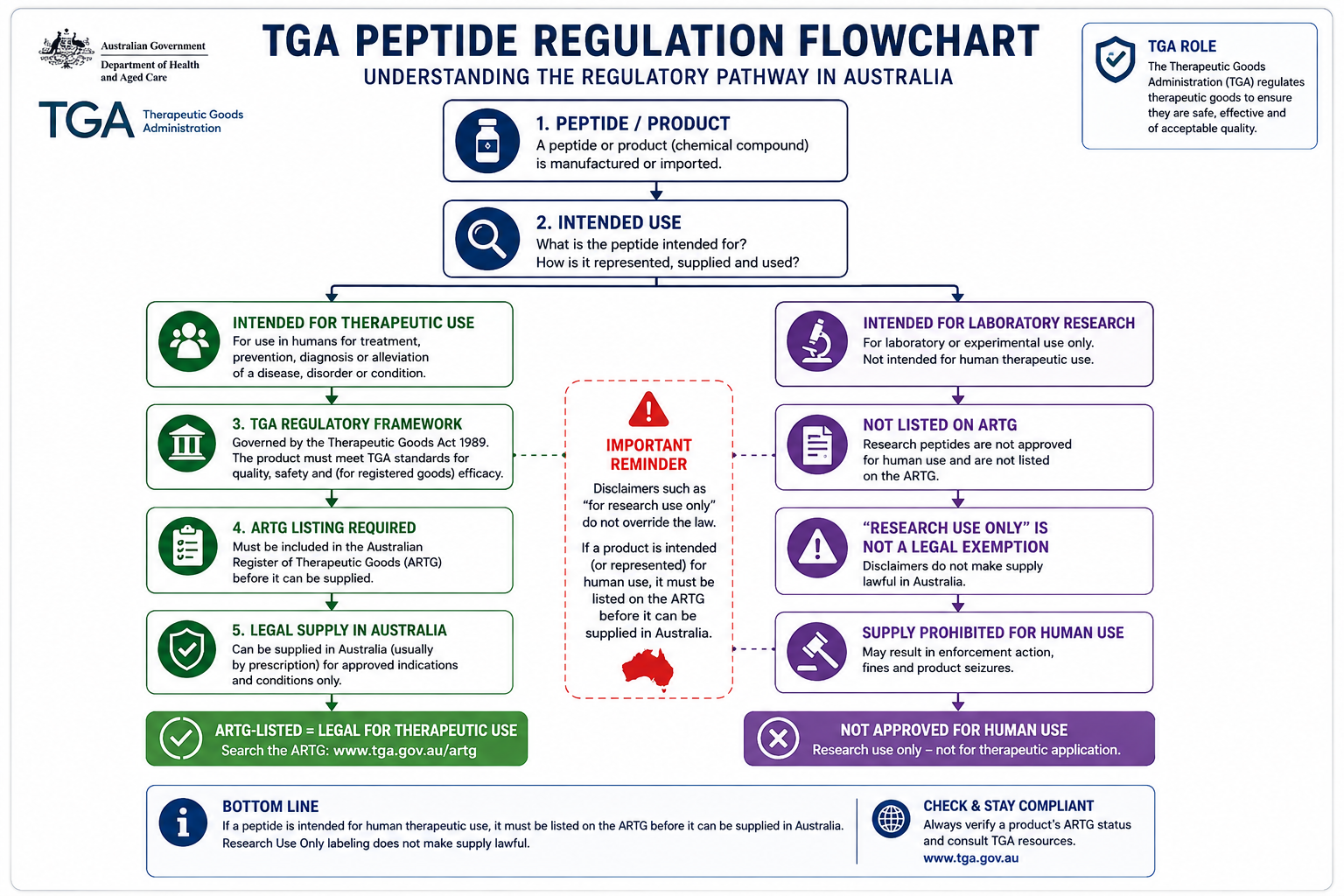
The TGA regulates therapeutic goods, including peptides that are intended for human use. Peptides that are not listed on the Australian Register of Therapeutic Goods (ARTG) cannot be supplied for therapeutic use in Australia.
The TGA’s regulatory framework covers:
The TGA has explicitly stated that products labelled “for research use only” or similar disclaimers do not circumvent the requirement for therapeutic goods to be included in the ARTG before supply.
The ARTG is the official register of therapeutic goods that can be supplied in Australia. The ARTG search allows anyone to search for registered or listed therapeutic goods.
| Category | Description | Examples |
|---|---|---|
| Registered goods | High-risk therapeutic goods, assessed for quality, safety, and efficacy | Insulin, GLP-1 receptor agonists |
| Listed goods | Low-risk therapeutic goods assessed for quality and safety | Some complementary medicines |
| Exempt goods | Goods exempt from ARTG listing requirements | Research peptides (not for human use) |
The TGA maintains a public ARTG search that allows researchers, healthcare professionals, and consumers to verify whether a therapeutic good is approved for supply in Australia.
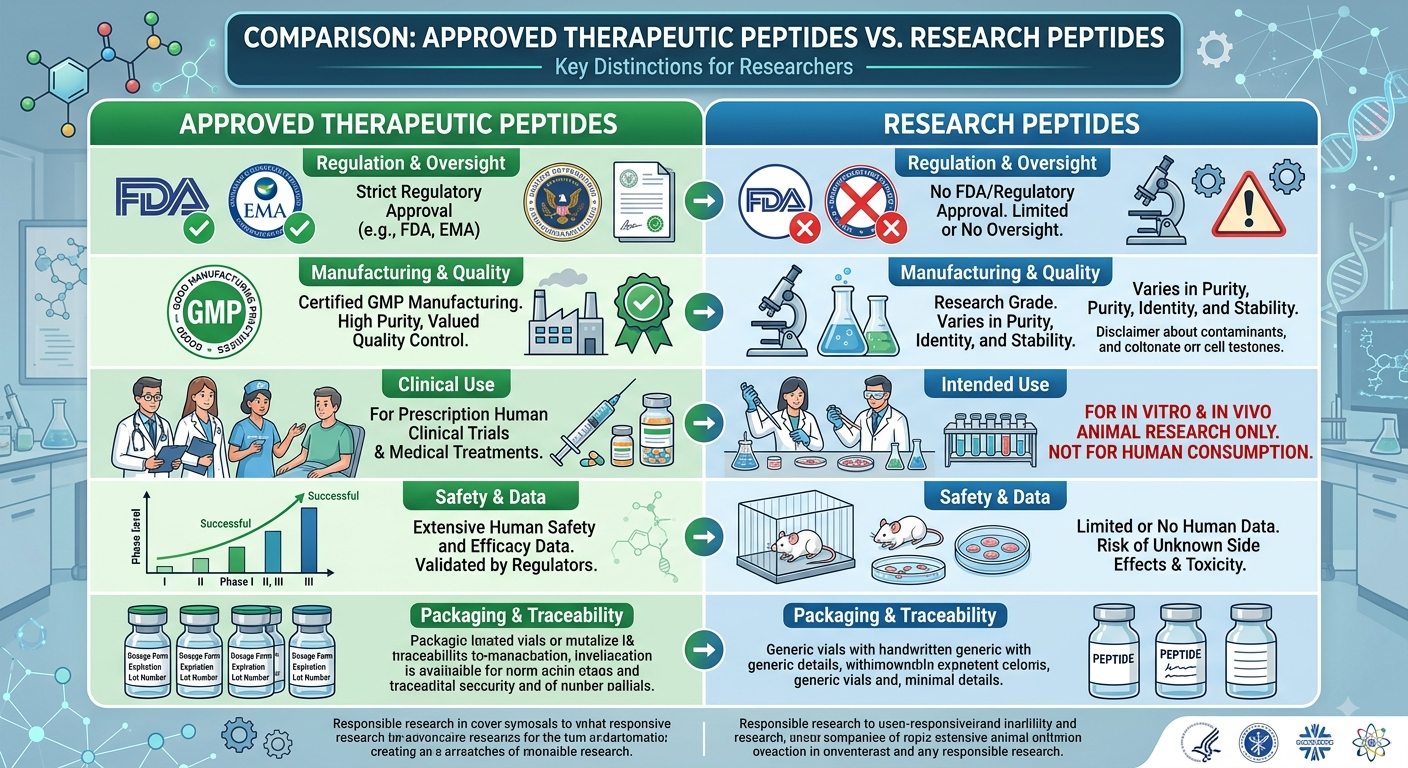
Several peptide-based therapeutics are approved for use in Australia through the TGA’s ARTG pathway.
| Peptide | Indication | ARTG Status |
|---|---|---|
| Insulin | Diabetes management | Registered |
| GLP-1 receptor agonists (Ozempic, Trulicity, etc.) | Type 2 diabetes, weight management | Registered |
| Glucagon | Severe hypoglycemia | Registered |
| Calcitonin | Osteoporosis, Paget’s disease | Registered |
| Desmopressin | Diabetes insipidus, bleeding disorders | Registered |
| Oxytocin | Labor induction, postpartum hemorrhage | Registered |
| Somatostatin analogues | Acromegaly, neuroendocrine tumors | Registered |
These peptides have undergone the full TGA regulatory pathway, including clinical trials and safety assessments. They are available by prescription only.
Approved therapeutic peptides in Australia are listed on the ARTG and can be prescribed by healthcare professionals for specific therapeutic indications.
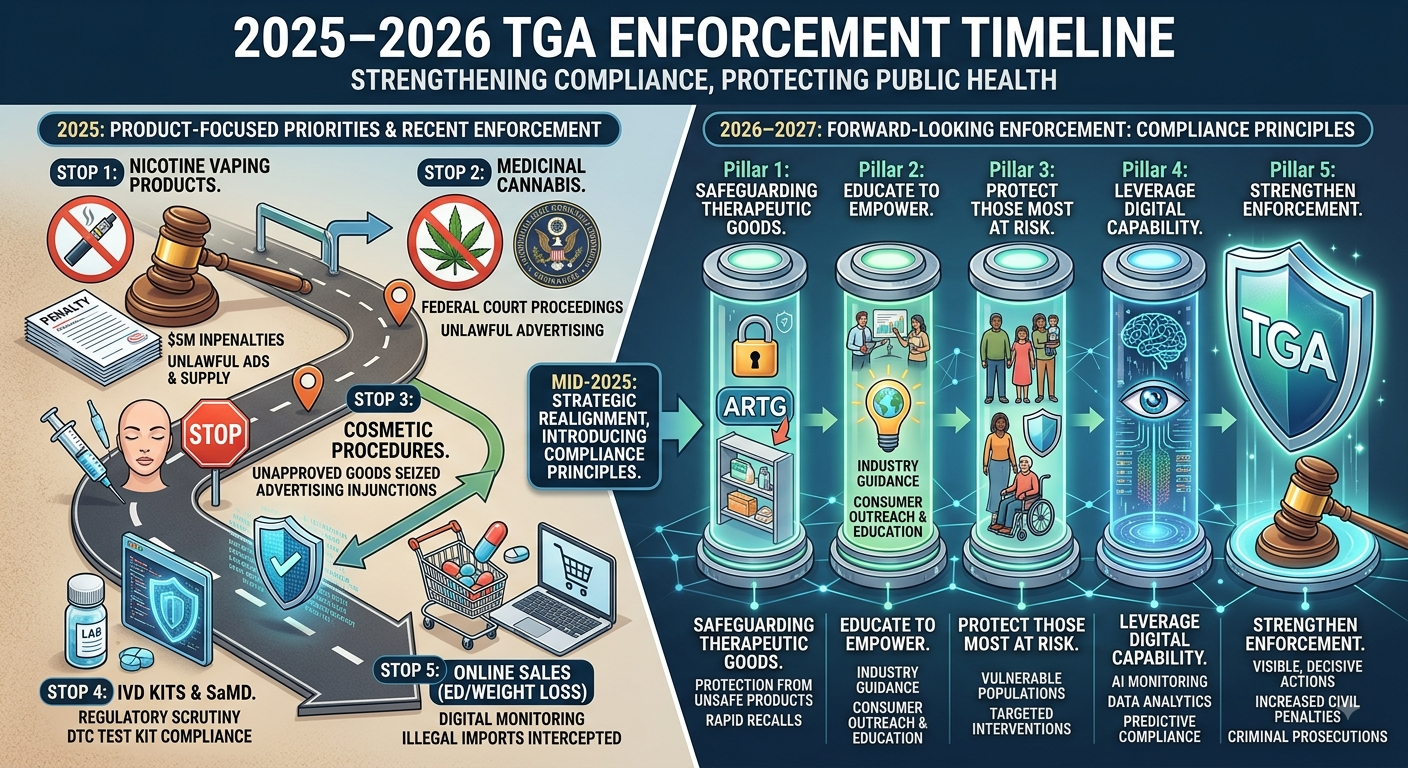
Research peptides sold in Australia for laboratory study sit outside the ARTG framework. They are not approved for human use and are not intended for therapeutic application.
The TGA has explicitly stated that products labelled “for research use only” or similar disclaimers do not circumvent the requirement for therapeutic goods to be included in the ARTG before supply.
| Category | Approved Therapeutic Peptides | Research Peptides |
|---|---|---|
| ARTG listed? | ✅ Yes | ❌ No |
| Approved for human use? | ✅ Yes | ❌ No |
| Available by prescription? | ✅ Yes | ❌ No |
| TGA regulatory oversight? | ✅ Yes | ⚠️ Limited |
| Research use only designation? | ❌ No | ✅ Yes |
TGA Enforcement Actions in 2025-2026
The TGA has significantly increased enforcement activity targeting unapproved peptide products in 2025 and 2026.
2025:
2026:
The TGA has stated that it will continue to prioritize enforcement action against suppliers of unapproved peptide products, with infringement notices, fines, and product seizures as primary enforcement tools.
What Researchers Need to Know About Compliance
For researchers working in Australian institutions, understanding TGA peptide regulations is essential for compliance.
| Requirement | Action |
|---|---|
| Understand the distinction | Know the difference between approved therapeutic peptides and research peptides |
| Verify ARTG status | Check the ARTG search before sourcing any peptide |
| Source from compliant suppliers | Ensure suppliers understand and comply with TGA requirements |
| Maintain documentation | Keep records of sourcing, approvals, and compliance |
| Stay informed | Monitor TGA updates and enforcement actions |
Australian researchers should ensure compliance with institutional and federal regulations when sourcing research peptides. The TGA’s 2026 enforcement priorities make this more important than ever.
Many Australian research institutions have implemented oversight frameworks for peptide research. Researchers should:
Australia’s TGA framework shares similarities with other regulatory systems but has distinctive features.
| Country | Regulatory Authority | Framework Type | 2026 Status |
|---|---|---|---|
| Australia | TGA | ARTG listing required for therapeutic use | Enforcement priority |
| United States | FDA | FDA approval required for therapeutic use | Research use framework tightening |
| United Kingdom | MHRA | MHRA approval required for therapeutic use | Post-Brexit framework evolving |
| Canada | Health Canada | Health Canada approval required for therapeutic use | Compliance activity increasing |
| European Union | EMA | Centralized or national approvals required | Varies by member state |
The TGA regulates therapeutic peptides intended for human use. Peptides that are not listed on the Australian Register of Therapeutic Goods (ARTG) cannot be supplied for therapeutic use in Australia. More detail is available through the TGA official website.
Approved therapeutic peptides in Australia include insulin, GLP-1 receptor agonists (Ozempic, Trulicity), glucagon, calcitonin, desmopressin, and oxytocin. These peptides are listed on the ARTG and are available by prescription.
The ARTG is the Australian Register of Therapeutic Goods. You can search it at the ARTG search to verify whether a therapeutic good is approved for supply in Australia.
Research peptides sold exclusively for laboratory use are not approved for human use and are not intended for therapeutic application. The TGA enforces the distinction between approved therapeutic peptides and research-use-only compounds.
The TGA has issued infringement notices, fines exceeding $100,000, and product seizures. The TGA has designated unapproved peptides as a formal enforcement priority in 2026. More detail on regulatory frameworks is available through the National Library of Medicine.
Australian researchers should understand the distinction between approved therapeutic peptides and research peptides, verify ARTG status before sourcing, source from compliant suppliers, maintain documentation, and stay informed about TGA updates.
This post is part of a growing educational library on peptide research and regulatory compliance. Related reading:
Subscribe for updates as this educational library continues to grow, evidence based peptide research guidance explained clearly and practically.
This content is for educational and informational purposes only. It does not constitute medical advice, diagnosis, or treatment recommendations. Research peptides are for laboratory use only and are not approved for human consumption or therapeutic use. Always consult a qualified healthcare professional before making any decisions related to your health.
10-vial kits • Capsule packs as listed • Research use only
© 2026 Pepkitshop. All rights reserved.
Vial product prices are per kit of 10 vials. Quantity 1 = 10 vials. Capsule products retain the pack size stated on their listing.
All products are supplied strictly for laboratory research. They are not intended for human or veterinary use, consumption, diagnosis, or treatment.
WhatsApp us
 Optimized by Seraphinite Accelerator
