
No products in the cart.

Vial products: price per kit of 10 vials. Quantity 1 = 10 vials. Capsule products are priced per capsule pack as listed. Dismiss
By Pepkitshop | Peptide Research Education
Updated August 2026 | Educational Content, Not Medical Advice
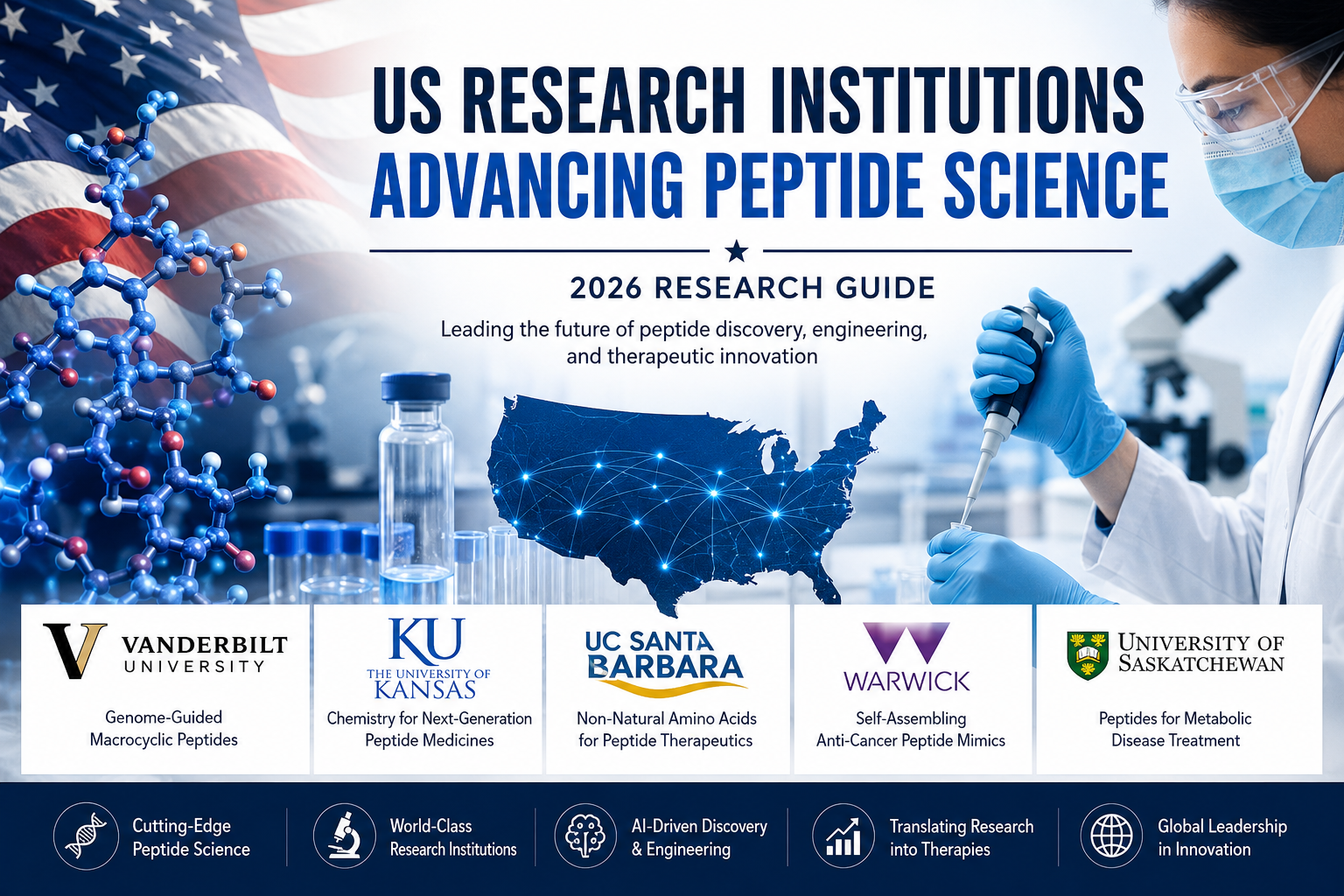
The United States is home to some of the world’s most active research programs in peptide science. Researchers are exploring macrocyclic peptides, ribosomally synthesized and post-translationally modified peptides (RiPPs), non-natural amino acids, peptide engineering, molecular self-assembly, and computational approaches to discovery.
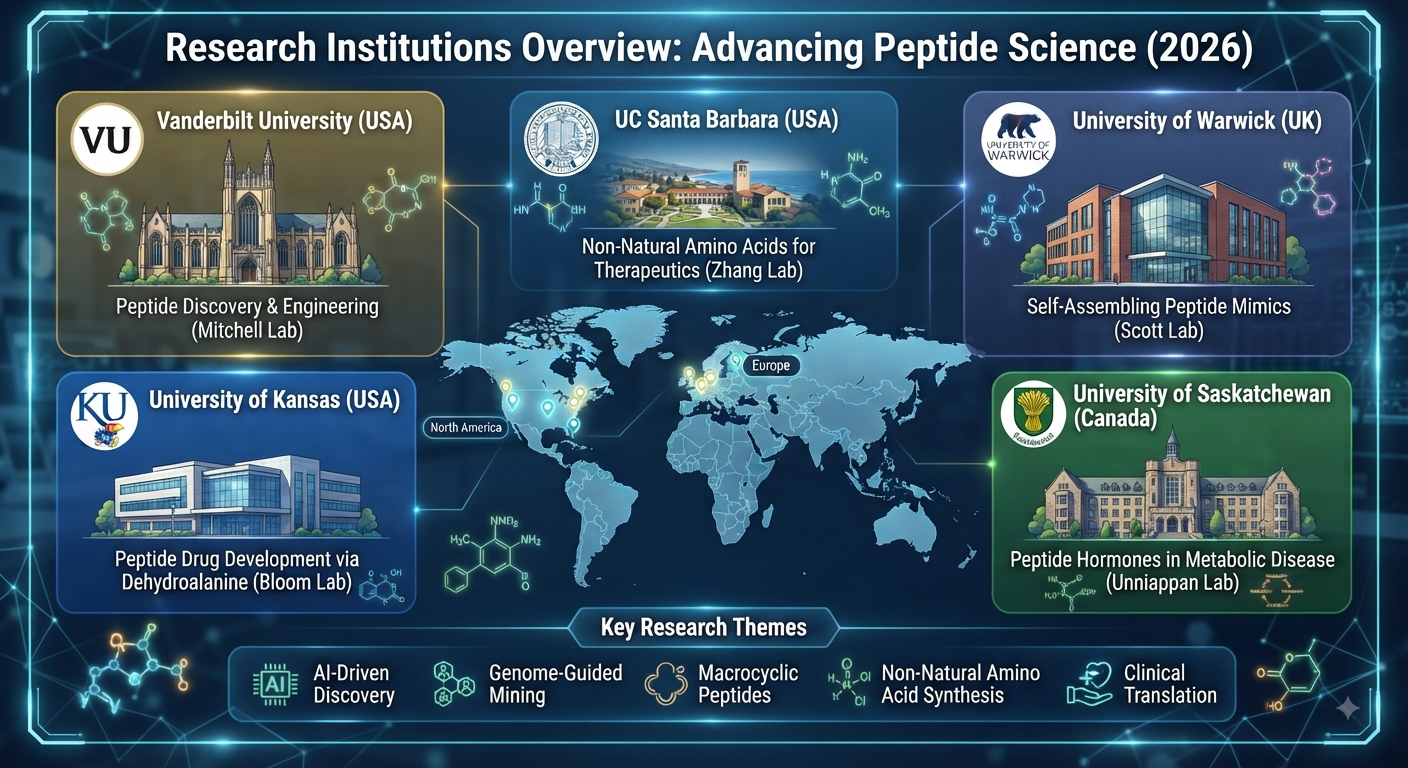
This guide highlights selected research programs and institutions contributing to modern peptide science, including work at Vanderbilt University, the University of Kansas, UC Santa Barbara, and other international institutions whose research provides important context for peptide development.
If you are new to the subject, start with our guide to peptide research in the United States before exploring the institutions and research programs discussed below.
Vanderbilt University is home to the Mitchell Lab, led by Professor Douglas A. Mitchell, Ph.D. The laboratory investigates peptide natural products and develops approaches for discovering and engineering new peptide scaffolds.
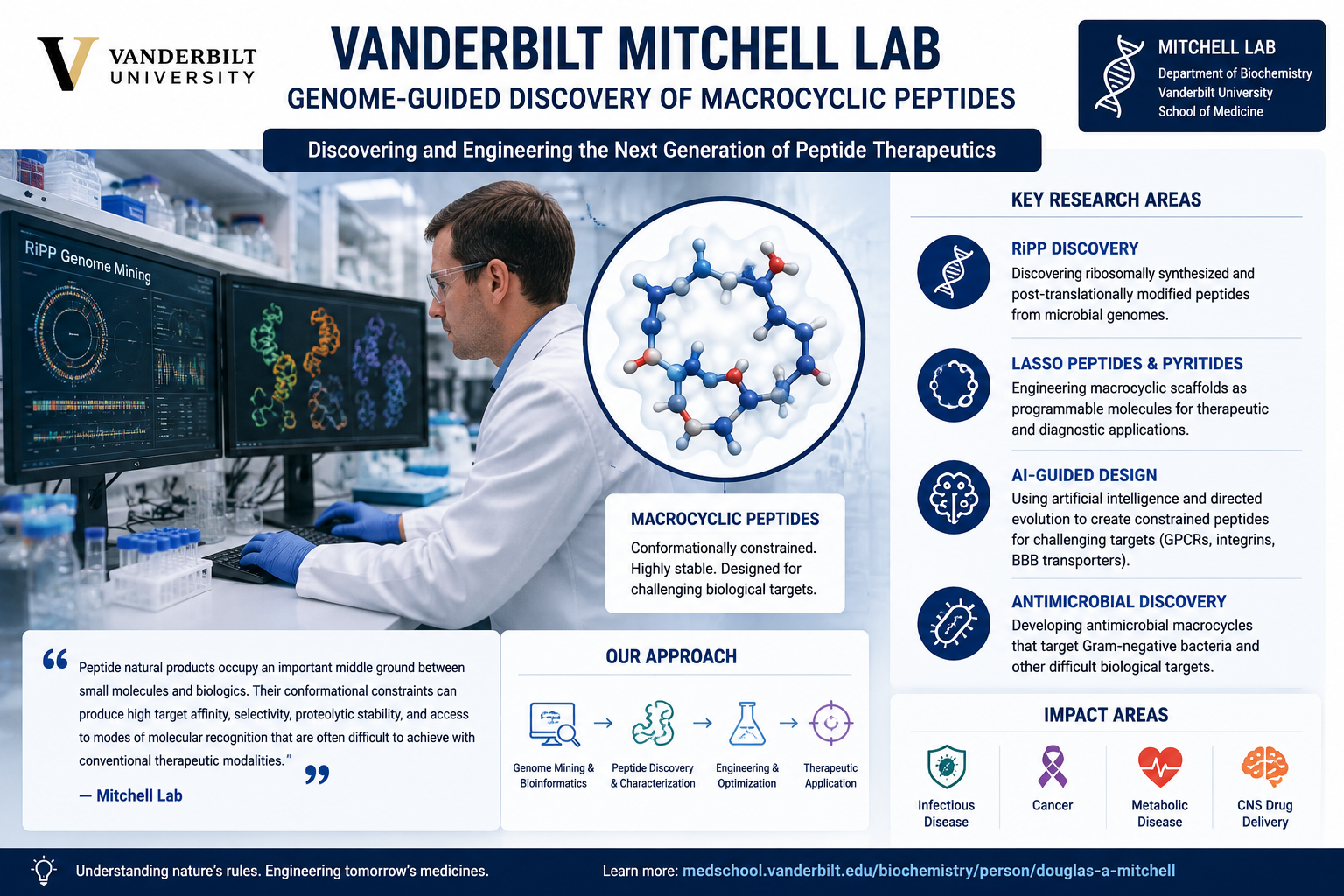
The Mitchell Lab combines bioinformatics, biochemistry, structural biology, synthetic biology, and protein engineering to investigate peptide natural products and their biosynthetic pathways.
Major areas of interest include:
The lab’s work contributes to a broader scientific effort to understand how naturally occurring peptide molecules can be discovered, modified, and studied for applications in biotechnology and biomedical research.
More information is available through the Vanderbilt Mitchell Lab.
The University of Kansas School of Pharmacy is home to research exploring new chemical strategies for peptide discovery and development.
Research associated with Dr. Steven Bloom’s laboratory focuses on using chemical methods to modify peptide structures and investigate new possibilities for peptide-based therapeutics.
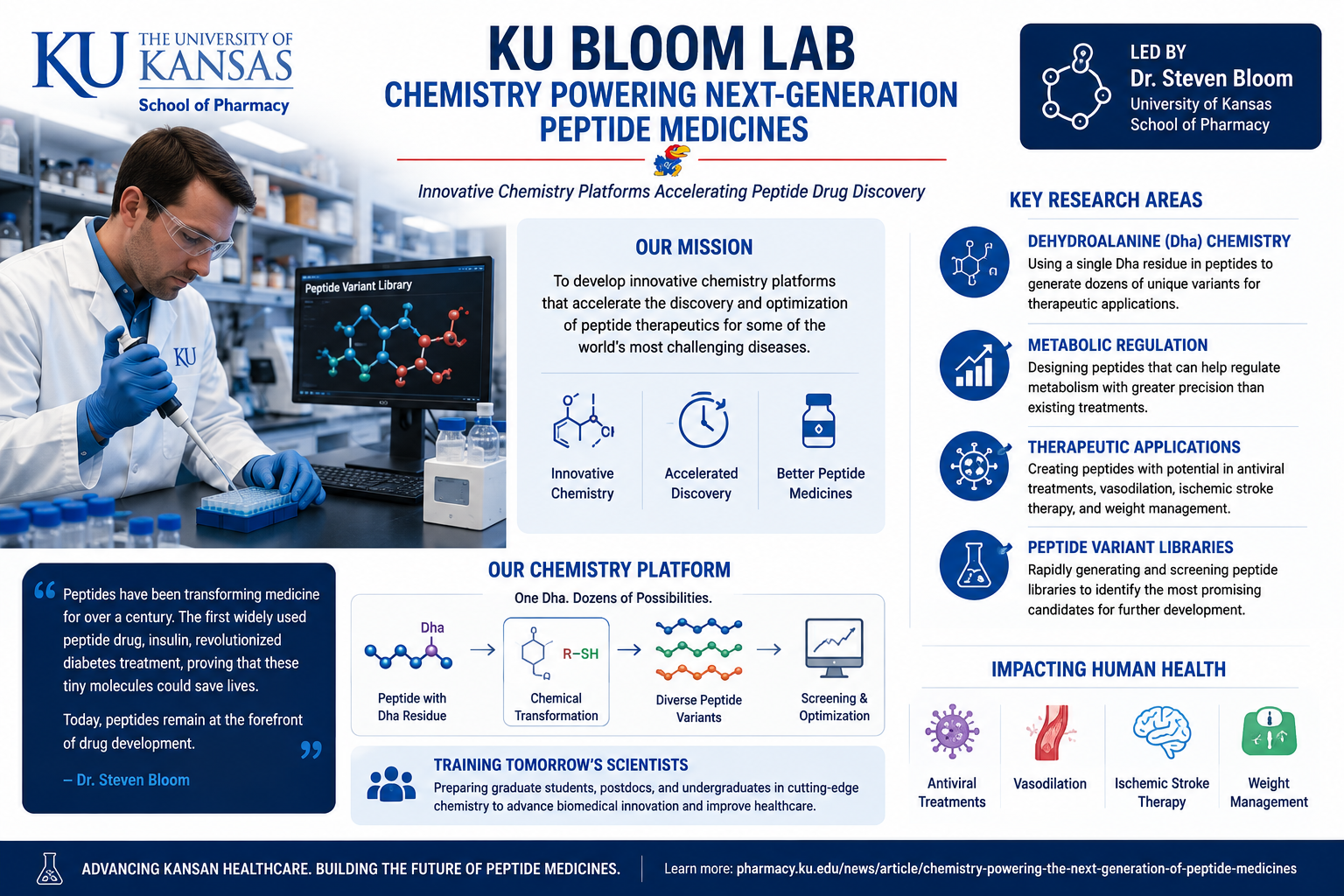
One important area involves dehydroalanine (Dha) chemistry. Researchers can use this specialized amino-acid residue as a chemical starting point for generating peptide variants.
Key areas include:
This type of chemistry illustrates how researchers are expanding beyond naturally occurring peptide structures to investigate new molecular designs.
More information is available through the KU Bloom Lab research feature.
Researchers at UC Santa Barbara have investigated new approaches for synthesizing non-natural amino acids that can expand the chemical building blocks available to peptide researchers.
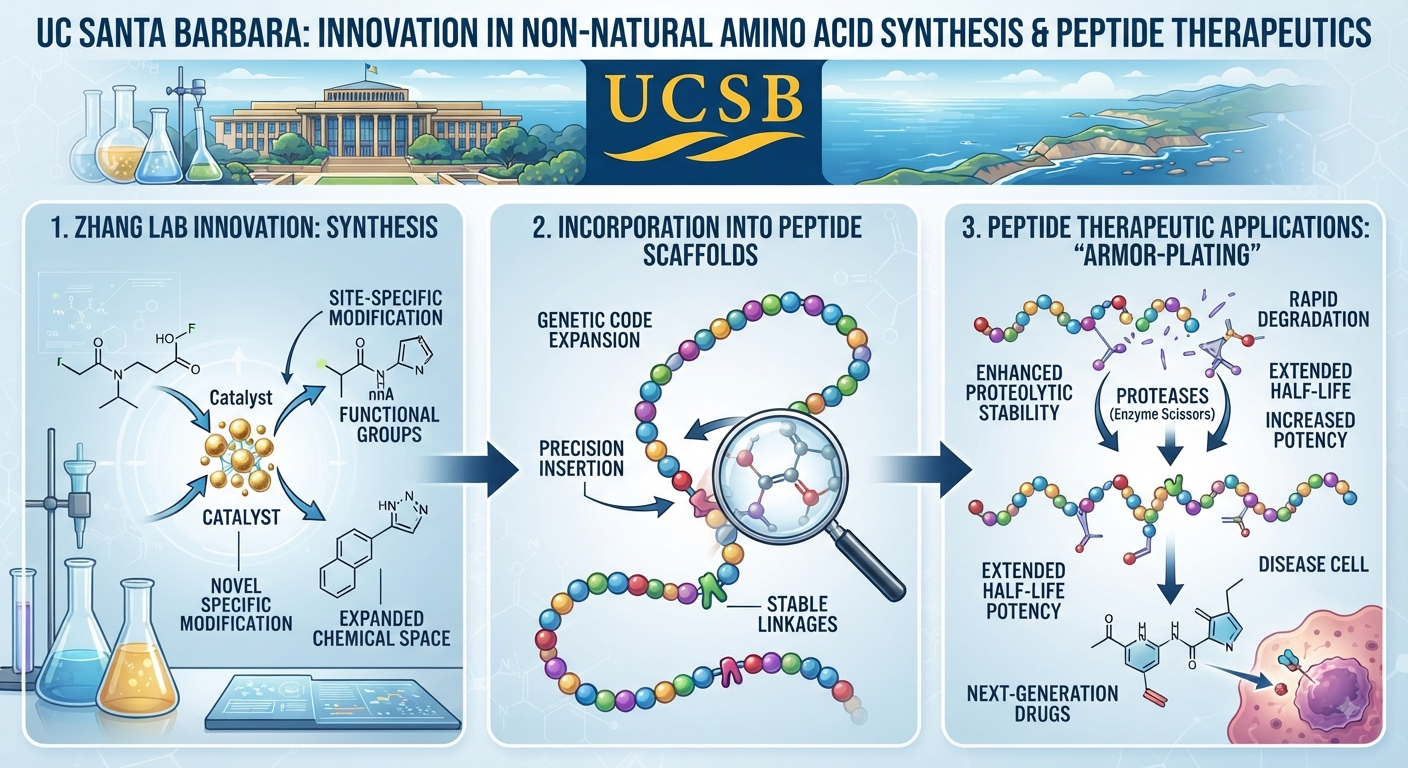
Professor Liming Zhang’s research includes synthetic chemistry approaches for producing structurally diverse amino acids.
Important areas include:
Expanding the available amino-acid building blocks gives scientists a larger chemical toolkit for studying peptide structure and function.
The research has been reported through EurekAlert’s UC Santa Barbara research release.
The University of Warwick has also contributed to research into synthetic molecules that mimic structural characteristics of naturally occurring peptides.
Professor Peter Scott and collaborators have investigated self-assembling molecular systems designed to form helical structures.
The research explores:
These studies remain part of laboratory-stage research. Results observed in cell-based experiments do not automatically establish safety or effectiveness in humans, and additional research is required before clinical applications can be considered.
More information is available from the University of Warwick research release.
Although the University of Saskatchewan is outside the United States, its peptide research provides useful international context for understanding how peptide biology is being investigated in metabolic disease.
Researchers associated with Dr. Suraj Unniappan’s laboratory have investigated nesfatin-1-like peptide (NLP) and its potential role in lipid metabolism.
Research areas include:
Importantly, laboratory findings should not be interpreted as evidence that an experimental peptide is an established treatment for a disease. Translating laboratory discoveries into safe and effective human therapies requires extensive additional research.
More information is available through the University of Saskatchewan research report.
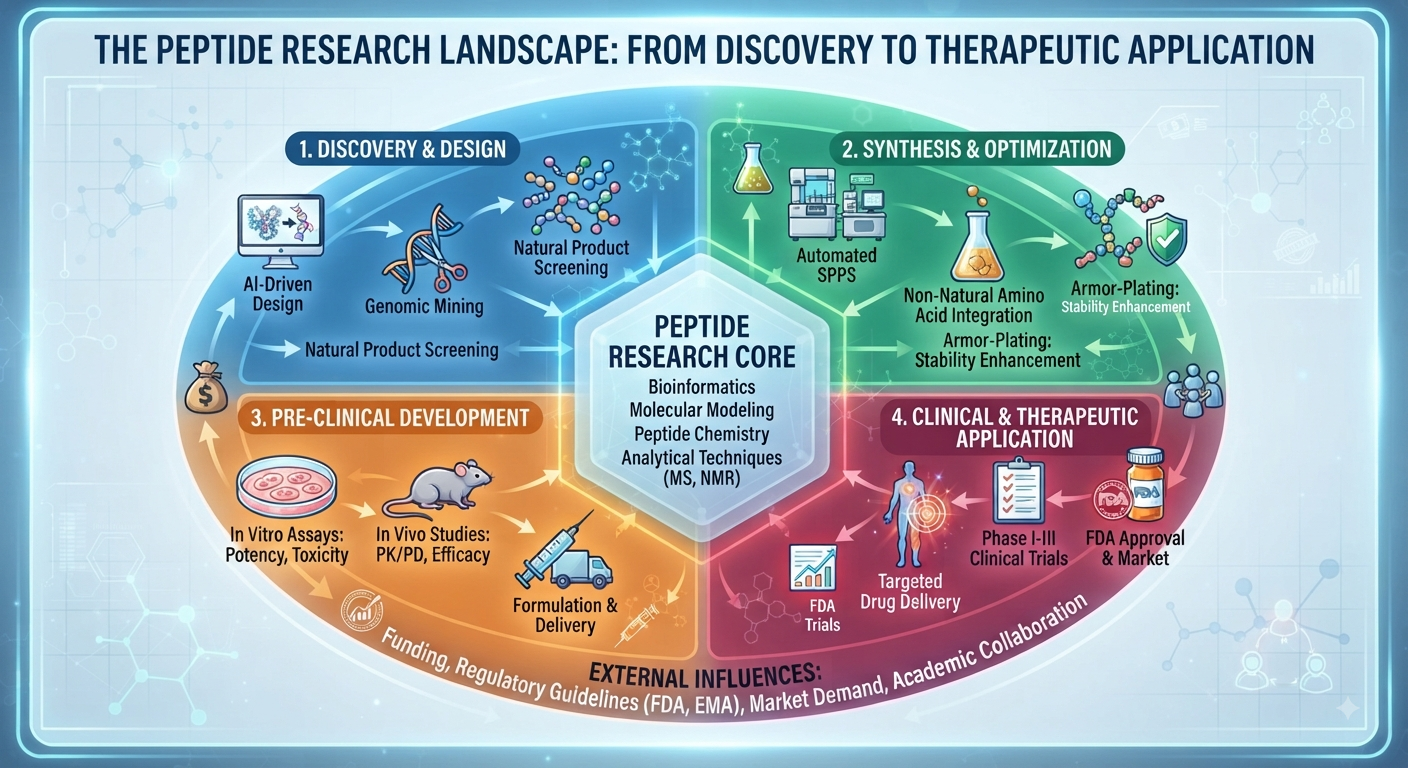
Peptide research is evolving rapidly as advances in chemistry, biology, computation, and drug discovery converge.
Machine learning and other computational methods are increasingly being investigated for peptide sequence analysis, structure prediction, molecular design, and candidate prioritization.
Macrocyclic and otherwise constrained peptides are attracting interest because their structures can provide different properties from conventional linear peptides.
Synthetic amino acids expand the chemical diversity available to peptide researchers and can be used to investigate structure, stability, activity, and molecular interactions.
Researchers are developing increasingly sophisticated approaches for modifying peptide sequences and structures to investigate biological function and improve experimental properties.
Antimicrobial peptide research remains an important area of investigation as scientists explore new approaches to addressing antimicrobial resistance.
| Funding or Research Sector | Typical Research Areas |
|---|---|
| National Institutes of Health (NIH) | Biomedical and therapeutic research |
| National Science Foundation (NSF) | Fundamental chemistry, biology, and materials science |
| Universities | Basic research, translational science, and researcher training |
| Pharmaceutical companies | Drug discovery, development, and clinical research |
| Academic-industry partnerships | Translational and applied research |
| Government agencies | Biomedical research and specialized health programs |
The United States has numerous universities and research centers studying peptide chemistry, biology, engineering, drug discovery, and related fields. Vanderbilt University and the University of Kansas are two examples highlighted in this guide. Other institutions across the country also contribute to peptide science through chemistry, biomedical research, computational biology, and pharmaceutical research.
natural products, including RiPPs and macrocyclic peptide systems. Its research combines approaches such as bioinformatics, biochemistry, structural biology, synthetic biology, and peptide engineering.
More information is available through the Vanderbilt Mitchell Lab.
The Bloom Lab investigates chemical strategies for peptide diversification and drug discovery, including approaches involving dehydroalanine chemistry.
More information is available through the University of Kansas research feature.
Research associated with Professor Liming Zhang includes synthetic methods for producing non-natural amino acids. These building blocks can expand the chemical diversity available to researchers studying peptide structures and functions.
More information is available through EurekAlert’s research release.
The Scott Lab has investigated synthetic molecules capable of self-assembling into helical structures that mimic selected characteristics of natural peptide systems. Some laboratory studies have explored their biological activity.
More information is available through the University of Warwick research release.
The Unniappan Lab investigates peptide signaling and metabolic biology, including research into nesfatin-related peptides and lipid metabolism.
More information is available through the University of Saskatchewan research report.
AI and machine-learning approaches can assist researchers with peptide sequence analysis, molecular design, structure prediction, candidate prioritization, and optimization. These computational techniques are generally used alongside laboratory experimentation rather than replacing experimental validation.
For published biomedical research, researchers can search the National Library of Medicine’s PubMed database.
This article is part of Pepkitshop’s educational library covering peptide science, research, and regulatory topics.
Related reading:
Explore these resources to continue learning about peptide research, scientific development, and regulatory considerations.
Educational Disclaimer
This content is provided for educational and informational purposes only. It does not constitute medical advice, diagnosis, or treatment recommendations. Experimental research compounds should not be assumed to be approved for human use or therapeutic purposes. Readers should consult qualified healthcare and scientific professionals for advice appropriate to their circumstances.
10-vial kits • Capsule packs as listed • Research use only
© 2026 Pepkitshop. All rights reserved.
Vial product prices are per kit of 10 vials. Quantity 1 = 10 vials. Capsule products retain the pack size stated on their listing.
All products are supplied strictly for laboratory research. They are not intended for human or veterinary use, consumption, diagnosis, or treatment.
WhatsApp us
 Optimized by Seraphinite Accelerator